Zimbabwe Facts for Kids: Geography, Animals and Culture
These Zimbabwe facts for kids were chosen and researched especially for kids to get more insights into this beautiful country in Southern Africa.
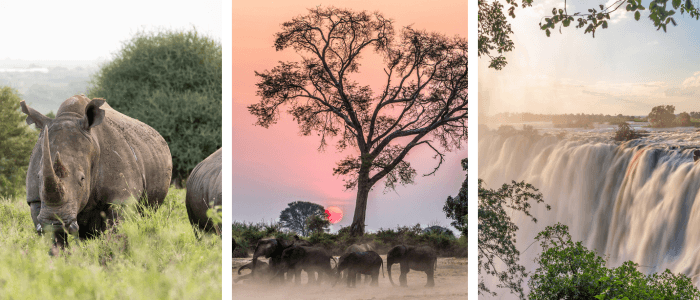 Impression: Rhino - Hwange National Park - Victoria Falls
What you will find on our Zimbabwe Facts for Kids page:
Zimbabwe - Snapshot
Latest update: 15 April 2026 - sources: Zimstat, ACRC |
Interesting Zimbabwe Facts for Kids
- Continent: Africa
- Name: Republic of Zimbabwe
- Area: 390,757 km
- Population: About 15 million people (2026)
- Capital: Harare with about 1.5 million people
- Nickname: "The Jewel of Africa"
- Border countries:
- Government: presidential republic
- Literacy Rate: 90% of all Zimbabweans 15 years and older can read and write
- Official Languages: 16 (including Shona, Ndebele, English and other minority languages)
- Religion: 84% Christians
- Official Currency: Zimbabwe Gold (ZiG), other foreign currencies are used, mainly US dollars and South African rand
- Unemployment: 20% of the people (2026 - Zimstat)
- Poverty Rate: 57% (2019 - Zimstat)
- Independence Day: 18 April
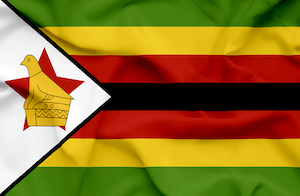
- National Symbols: Flag, coat of arms, Zimbabwe bird
- National Colours: green, gold, black, red, white
- Anthem: "Blessed be the Land of Zimbabwe"
- Motto: "Unity, Freedom, Work"
- History: Zimbabwe gained independence in 1980.
- President: Emmerson Mnangagwa
Zimbabwe Map
Where is Zimbabwe?
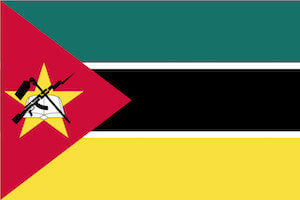
Zimbabwe is located in Southern Africa. The landlocked country borders Zambia, Mozambique, South Africa and Botswana as you can see on the map.
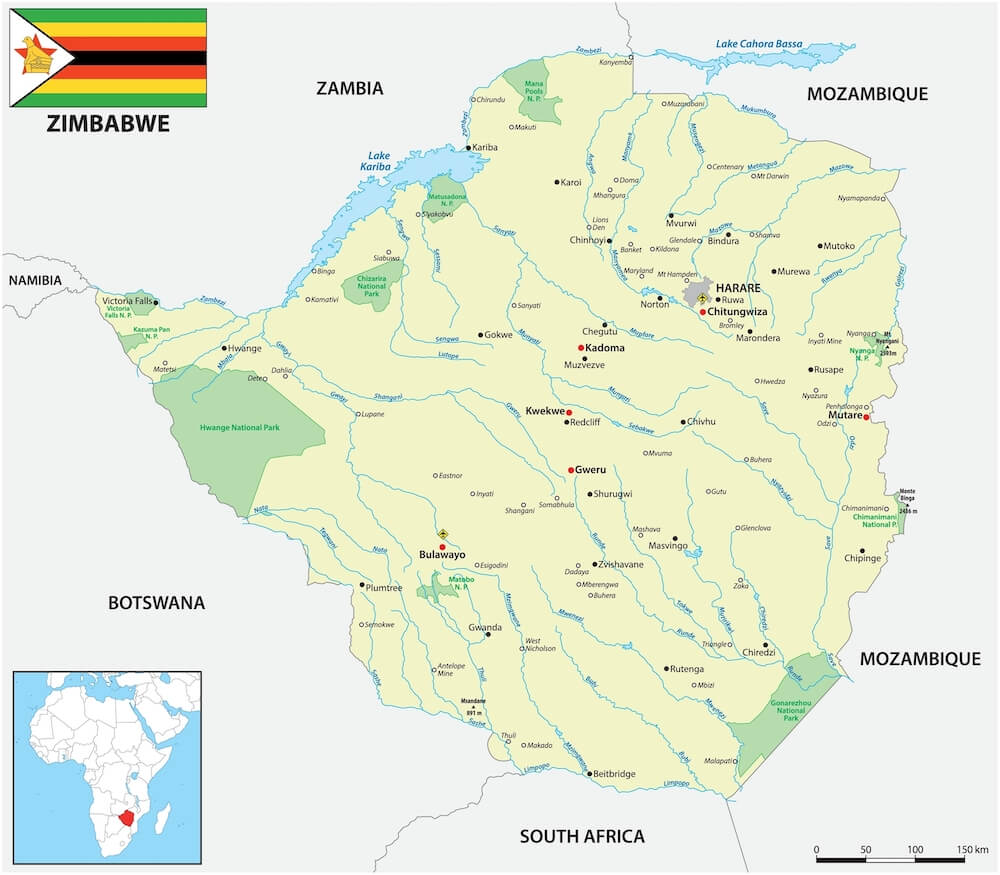
Zimbabwe is slightly larger than the U.S. state of Montana.
A flight from London/ England to Harare takes about 15 hours (there is no direct flight) and a flight from Johannesburg/ South Africa takes almost 2 hours.
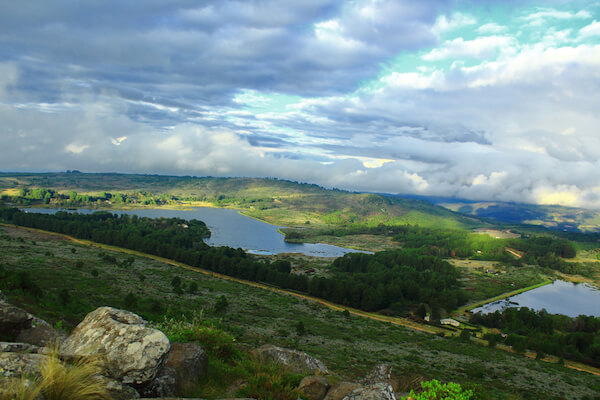 Zimbabwean landscape
Zimbabwe Facts for Kids:
Zimbabwe Geography
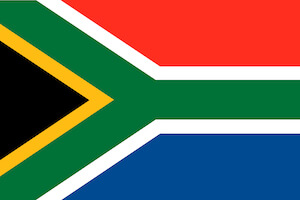
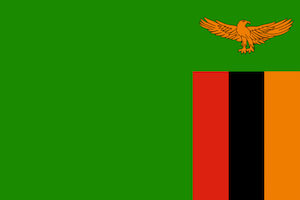
Zimbabwe is one of the landlocked countries in Southern Africa. The four neighboring countries are: Zambia in the north, Mozambique in the east, South Africa in the South and Botswana in the Southwest.
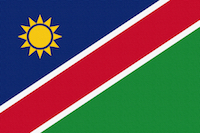
Although Namibia is not a bordering country of Zimbabwe it is not far from the Zimbabwean border, more exactly only a 150m/ 492 ft wide strip separates the two countries in the northwestern region where the three borders of Zambia, Botswana and Zimbabwe meet.
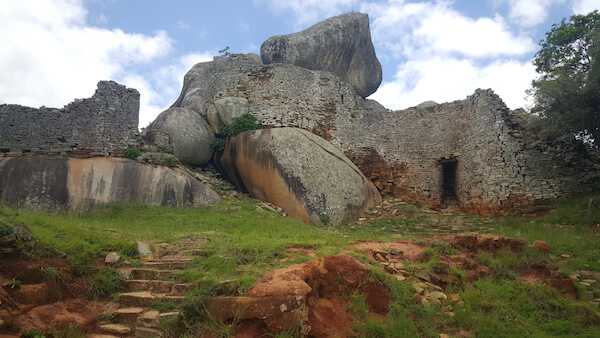 Ruins of Great Zimbabwe
Did you know?
|
Most of country lies on central plateau at an elevation of 1,000 m to 1,600 m. The highest peaks, with rugged mountains, are found in the Eastern Highlands. The country features grasslands, woodlands and forests. Zimbabwe is known for its five UNESCO world heritage sites.
Zimbabwe has a subtropical climate with mild and dry winters from May to September and hot and rainy summers. The months of November to March are very humid. Afternoon rain showers and heavy thunderstorms can be encountered during this time.
January is generally the hottest month with daily temperatures of around 33.5°C or 92.3°F. There is a risk of malaria, especially in low-lying areas between November and June.
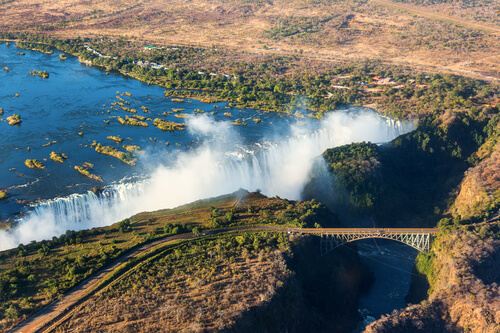
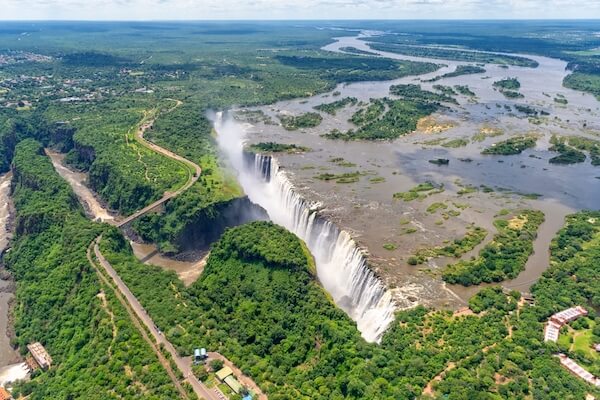 Victoria Falls aerial view
Zimbabwe Geo Superlatives
- Mount Nyangani is the highest mountain in Zimbabwe at 2,592 m/ 8,507 ft
- The longest river in Zimbabwe is the Zambezi River that forms the country’s northern borders to Zambia.
- The largest lake in Zimbabwe is Kariba Reservoir. This is a man-made lake or an artificial lake that filled Kariba Gorge with the waters of Zambezi River after Kariba dam was built in 1958.
- The Victoria Falls shared with Zambia are the most prominent waterfalls of the African continent.
- The largest cities of Zimbabwe are Harare and Bulawayo, both are located close to the border to South Africa. Harare and Bulawayo are the only cities housing more than 1 million people.
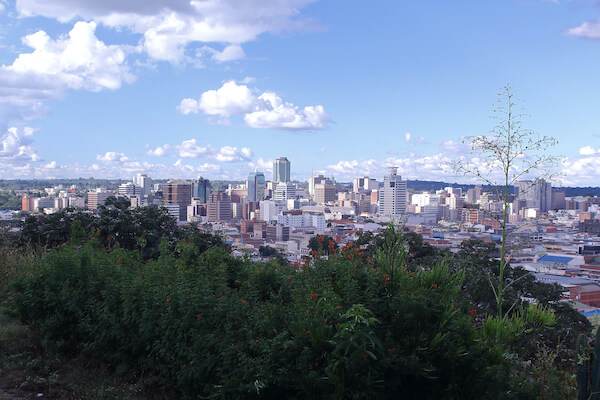 Harare
- Zimbabwe is among the countries with the most official languages in the world. Zimbabwe has 16 official languages, the most spoken are English, Shona and Ndebele.
- Hwange is the largest national park in Zimbabwe, housing the Big Five animals of the African continent and many more species you encounter on a typical African safari.
- Zimbabwe has one of the highest literacy rates on the African continent with about 90% of the population being older than 15 years able to read and write - after Seychelles and South Africa
Zimbabwe Facts for Kids
Landmarks and Attractions
- In the capital city, besides Harare Gardens and the National Gallery, try to visit Chapungu Sculpture Park and Mbare Market. A bit further out, there are the fascinating balancing rocks at Epsworth.
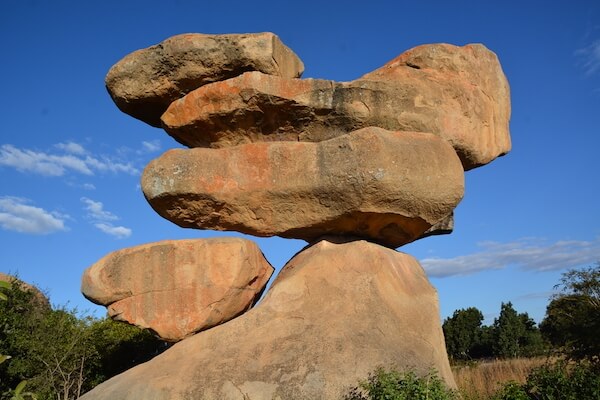 Balancing Rocks
- The mighty Victoria Falls are shared with Zambia. The town of Victoria Falls is located on the Zimbabwean side, while Livingstone is the city on the Zambian side of the waterfalls
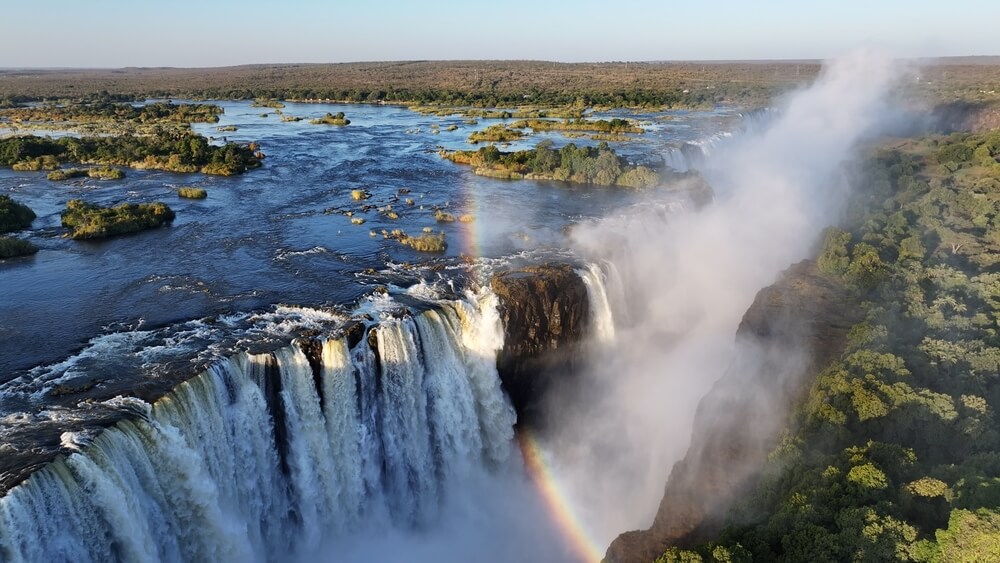 Victoria Falls
- Ruins of Great Zimbabwe in Masvingo: one of the most important UNESCO world heritage sites.
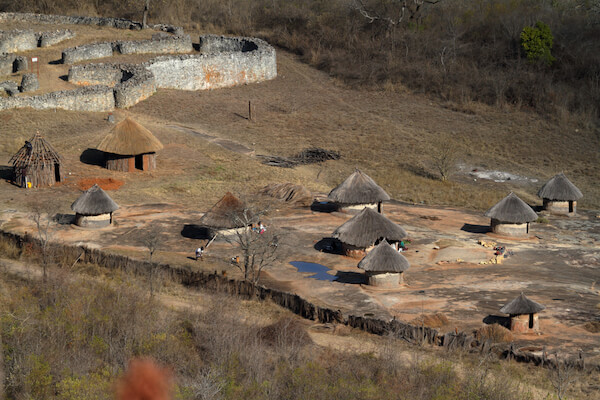 Ruins of Great Zimbabwe
- Hwange National Park, Zimbabwe's largest national park is located in the northwest of the country. The national park houses the largest elephant herds in the country and the largest population of the rare wild dogs of the African continent
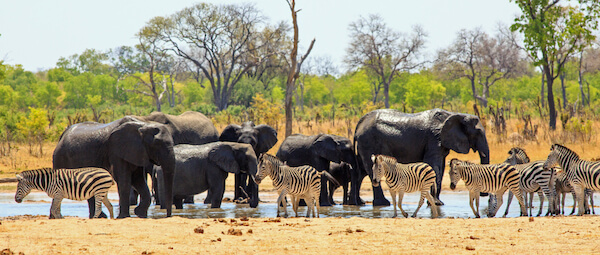 Hwange National Park
- Matobo Hills with unique granite boulders called kopjes
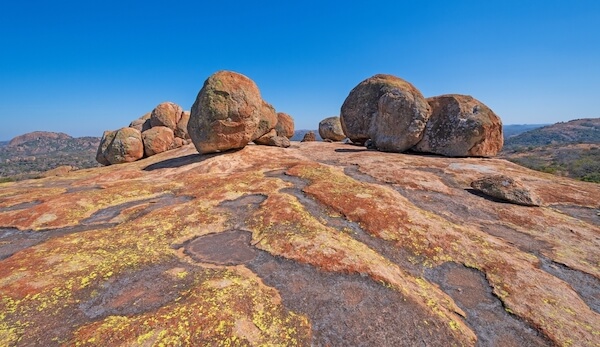 Matobo hills
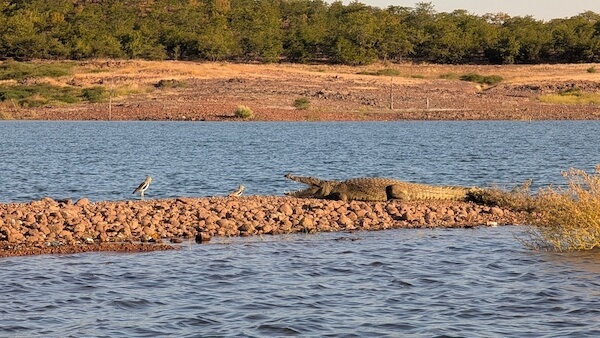 Lake Kariba crocodile
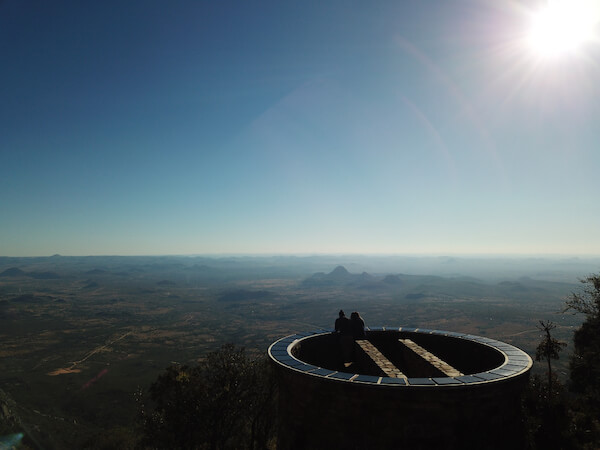 World's View in Nyanga
Facts about Zimbabwe
History
Zimbabwe was settled by the San and Bantu people already more than 2,000 years ago. The Shona people started building Great Zimbabwe in the 11th century. About 1,000 years ago Great Zimbabwe was known as the major trading city in Southern Africa. It also was the capital of the Great Kingdom of Zimbabwe and the largest city in Southern Africa before colonialism.
In the 1830, the region was explored by European traders, hunters and missionaries. The country was under British colonial rule after Cecil Rhode’s British South Africa Company reached the region and ruled in the country from the 1890s. The Matabele and Shona people started various uprisings and a war of liberation in 1898 but the rebellion was suppressed and a Land Act was introduced that restricted black people from owning land and forced them to work for white farmers. The black opposition grew and the Zanu and Zapu parties were formed uniting Zimbabwean workers in two big nationalist unions. in 1953 after Britain creates a Central African Federation that consisted of three countries: Zimbabwe, Zambia and Malawi.
Zimbabwe was then part of Rhodesia which this region was referred to in honour of explorer Cecil Rhodes. The Federation, however, collapsed when Malawi and Zambia gained independence in 1963. Southern Rhodesia declared independence from British rule in 1965 under a white prime minister and was renamed Rhodesia. However, also a Republic of Rhodesia that existed between 1970 and 1979, never gained stable independence.
Independence was recognised by the UK finally in 1980 when Robert Mugabe was elected prime minister, he later was president from 1987 until 2017. Around the turn of the century, Mugabe initiated a land reform programme that seized white-owned farms and led to the eviction of the white population and the economy crumbled as inflation rose extremely high and peaked in 2020 with over 500%!
In 2017, Mugabe resigned from power, however, the country still suffers from difficult relationships with other countries.
Zimbabwe Facts for Kids
Zimbabwe People
Zimbabwe has a population of more than 15 million people, most of them living in rural areas and only about 29% live in urban centres such as the cities Harare, Bulawayo, Chitungwiza, Mutare or Gweru. The country has a very youthful population and about 41% of the Zimbabweans are children under 15 years.
The school year in Zimbabwe runs from mid January to the beginning of December. The final exams in Zimbabwe correspond with the 'O' and 'A'-levels of the International Cambridge curriculum.
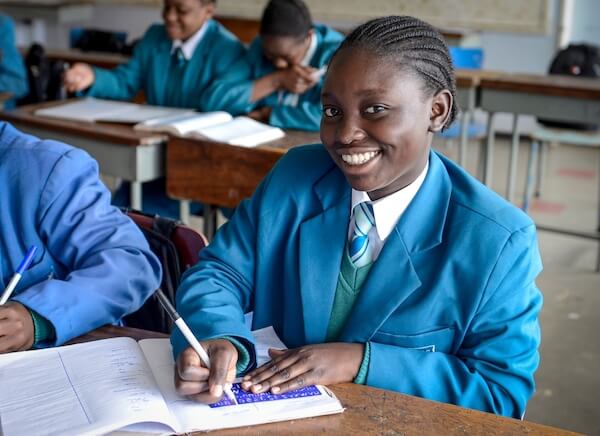 Children wear uniforms in school
The largest population groups are the Shona and the Ndebele people, however, there are also several minority groups such as the Venda, Sotho, Tsonga and other local ethnic groups.
More than 80% of the population are Shona and about 12% of the Zimbabweans belong to the Ndebele people.
Less than 1% are considered white Zimbabweans such as the former Rhodesians which are mainly British, Afrikaner, Dutch or French people.
Traditional arts include, pottery and stone carvings, mostly animal carvings made from soapstone. The stone carved Zimbabwean bird is a popular model as it is also a national symbol (see the flag!)
Soccer and rugby are the most popular sports in Zimbabwe. Rugby and Cricket are popular too.
Interesting Zimbabwe
Language Facts
Several indigenous African languages are spoken as home languages in Zimbabwe. Amongst the most spoken home languages in Zimbabwe are Shona, spoken by about 70% of the population and Ndebele, which is spoken by about 20% of the people.
Portuguese is one of the more prominent foreign languages, especially at the border to neighbouring country Mozambique.
Facts about Zimbabwe
Economy
Zimbabwe has faced economic challenges and high inflation over the recent years. This means products cost more and more and even basic goods are difficult to afford. Many people have been hit from extreme poverty, which hit about half of the population that lived with less than USD 3.65 per day.
The unemployment rate is very high and a large number of Zimbabweans live in neighbouring South Africa, were many highly skilled people settled.
Did you know?
|
About 70% of the people work in the agricultural sector. Especially Zimbabweans in the poorer households live from agriculture and work in small-scale farming.
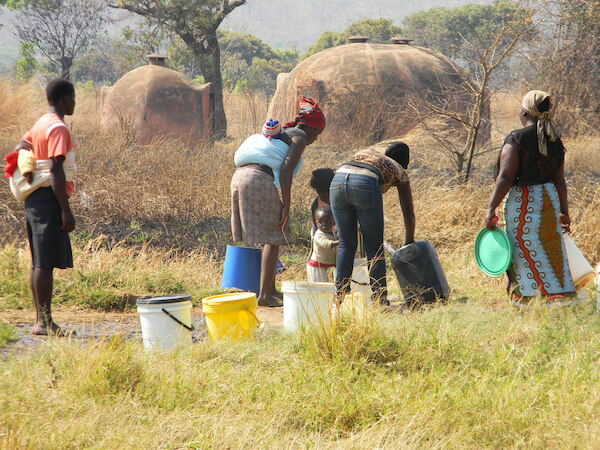 Women fetching water - image by Cecil Bo Dzwowa/ shutterstock.com
Zimbabwe suffers from climate changes which comes with increasing droughts and therefore a lack of water.
Among the main exports of Zimbabwe are minerals such as gold, platinum and diamonds. Mining, agriculture and now increasingly tourism are the main economic sectors.
Zimbabwe Facts
Animals in Zimbabwe
Zimbabwe is rich in wildlife and is home to the "Big Five" which are the lion, the leopard, the elephant, the rhino and the buffalo. Read more about the Big Five here.
Zimbabwe’s national animal is the Sable antelope. This antelope has long curved horns and is typically found in Southern African plains.
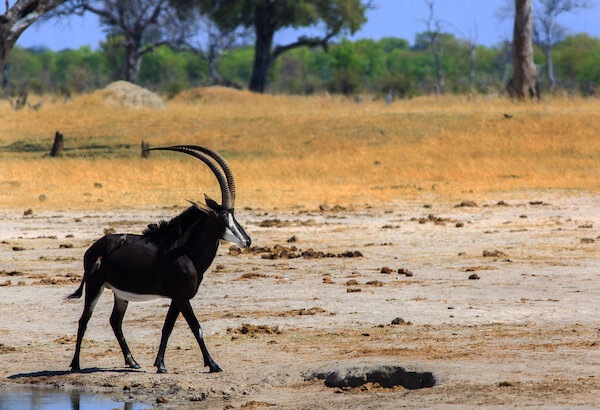 Sable antelope in Hwange National Park
There are about 350 species of mammals in the country. Among these animals are all the African big five animals as explained above as well as giraffes and hippopotamus.
The bateleur eagle is the national bird. There are roughly 700 species of birds such as African fish eagles, the pelicans, flamingos and herons, and more than 130 fish species including cichlids, catfish, tiger fish and the bull shark that lives in the Zambezi river.
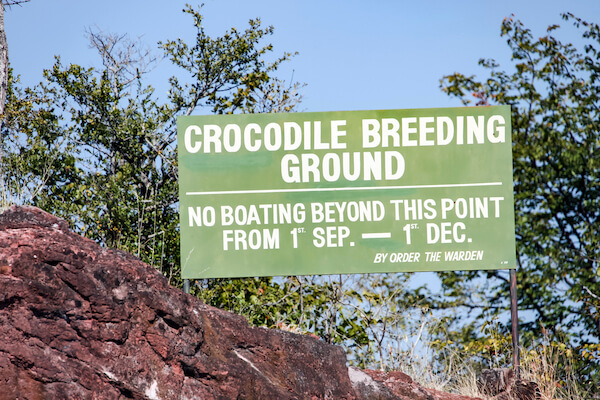 Crocodile warning at Lake Kariba
Lake Kariba is home to hippos and crocodiles too!
Zimbabwe Facts for Kids Zimbabwean Food
The staple food in Zimbabwe are maize (corn) and ground nuts which are used in many traditional dishes in the region. Although sadza, a simple cornmeal porridge, is often named as the staple dish, another dish is very popular and is commonly recognised as the national dish, mutakura. Peanuts are used in many dishes!
Game meat dishes made with with warthog, kudu and even crocodile meat also are eaten in many communities.
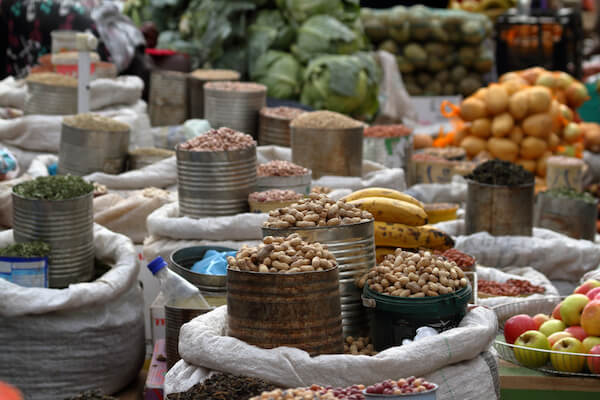 Streetmarket in Bulawayo/ Zimbabwe
The most commonly known dishes in Zimbabwe are:
- mutakura: Zimbabwe's national dish consists of boiled corn, peanuts and beans and is a healthy staple dish
- sadza: porridge made with cornmeal, usually very thick, so it can be eaten with the hands
- bota: another cornmeal porridge, mainly eaten for breakfast. It is slightly thinner than sadza
- nyama choma: typical Zimbabwean barbecued meats made with chicken, beef and goat meats that have been marinated in a spicy sauce
- mopane worms: crispy fried caterpillars or sometimes served cooked in tomato sauce. Mopane worms are a traditional and nutritious snack!
- dovi: peanut stew usually cooked with chicken and a rich creamy peanut sauce
- matemba: dried fish
- chikenduza: steamed and glazed sweet treat also referred to as "candy cakes"
- gango: mixed meats and vegetables
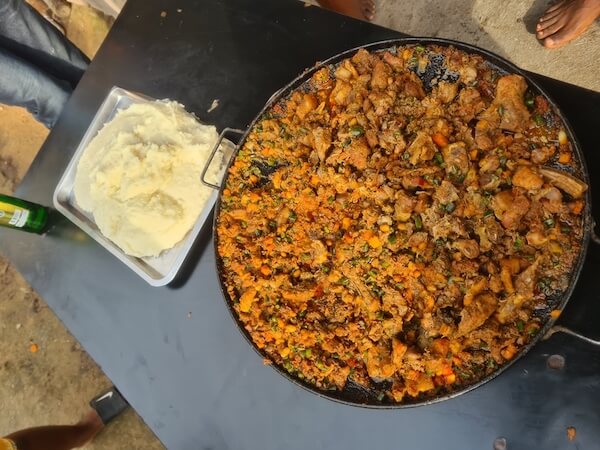 Gango and Sadza - image by Tee2045/ shutterstock.com
Zimbabwe Facts For Kids Resources
- Zimbabwe National Statistics Agency. "ZimStat Home. ZIMSTAT. Last accessed 15 April 2026
- Brendan White. "10 Zimbabwean Dishes You Simply have to taste." DiscoverAfrica. Last accessed 15 April 2026
- Zimbabwe National Parks. "Hwange National Park." Zimparks. Last accessed 15 April 2026
- Juliette Delbarre. "Top 10 Facts about Poverty in Zimbabwe." The Borgen Project. Published 11 August 2025. Last accessed 15 April 2026
We hope you enjoyed our Zimbabwe Facts for kids and will visit again.
Zimbabwe Facts for Kids - Image Credits: own images and shutterstock.com
Popular Pages
 |
 |
 |
 |
 |
 |
 |
 |
Competition
2026
Recent Articles


-
Jamaica Facts for Kids: Geography, People, Culture and Wildlife
Oct 02, 26 08:16 AM
Our Jamaica Facts for Kids will provide an overview of the Caribbean island nation, about Jamaican geography, people, culture animals, food and economy -
Facts about Tuvalu for Kids: Geography, People and Wildlife
Sep 11, 26 07:15 AM
Explore our facts about Tuvalu and learn about the Polynesian island nation and its geography, people, economy, culture and animals - Worksheets included -
Animals in Norway for Kids: Wildlife Facts
Sep 03, 26 10:50 AM
Animals in Norway explained: meet reindeer, moose, polar bears, whales and puffins, with habitat facts and a short quiz for class.
More about Africa
More Countries in Africa
 Tanzania
Countries in Southern Africa
Animals around the World
Food around the World
Fun Facts

Did you like what you read?

Follow us on Facebook
Competition 2026