30 Facts about Tuvalu:
Geography, People, Culture and Wildlife

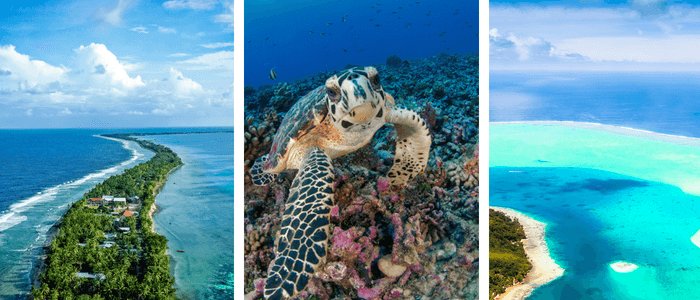
Facts about Tuvalu: Funafuti atoll, sea turtle, Polynesian islandsFacts about Tuvalu: Funafuti atoll, sea turtle, Polynesian islands
loudspeaker icon

Tuvalu is one of the smallest countries in the world and is very vulnerable to climate change because its islands are very low-lying. With a small population and limited natural resources, the country also relies heavily on foreign aid and grants.

Our fun facts about Tuvalu will help you learn more about one of the smallest countries in Oceania. Here we explain where the country is, who lives there and what makes the Polynesian islands special.

Now let's begin the journey with our popular snapbox!

tuvalu flag

Tuvalu - At a Glance

  • Name: Tuvalu
  • Location: South Pacific Ocean
  • Region: Polynesia, Oceania
  • Area: 26 km²/ 10 sq miles
  • Islands: 9
  • Capital: Funafuti
  • Population: 9,500 (2026 Estimate)
  • Official Languages: Tuvaluan and English
  • Currency: Australian Dollar (AUD)
  • Timezone: UTC+12
  • Government: constitutional monarchy
  • National Colours: blue and yellow
  • Independence Day: 1 October
  • Cultural Traditions: fatele (dance), pulaka (food)

Small island country in Polynesia about half way between Australia and Hawaii. Second smallest country in Oceania after Nauru.

The volcanic archipelago of nine islands is known for its marine biodiversity.

Source: tuvalu.gov.tv and Pacific Community SDD - Last accessed 10 September 2026

Our 'Facts about Tuvalu' page gives children a quick facts overview of Tuvalu. Included are highlights on geography, people, culture, and wildlife as well as some useful resources for teachers. Enjoy!

page content_icon


This is what you will find on our page about Tuvalu:

30 Tuvalu Facts for Kids

Here are some interesting facts about Tuvalu which were chosen and researched especially for kids.
Facts about Tuvalu
Where is Tuvalu?

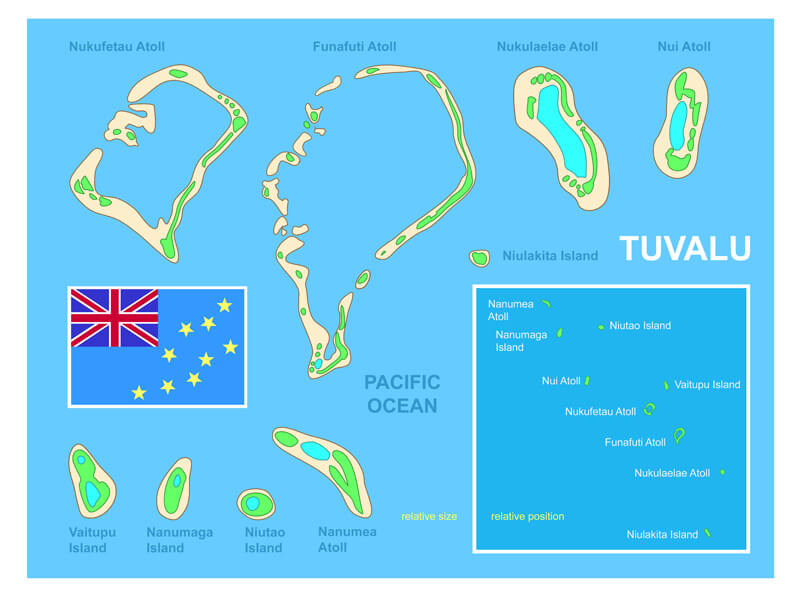
1. Tuvalu is a country in the Pacific Ocean and is part of a region called Oceania. The nine islands of Tuvalu lie in the South Pacific about half way between Australia and Hawaii.
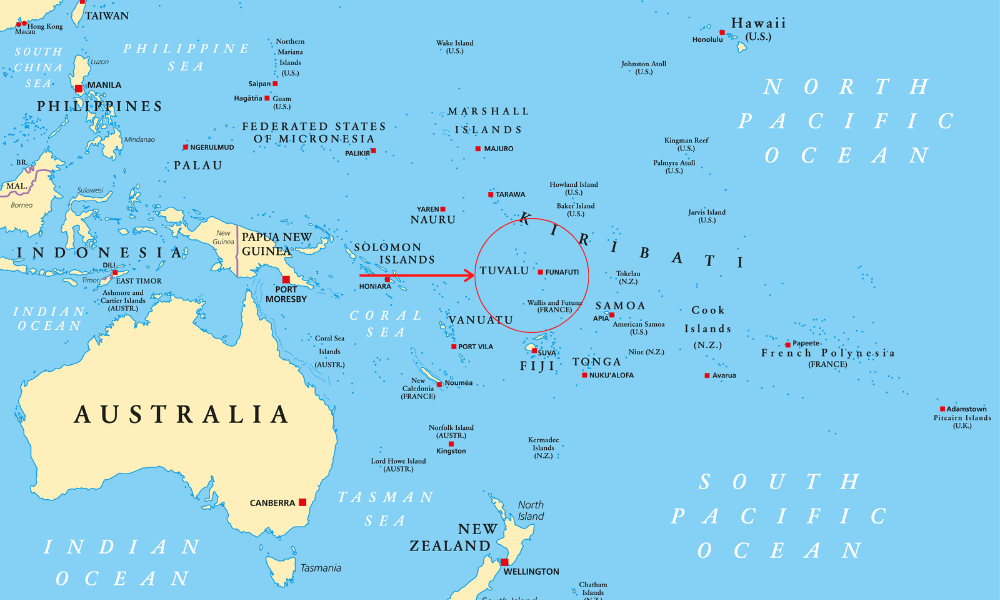
2. Tuvalu is an archipelago of nine islands with three reef islands and six atolls. The archipelago covers a land area of just about 26 square kilometres or 10 square miles.

Map of Tuvalu: Tuvalu lies halfway between Australia and HawaiiTuvalu lies halfway between Australia and Hawaii

The nine islands that spread out between of and 10° South latitudes and all islands are very flat. Six of the islands have large lagoons that open up to the ocean, which makes the environment very vulnerable to any sea level rise.

3. Tuvalu is one of the smallest countries in the world and the islands belongs to the Polynesian islands, which are a region in Oceania. Actually, Tuvalu is the fourth smallest country in the world and the second smallest in Oceania after Nauru!

Did you know?

  • Tuvalu is slightly larger than Nauru. Tonga is about 30 times larger than Tuvalu and Samoa is about 110 times larger! 
  • Tuvalu is a bit smaller than the city state of Macau (China) in Asia.
  • The smallest state of the USA, Rhode Island is about 100 times larger than Tuvalu. In fact, Tuvalu's land area is in total about half the size of Manhatten/ New York, only that much less people live in Tuvalu!

4. Funafuti is the largest atoll of Tuvalu and Funafuti is also where the capital is located.

Map of TuvaluMap of Tuvalu

Facts about Tuvalu
Geography

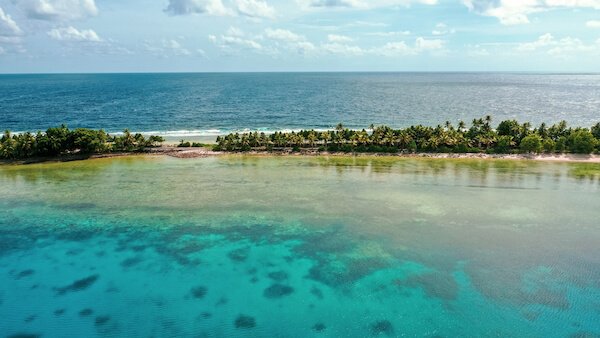
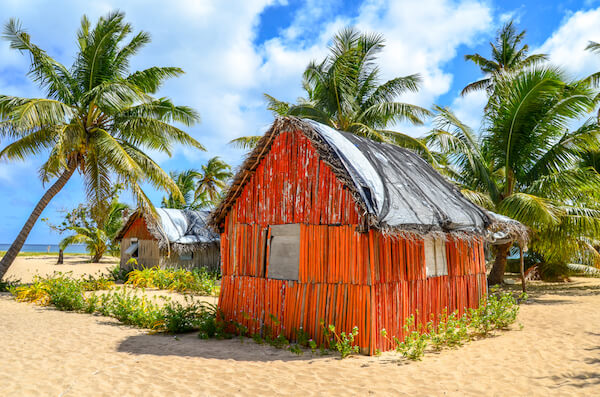
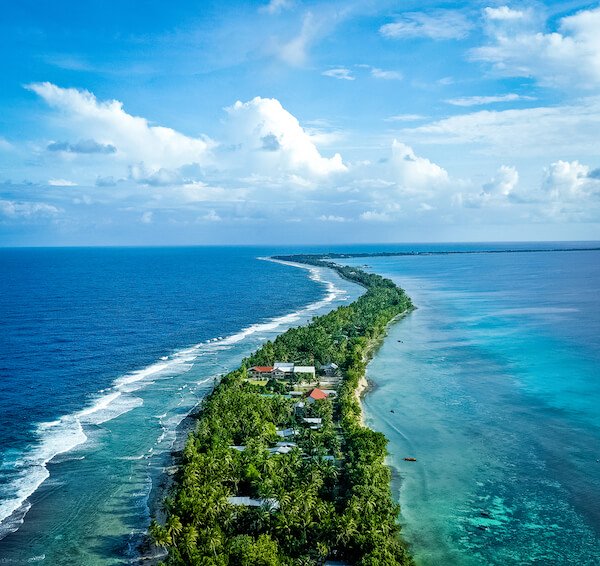
5. The islands are very flat and consist of poor soil and there are some swampy areas where mangroves grow. Coconut palms, pandanus trees and hibiscus bushes are very common vegetation on the islands. The average land height in Tuvalu is about two meters or 6.5 feet.

The highest point in Tuvalu is only about 4.6 metres/ 15 ft high! This is actually a sand dune on the country's southernmost island of Niulakita.

As the country is so low-lying, the islands are under sever threat of becoming inhabitable. Climate change with sea-level rise and increasing temperatures is an acute risk to the country.

Lowlying islands of TuvaluLowlying islands of Tuvalu

6. Tuvalu is home to less than 10,000 people. About 60% of the population of the country live in and around the capital city on Funafuti. Only eight of the nine islands of the country are inhabited.

(Source: Tuvalu Central Statistics Division - accessed 10 September 2026)

Did you know?

    The main settlement or village called on the Funafuti atoll is called Vaiaku and houses about 6,000 people.

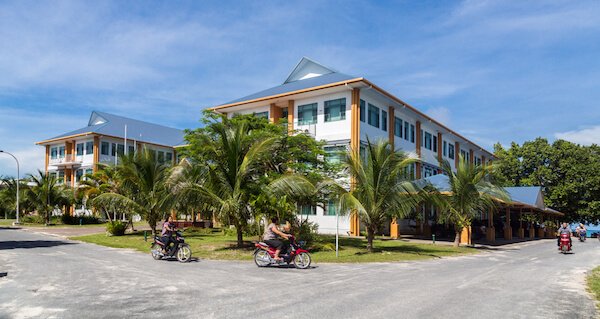
7. The island of Funafuti houses the government buildings. The highest and largest building of the country is Tuvalu House which has three floors! This landmark building is the home of the Prime Minister of Tuvalu. 

Tuvalu House is the largest and highest building in the country - image by maloff/shutterstock.comTuvalu House

8. The climate is tropical and although tropical cyclones are rare, the country suffers from the rise of sea level due to climate change. Tuvalu has two seasons: a wet season that usually lasts from November to April and a dry season that is from May to October. 

Facts about Tuvalu
People 

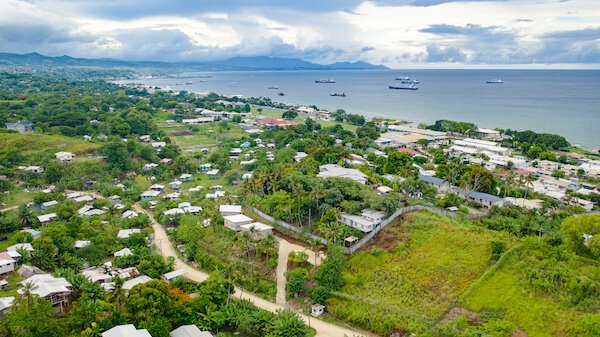
9. Tuvalu is one of the most densely populated countries in the world, considering its amount of people and the small land area. Most people live on the main atoll of Funafuti.

Tuvalu aerial - Flying over TuvaluFlying over Tuvalu

10. Tuvalu was first settled by Polynesians who probably travelled there from other Pacific islands such as Samoa and Tonga. The islands have been inhabited for many centuries. In 1568, the islands were visited by Spanish explorer Álvaro de Mendaña de Neira. Most Tuvaluans are of Polynesian descent.

11. About 97% of the Tuvaluans are Christians and belong to the Congregational Christian Church of Tuvalu, which is a Protestant church.

12. Tuvaluan children start primary school at the age of 6. Education is compulsory until the age of 15.

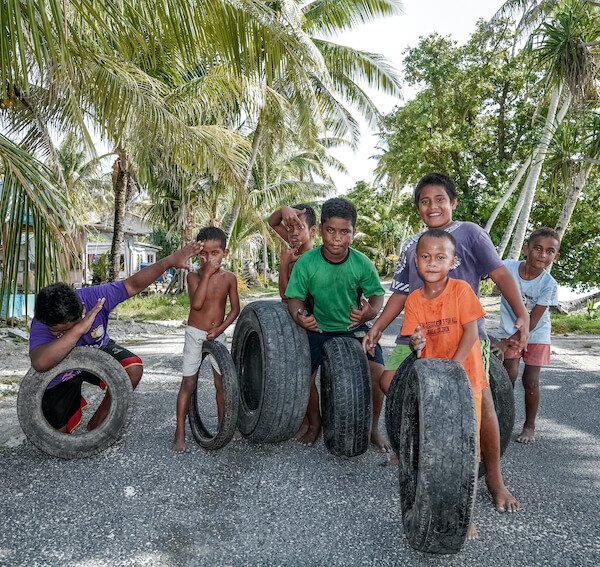
Children in Tuvalu - image by Romaine W/shutterstock.comChildren in Tuvalu - image by Romaine W

13. The national languages of Tuvalu are Tuvaluan and English. Tuvaluan is a Polynesian language and spoken by almost all Tuvaluans. English is widely used in government, education and official communication. However, only few written documents are available in Tuvaluan.

14. Most people on the Tuvalu islands work in the fishing industry. Fishing and government services are among the main income sources. 

15. The most popular sports in Tuvalu are soccer or football, volleyball, handball as well as the traditional sports called kilikiti, which is similar to cricket, as well as te ano, which is similar to volleyball.

16. One of the best-known Tuvaluan traditions is the fatele, which is a group performance combining singing, dancing and clapping to lively music. This energetic dance is performed at many community celebrations, and also to welcome and honour visitors and guests. Both men and women wear flower garlands and headdresses called fou or fau, and special skirts, called titi, that are made with coconut fibers, pandanus or pulaka leaves or a lavalava that is a wrap skirt.

See here a video from Tuvalu Language Week where you can hear the sound of this unique language

17. Weaving and creating traditional woven handicrafts such as fans, mats, baskets, necklaces or woodcarvings are very popular in Tuvalu. Often pandanus leaves and hibiscus fiber are used to create mats, hats and baskets. These crafts also provide an additional income to many families.

Facts about Tuvalu
Economy

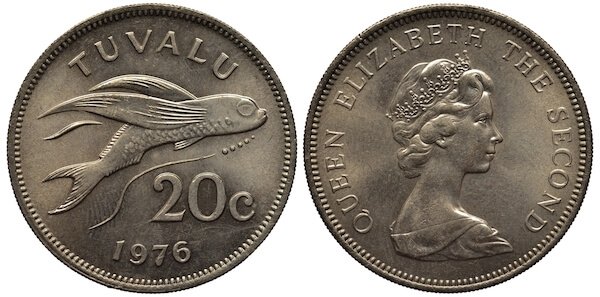
18. The currency of Tuvalu is called Tuvaluan dollar. However, there are no Tuvaluan banknotes, the people use the Australian dollar banknotes, but there are Tuvaluan coins.

Tuvaluan coins - 20 centsTuvaluan coins

19. Fishing is the main income source for most people and almost one third of the population live below the poverty line, that means they have less than 1.90 US dollars per day for all their living expenses. Most people live from subsistence farming and fishing. 

20. Tuvalu's natural resources are fish, seafood and coconuts. The main export products are thus fish and seafood. Thailand, Singapore and the European Union as well as China and Japan, are the main trading partners of Tuvalu. Due to its limited resources, the country is dependent on foreign aid and grants.

21. Most of the visitors to the islands come from Australia, Fiji, New Zealand and the USA.

(Source: Tuvalu Central Statistics Division - accessed 9 September 2026)

Facts about Tuvalu
Flag, Anthem, Name and Government

Tuvalu FlagTuvalu Flag

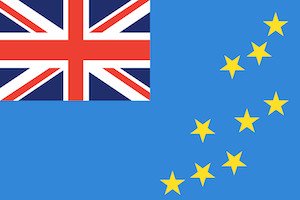
22. The national flag is blue with a Union Jack in the upper left corner and nine yellow five-pointed stars. The blue in the flag represents the Pacific Ocean while the yellow stars symbolise the nine islands. 

23. The national colours are blue and yellow with the Union Jack in white, dark blue and red. The motto of the country is "Tuvalu for the Almighty".

24. Tuvalu is a constitutional monarchy and a parliamentary democracy. King Charles III is the king of Tuvalu and is represented in Tuvalu by a governor general. Feleti Teo is the Prime Minister of the island country since February 2024. However, Tuvalu is unique as it does not have any political parties!

All Tuvaluans aged 18 years and older can elect the 16 members of Parliament that will serve the nation for four years. These 16 parlamentarians elect the prime minister via secret vote.

Tuvalu is part of the United Nations and the Commonwealth of Nations. 

25. The national anthem of Tuvalu is in Tuvaluan and called "Tuvalu me the Atua" which translates to "Tuvalu for the Almighty".

26. The name 'Tuvalu' comes from the Polynesian language means 'eight standing together' as only eight of the nine islands are settled by Tuvaluans.  

Did you know?

  • Funafuti was first named Ellice's Island by the British explorers in 1819. The British later claimed the island as a British Protectorate in 1877.
  • Tuvalu became a British colony in 1892. Only in 1978 Tuvalu became independent. Independence Day is celebrated on 1 October.
Facts about Tuvalu
Animals

27. Lizards, turtles and bats are common animals in Tuvalu.

The marine life includes orcas, whales, dolphins, octopuses and many species of fish, corals, algae and invertebrates.
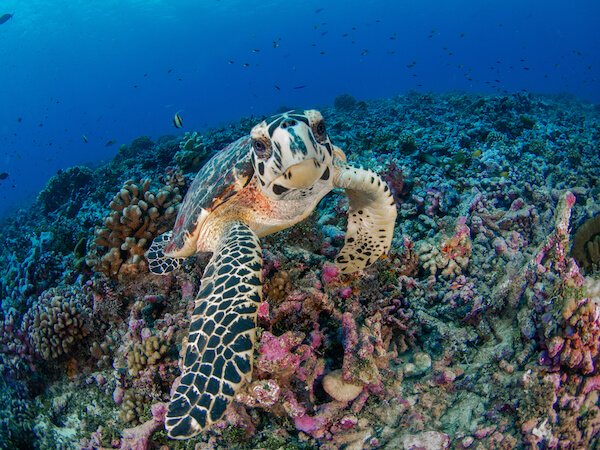
Turtle in Polynesian watersTurtle in Polynesian waters

The Funafuti Marine Conservation Area protects the many marine and plant species living in the lagoon, reef and ocean.

Facts about Tuvalu
Food

28. Typical food in Tuvalu includes fish and seafood, tropical fruits and vegetables such as coconut, figs and bananas. Breadfruit and taro as well as coconut and coconut milk are used in many dishes. Food is mostly steamed or cooked over fire or in an earth oven and rarely fried. 

Did you know?

Coconut palms are grown in Tuvalu everywhere! The flesh and milk of the coconutes is eaten, while coconut leaves and fibres are used to make mats, hats, baskets and other objects.

29. Seafood and fish is commonly eaten while pork is eaten mainly at special events and parties. Fishing is an important part of Tuvaluan culture. Traditional knowledge about the best fishing grounds, tides and the importance of healthy coral reefs and oceans is passed down from one generation to the next. 
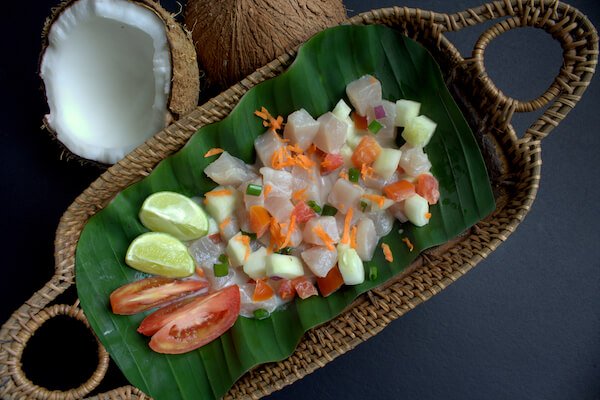
Polynesian seafood salad with coconutPolynesian seafood salad

30. Pulaka is a local type of root vegetable grown in the Tuvalu wetlands. Pulaka is similar to taro and toxic if eaten raw, so the 'swamp crop' is always cooked or steamed.

Excursion: Tuvalu, Samoa and Tonga
More about the Polynesian Islands

Samoa, Tuvalu and Tonga are all Polynesian island nations that have cultures that are strongly connected to the ocean, family and community.

Traditional music, dancing, storytelling and weaving as well as community celebrations are important in all three countries, but see here where they differ.

Here is a short comparison of the three Polynesian islands Samoa, Tonga and Tuvalu. Can you find more differences and similarities?

polynesianislands_tinified

Do you want to know more about Samoa and Tonga?

Facts about Tuvalu
FAQs

Where is Tuvalu?

Tuvalu is a small island country in the south Pacific Ocean with nine islands spread over a large area just below the Equator.

Which is the largest atoll in Tuvalu?

Funafuti is the largest atoll and here most of the Tuvaluans live.

Which language do people speak in Tuvalu?

The official languages are Tuvaluan and English.

Which animals can you encounter in Tuvalu?

There are lizards, sea turtles, bats, dolphins, reef sharks and many species of colourful fish. Humpback whales and orcas also are in the ocean waters.

Which is the highest point in Tuvalu?

Tuvalu is an archipelago of lowlying islands. The highest point is Niulakita, which is only 4.6 metres or 15 feet above sea level.

Facts about Tuvalu
Resources

Facts about Tuvalu - Comparison

Now a last recap and over to you again!

Let's compare Tuvalu with Tonga and Samoa and test your knowledge about the Polynesian islands. Here is our worksheet for you to download - for free!

Simply click on the image tile below! Have fun!

polynesian islands comparison tile

Sources for Tuvalu Facts page:

  • Tuvalu Central Statistics Division. "Demography." Stats.gov.tv Last updated 30 October 2025. Last accessed 10 September 2026
  • Pacific Community - Statistics for Development Division. "Tuvalu". Sdd.spc.int. Last accessed 10 September 2026
  • Tourism Tuvalu. "TimelessTuvalu." TimelessTuvalu. Last accessed 10 September 2026

Image Credits on Facts about Tuvalu: photo stock from shutterstock and wikicommons, if not otherwise stated.

We hope you enjoyed reading our Tuvalu Facts. Please bookmark this page and spread the word. We will add more information in the near future.

Popular Pages
Oceania facts for Kids by Kids World Travel Guide
Ocean facts for Kids by Kids World Travel Guide

Back from Tuvalu Facts to Kids-World-Travel-Guide

Share this page:
Enjoy this page? Please pay it forward. Here's how...

Would you prefer to share this page with others by linking to it?

  1. Click on the HTML link code below.
  2. Copy and paste it, adding a note of your own, into your blog, a Web page, forums, a blog comment, your Facebook account, or anywhere that someone would find this page valuable.

More about the Pacific Ocean

pacific ocean facts

Fun Facts

Continent Facts for Kids by Kids World Travel Guide
Flag Facts for Kids by Kids World Travel Guide
Ocean Facts for Kids by Kids World Travel Guide
Desert Facts - Kids World Travel Guide
Landlocked Countries - Facts for Kids - Kids World Travel Guide
Megadiverse Countries - Kids World Travel Guide Facts for Kids
Animals around the world - Kids World Travel Guide Facts for Kids

Food around the World

Food in Chile - Food around the World by Kids World Travel Guide
Food in China - Food around the World by Kids World Travel Guide
Food in France - Food around the World by Kids World Travel Guide
Food in Germany
Food in Italy - Food around the World by Kids World Travel Guide
Food in Poland - Food around the World by Kids World Travel Guide
Food in South Africa - Food around the world by Kids World Travel Guide
Food in Sweden - Food around the World by Kids World Travel Guide
foodinuruguay
Christmas Food - Food around the World by Kids World Travel Guide

Fun Games

Trivia Fun for Kids by Kids World Travel Guide
Geography Trivia by Kids World Travel Guide
Science Games for Kids by Kids World Travel Guide

Like what you read?

Simply share the html code below. Copy and paste onto your website, blog or Facebook page: 

<a href="https://www.kids-world-travel-guide.com/facts-about-tuvalu.html">Kids World Travel Guide: Facts about Tuvalu for Kids</a> 

Like us on Facebook

Competition 2026 

competition 2026