- Homepage
- Australia/Oceania
- Kiribati
30 Facts about Kiribati for Kids:
Geography and Wildlife

Kiribati is a country of 33 coral atolls located in the Pacific Ocean around the Equator. Kiribati is the only country in the world that spans over all four hemispheres!
Our fun facts about Kiribati will help you learn more about one of the world's famous "Christmas islands". Discover with us what this tiny Pacific island nation is famous for. Now let's begin with our popular snapbox!
 Kiribati - At a Glance
|

What will you find on our Kiribati Facts page:
30 Kiribati Facts for Kids
Here are some interesting facts about Kiribati which were chosen and researched especially for kids.
Facts about Kiribati
Geography - Where is Kiribati?
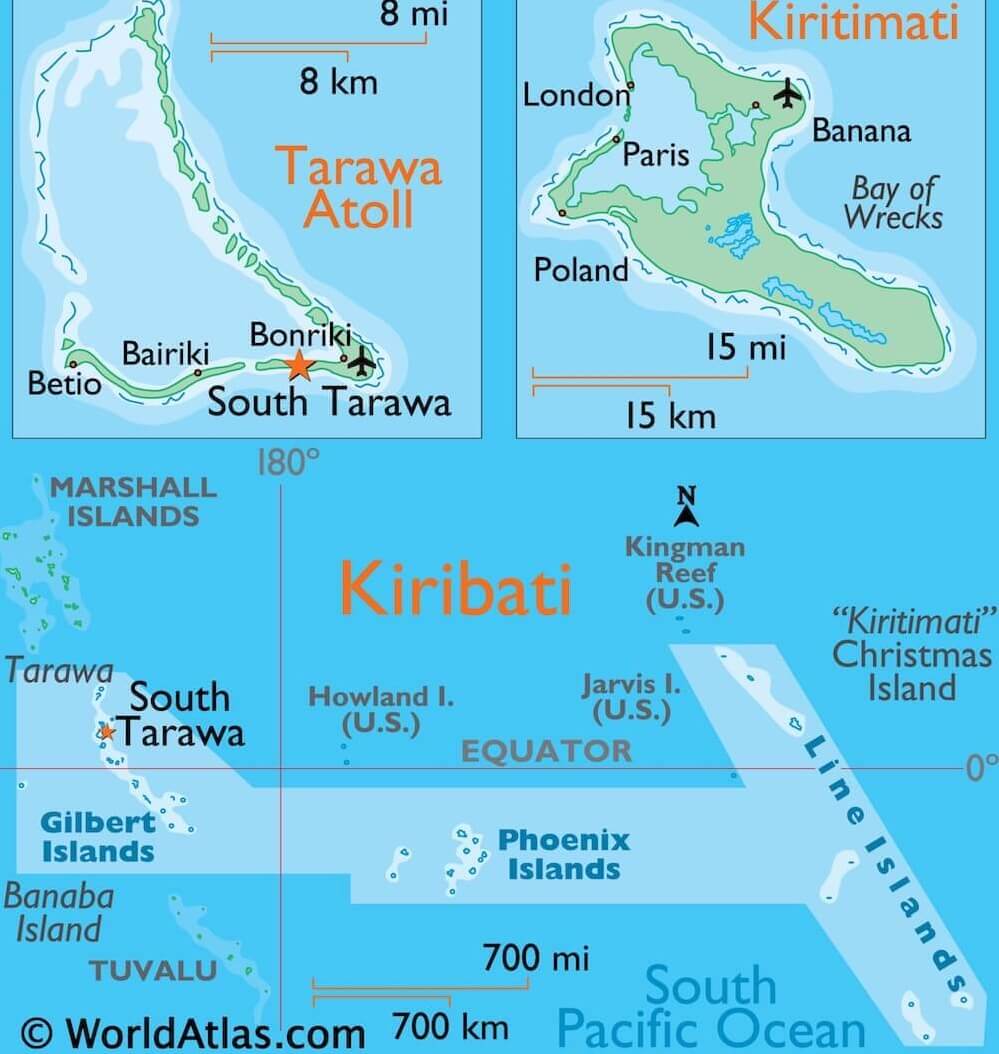
1. Kiribati is an island nation in Oceania. The country includes three island groups and consists of 32 low-lying coral atolls and one raised coral island called Banaba.
Only 20 of the 33 atolls are inhabited. The country is severely affected by rising sea levels.
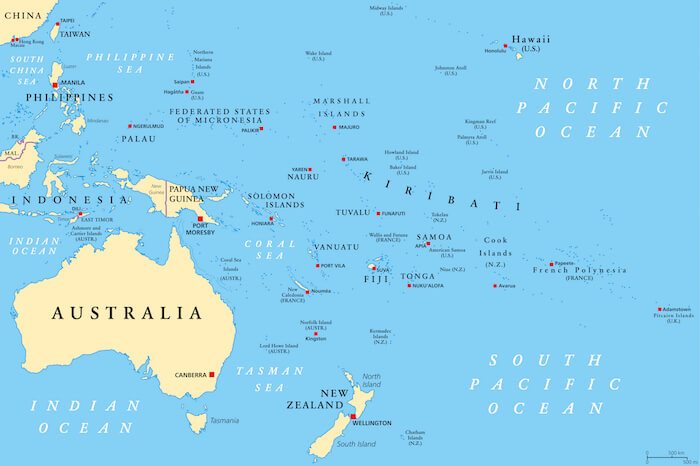 Map of Kiribati in Oceania
2. Kiribati is the English name for the islands, while the locals call the islands by the name Kiritimati. This again is pronounced in the Gilbertese language sounding like "kirisimas " which then created the name "Christmas island". Kiribati in fact is pronounced as 'Kiri-bass' as the locals pronounce the 't' as an 's'.
3. Kiribati is the only country in the world that has islands spread across all four hemispheres! The Republic of Kiribati belongs to the region of Micronesia and the atolls are spread around the equator.
4. The Line islands are the first islands on the date line that greet the new day.
5. The nearest neighbouring nation is Nauru. Kiribati is located about halfway between the US island of Hawaii and Australia.
6. The capital is South Tarawa which is located on Tarawa island. Here the country's parliament and some government buildings are located.
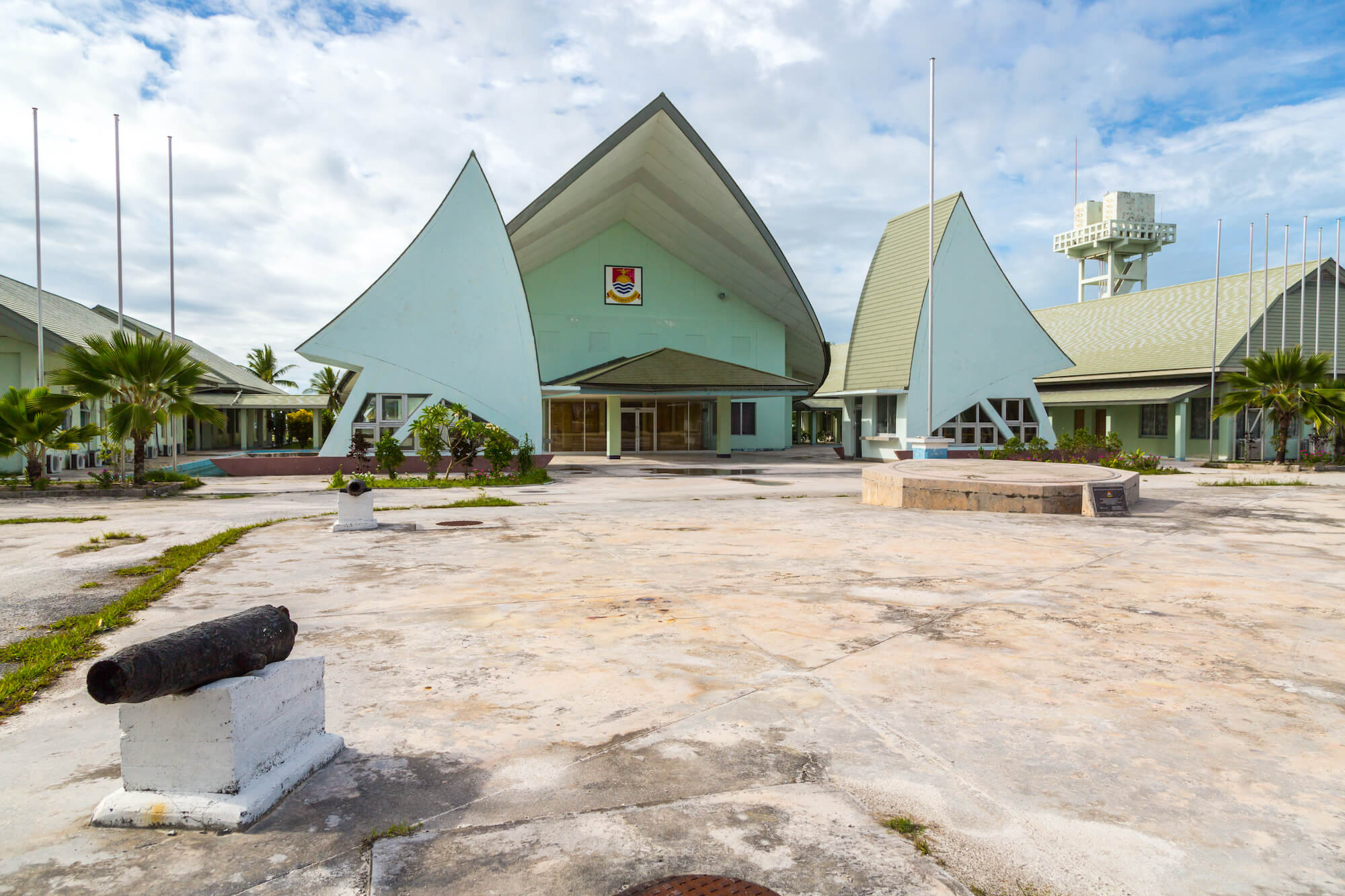 Government buildings in Kiribati - image by Maloff
7. Kiritimati or Christmas island is the largest atoll in the world that is formed by corals. On Kiritimati, there are five villages. Interesting are the names of the villages: Tabwakea, the largest village, London, Banana, Poland and Paris (now only ruins to see).
8. The highest point of the country is on Banaba island, which is a raised coral island. The island's highest point is at only 81 m/ 266 ft above sea level. The island was once was rich in phosphate rock but due to extensive mining the island's center is not inhabitable anymore.
9. The climate is hot and humid in Kiribati and average temperatures are around 26°C and 32°C/ 79°F - 90°F throughout the year. The wet season last from November to April.
Facts about Kiribati
History
10. Kiribati was settled as early as 3000 BCE by Austronesian peoples. Later Polynesians and Melanesian people came to the islands to settle there as well. The first European explorers visited the islands in the 17th century. In the 18th the British claimed the islands and some islands were occupied by the Japanese in World War II. Only in 1979 the country became independent.
11. Kiribati moved the international date line eastwards, so the country could lie on one time zone. This move made Kiritimati island in Kiribati the first inhabited place to see in the new millennium in the year 2000.
12. Kiribati is a parliamentary republic and David Adeang is the president since 2023. Voting is compulsory for all aged 20 years and older. Parliament is elected for three years and there are 19 members of Parliament, however, there are only two women among the members of Parliament.
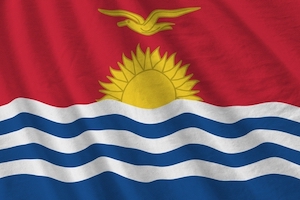
Flag of Kiribati13. The national flag colours are red, blue and white with a yellow sun representing the sun and sea and the frigate bird or seabird represents power and freedom. The 16 rays of the sun refer to the Gilbert islands and Banaba island. The motto of Kiribati is 'health, peace and prosperity'.
14. The tiny country is one of the countries threatened most by climate change. One of the atolls experiences complete flooding and is since submerged by sea water. Kiribati is one of the countries that is feared to become inhabitable by 2100 according to UN reports.
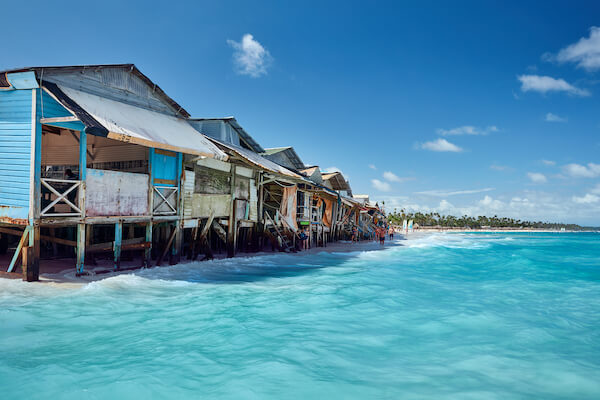 Kiribati houses on stilts
Facts about Kiribati
People
15. About 120,000 people live in Kiribati. More than half of all islanders live on Tarawa island.
The people are referred to as i-Kiribati. Most of the i-Kiribati live from subsistence farming and fishing.
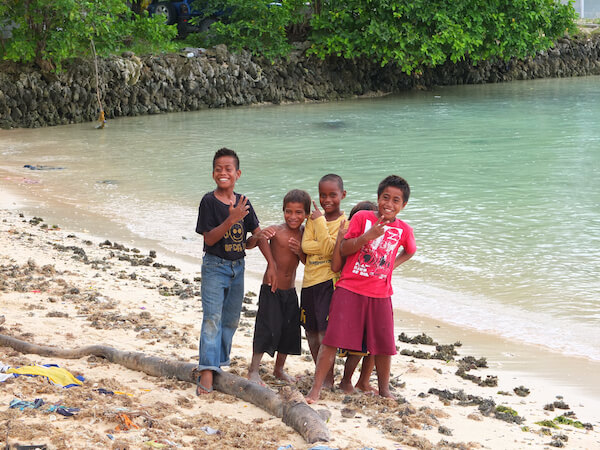 Children in Kiribati - image by Robert Szymanski
16. Due to the island's isolation in the vast Pacific Ocean, the Kiribati culture has been greatly preserved and most of the islands having their own unique traditions and practices. Many of the islanders still live in big and extended families where respect towards elders and guests, mutual support and caretaking of the frail and aging is self understood.
However, many young people move off the island for furthering their education, as there are little opportunities to find jobs or studies.
17. The official language of Kiribati is Gilbertese or Taetae ni Kiribati and English. English is widely spoken and understood and used in government institutions and schooling. "Mauri" means "Hello" or "welcome". "Eng" means "yes" or "okay".
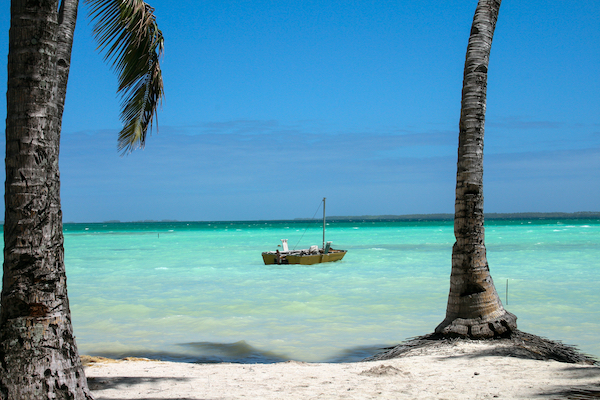 Kiribati scene by Kara Math
18. The most popular sports in Kiribati are Australian rule football, volleyball and canoe racing.
19. The maneaba (communal meeting house) is the center of the islands' communities.
20. More than 90% of the i-Kiribati are Christians. Christianity was introduced in the 1800s.
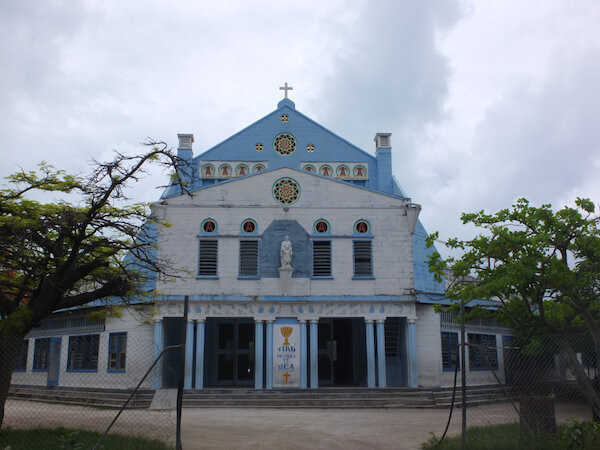 Church on Tarawa
Facts about Kiribati
Landmarks and Attractions
21. Due to the remoteness and limited infrastructure, Kiribati is not one of the main tourist destinations, thus tourists seeking adventures and learning about Micronesia's history will be very welcome by the friendly locals.
Among the main tourist attractions are the World War II sites as well as the cultural sites such as visits to a traditional maneaba, a meeting house and local community building, and of course water-based activities such as world-class fishing and diving.
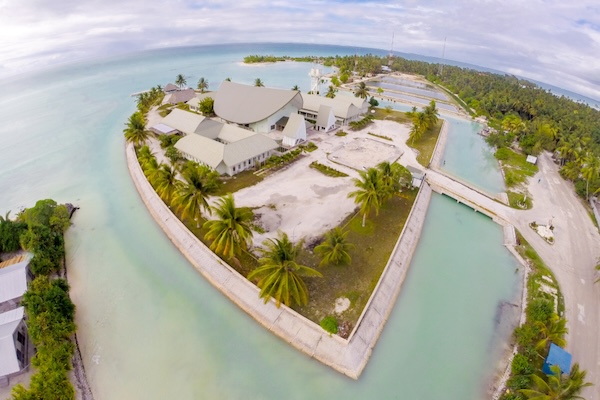 Kiribati parliament
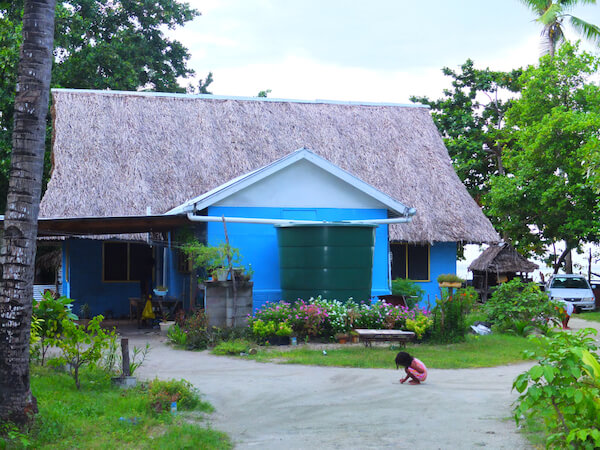 House in South Tarawa
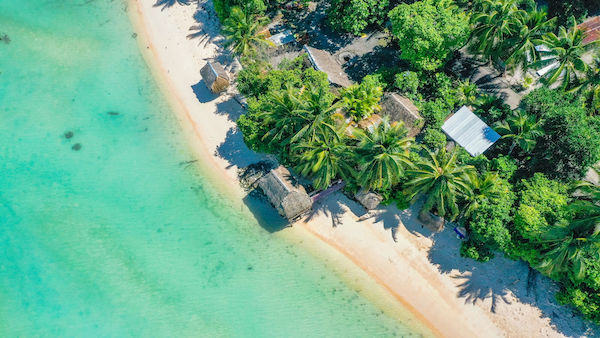 Kiribati as seen from the plane
Facts about Kiribati
Economy
22. Kiribati is famous for the natural mineral Phosphate which is found right under the lime surface of the islands - similar to neighbouring country Nauru.
Did you know?
|
23. The main agricultural products are fish (mainly tuna and marlin), coconuts and copra. Most people live along the coastal strip where mango, guava and taro are the main crops.
Deep-sea fishing is a major industry sector.
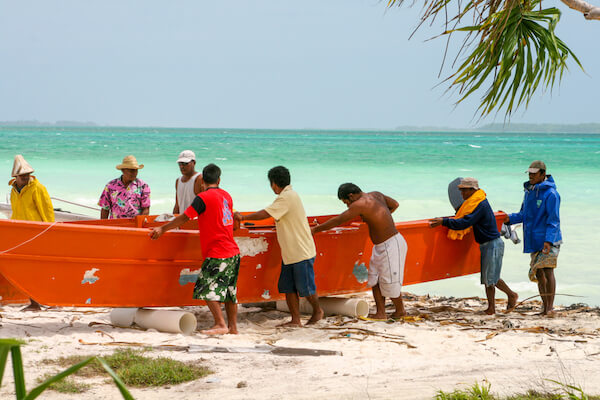 Kiribati fishermen - image by Kara Math
24. The currency is the Australian Dollar.
25. The main trading partners are Thailand and Philippines for exports as well as China, Fiji and Australia for imports.
Facts about Kiribati
Animals
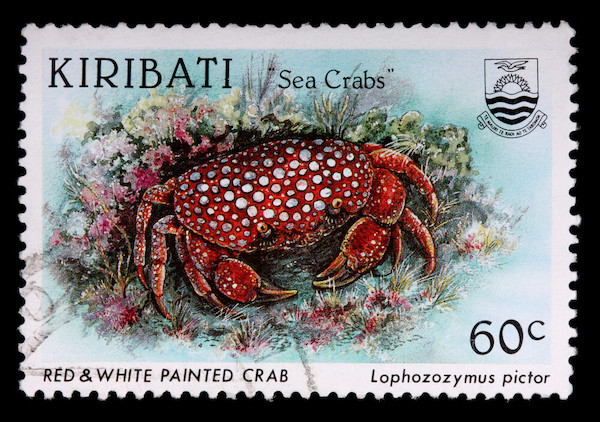
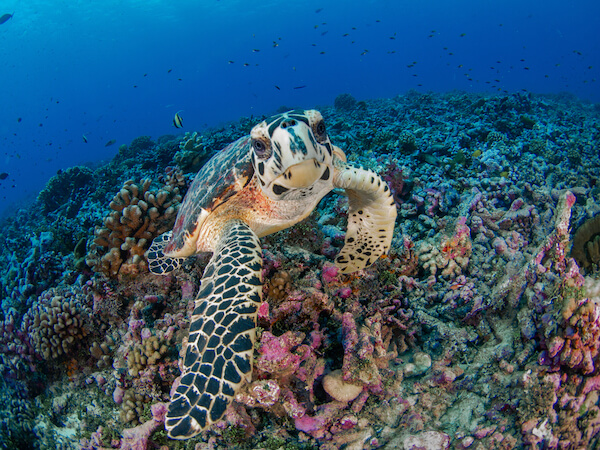
26. Kiribati's wildlife consists of mainly marine animals and bird life. Around the islands you can see green sea turtles, hawksbill turtles, dolphins, coconut crabs, reef fish and many seabirds, including frigate birds, boobies, terns and tropic birds. There are many species of fish and coral.
In Kiribati, there is only one animal found in the country that is endemic which means is only found here. This is the Bokikokiko, also called Kiritimati reed warbler, a small grey bird. The endangered bird lives in the scrublands of the island. See how the bird looks like here.
27. Coral reefs surround the islands. The reefs are home to 20 marine mammal species and just over 500 fish species but the habitat suffers from overfishing and heat stress due to climate change.
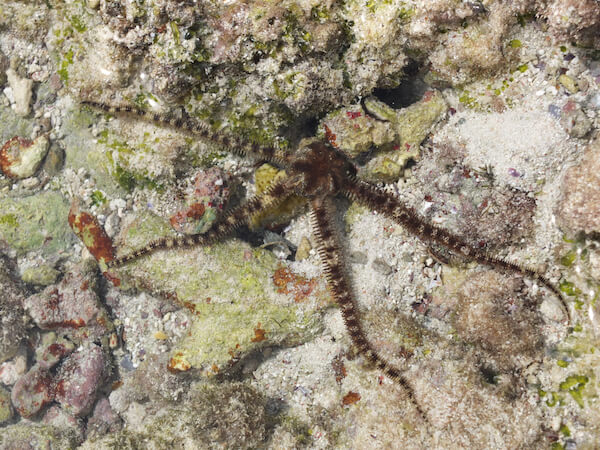 Brittle star in Kiribati waters - image by Robert Szymanski
Sadly the Kiribati islands only have very low biodiversity due to earlier phosphate mining activities.
The Pacific Ocean waters surrounding the islands, however, are still rich in sea life but this is also the main income source for the people living in Kiribati. Overfishing is a main environmental issue.
Facts about Kiribati
Food
28. Fresh local food includes seafood, chicken, pork and staple crops as coconut, breadfruit, taro, pumpkin and banana. Most other foods such as rice, flour or sugar must be imported.
29. Most dishes contain coconut or fish, crayfish and other seafood and Vitamin C-rich "toddy". Toddy is the name for the sweet sap that comes from the coconut tree's flower leaf called spathe. This sap is then used as a sweetener like honey or is fermented into a vinegar or alcoholic coconut wine.
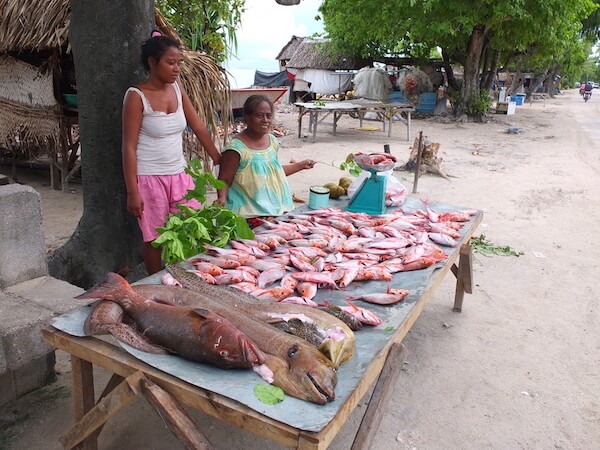 Market in South Tarawa - image by Robert Szymanski
Shellfish, prawns and crabs are served with every meal. Fish often is eaten raw, sashimi-style, or as salted sun-dried salt fish jerky.
30. The country imports about 50% of their food supply. Only few crops are thrive in Kiribati as the soil is very poor. Breadfruit, pandanus, papaya (paw paws), mango and taro are the main crops.
Facts about Kiribati
FAQs
Where is Kiribati?
Kiribati is an island country in the central Pacific Ocean and is part of Oceania. The islands spread across all four hemispheres and are about halfway between Hawaii and Australia.
Which are the neighbouring countries of Kiribati?
The neighbouring island countries include Nauru, Tuvalu, the Marshall Islands and Fiji. Banaba, the westernmost island of Kiribati, lies only about 300 km from Nauru.
Which is the highest point in Kiribati?
The highest point is on Banaba Island. It is about 81 m/ 266 ft above sea level.
Which language do people speak in Kiribati?
The main languages are Gilbertese, which is also called te taetae ni Kiribati, and English.
Which animals can you see in Kiribati?
There are many species of seabirds, turtles, crabs, fish and corals. There is one endemic bird which is called Bokikokiko, the Kiritimati reed warbler, which is a small grey bird.
Facts about Kiribati for Kids
Resources
Sources for Facts about Kiribati page:
- Kiribati Tourism Board. "Culture". KiribatiTourism. Last accessed 8 September 2026
- PacificPSDI. "Kiribati. Pacific Tourism Sector Snapshot." PSDI. November 2021. Last accessed 8 September 2026
- Greenpeace. "Overfishing in Kiribati." Last updated 14 February 2018. Last accessed 8 September 2026
- UN Environment. "Kiribati." CBD. Last accessed 8 September 2026
- WorldAtlas. "Map of Kiribati." Last updated November 2020. Last accessed 8 September 2026
- Tourism Authority of Kiribati. "I-Kiribati People." Kiribati Tourism. Last accessed 8 September 2026
Image Credits on Facts about Kiribati: photo stock from shutterstock and wikicommons, if not otherwise stated.
Popular Pages
 |
 |

Competition
2026

Recent Articles


-
Facts about Tuvalu for Kids: Geography, People and Wildlife
Sep 11, 26 07:15 AM
Explore our facts about Tuvalu and learn about the Polynesian island nation and its geography, people, economy, culture and animals - Worksheets included -
Animals in Norway for Kids: Wildlife Facts
Sep 03, 26 10:50 AM
Animals in Norway explained: meet reindeer, moose, polar bears, whales and puffins, with habitat facts and a short quiz for class. -
Norway Facts for Kids: Fjords, Vikings and Reindeer
Sep 01, 26 09:01 AM
Learn Norway Facts about the land of the Nobel Prize, the Vikings, reindeers, trolls and other attractions
More about Oceania

Fun Facts
Fun Games

Like what you read?

|
Simply share the html code below. Copy and paste onto your website, blog or Facebook page: <a href="https://www.kids-world-travel-guide.com/facts-about-kiribati.html">Kids World Travel Guide: Facts about Kiribati for Kids</a> |
Like us on Facebook



























Competition 2026