Facts about Greenland
Interesting Greenland Facts for Kids
Here are some interesting Facts about Greenland which were chosen and researched especially for kids.
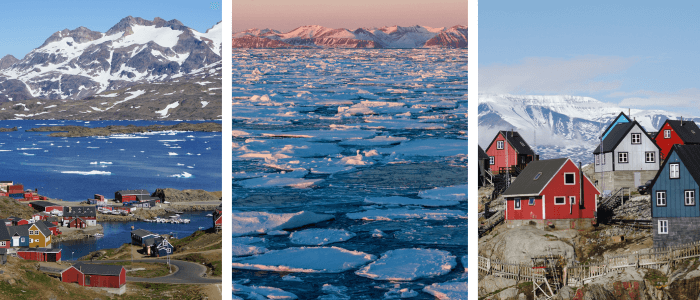 Facts about Greenland: Snow and Ice cover 81% of the island
First let's have a quick glance at the most important basic facts about Greenland:
Greenland - At A Glance
Last updated: 14.01.2026 |

What you will find on our Facts about Greenland page:
Greenland Facts - Overview
- Continent: North America (geographically)
- Country: self-governed territory (autonomous region of the Kingdom of Denmark); not an independent country
- Population: 57,000 people (2025)
- Capital: Nuuk is the capital of the autonomous country within the kingdom of Denmark
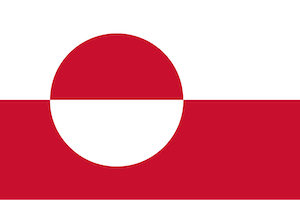 Flag of Greenland
- Name: Greenland or Kalaallit Nunaat which means "Land of the People".
- Official language: Greenlandic (Kalaallisut)
- Literacy: 100% can read and write
- Religion: mainly Christians, of these mainly Lutherans (90%)
- Currency: 1 Danish krone = 100 øre
- National Day: "Ullortuneq" is celebrated on 21 June, introduced in 1983
- National Symbols: red and white (national colours) and the national costume, Kalaallisuut

- History: The first people settled in Greenland around 2500 BCE. These were early Arctic peoples. Around 1000 CE, Norse settlers from Iceland arrived, led by Erik the Red, but their settlements later disappeared because of the harsh climate and difficult living conditions. The Inuit, who came from North America, settled in Greenland from about 1200 CE and are the ancestors of today’s Greenlanders. Denmark and Norway claimed Greenland, and Danish missionaries later brought Christianity to the island. In 1814, after Denmark and Norway separated, Greenland became part of Denmark. During World War II, when Denmark was occupied by Germany, Greenland traded with the United States of America. In 1953, Greenland became a full part of the Kingdom of Denmark and later gained self-government in 2009.
- Prime minister: Jens-Frederik Nielsen (since 2025)
- Head of State: King Frederik X of Denmark (since 2024)
Greenland Geography
Where is Greenland?
Location of Greenland: Greenland is an island in the Arctic region that borders the North Atlantic Ocean as well as the Arctic Ocean. The island is a territory of Denmark which is located in Northern Europe.
The island's landmass sits on the Greenland plate which is part of the North American continental plate. This means that geographically, the island of Greenland is part of the North American continent.
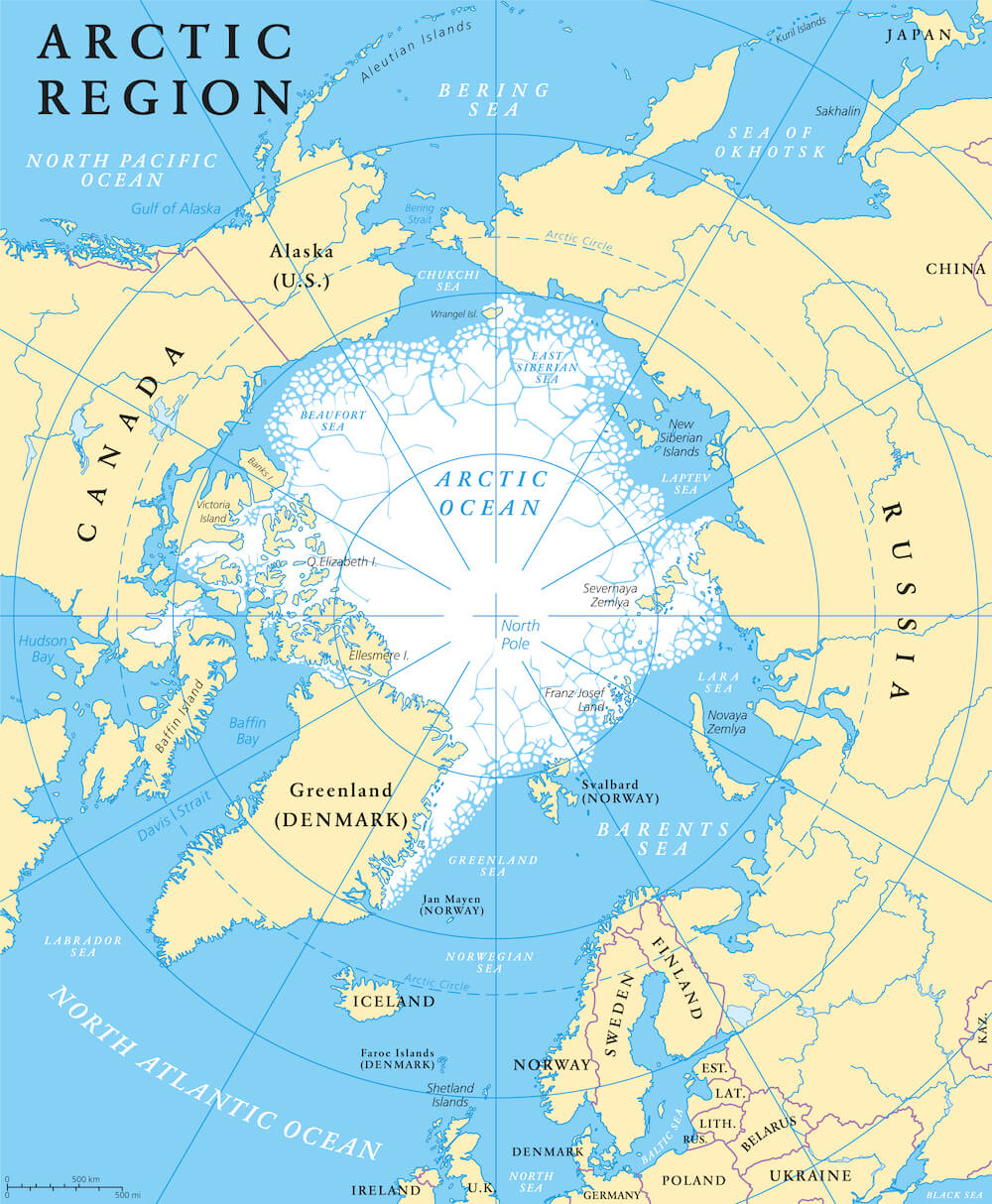 Location of Greenland
Greenland lies to the northeast of Canada and to the west of Iceland. It is part of the Kingdom of Denmark politically, even though Denmark itself is far away geographically.
Did you know?
|
The distance from Greenland to the North Pole is about 740 km/ 460 miles when measured from Cape Morris Jesup, the northernmost point on mainland Greenland.
Greenland’s closest neighbouring country is Canada, which is about 25 km/ 15 miles away across the Nares Strait. The nearest European country, Iceland, is about 1,175 km/ 730 miles away across the Denmark Strait.
Where does the name "Greenland" come from?
The name "Greenland" comes from the Viking explorer Erik the Red. He named the land to make it sound inviting to settlers. Over 1,000 years ago, he founded the first Norse (European) settlements in southern Greenland, near today’s town of Qassiarsuk.
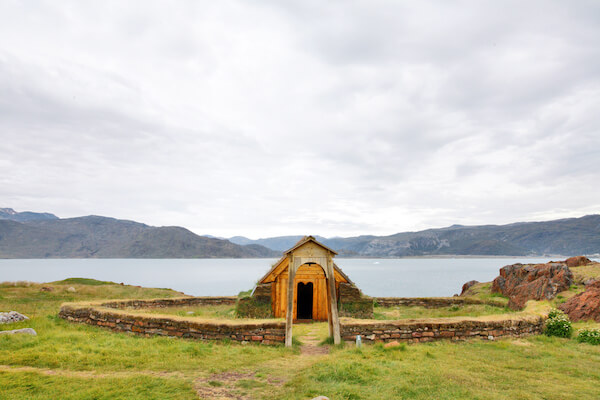 Replica of the first church in Qassiarsuk
Greenland Geography Superlatives
Here are the most fascinating geography superlatives and impressive facts about Greenland:
Greenland Superlatives
|
Greenland is the world's largest island. This island is one of over 443 islands in the North Atlantic Ocean that are part of the Kingdom of Denmark!
The island is the largest ice-covered landmass in the Northern Hemisphere. More than 80% of Greenland is covered by ice and snow.
Greenland is the least densely populated island of our planet. Due to the extensive ice sheet, most people live along the coastline.
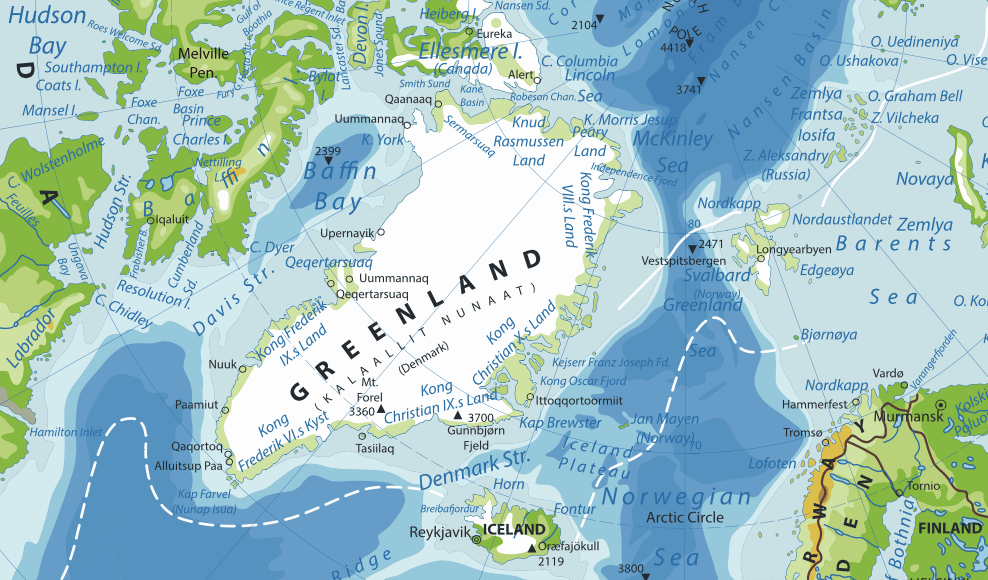 Greenland Physical Map
The Greenland Ice Sheet is the second largest ice sheet in the world (after the Antarctic Ice Sheet). This coast-to-coast ice cap is very important for the global climate.
Some parts of the Greenland Ice Sheet are over a million years old, while the edges are younger and about 100,000 years old. Climate change is causing the ice sheet to shrink faster than ever before. If the entire ice sheet melted, the world’s oceans could rise by up to 7 metres/ 23 feet.
Jacobshavn, also called Sermeq Kujalleq, in western Greenland is the largest and fastest moving glacier on the Greenland ice sheet. The three largest glaciers Jacobshavn, Helheim, and Kangerlussuaq are located in the southern half of the ice sheet.
The Greenland glaciers and ice streams flow into the Arctic ocean, where they "calve" off large chunks of ice.
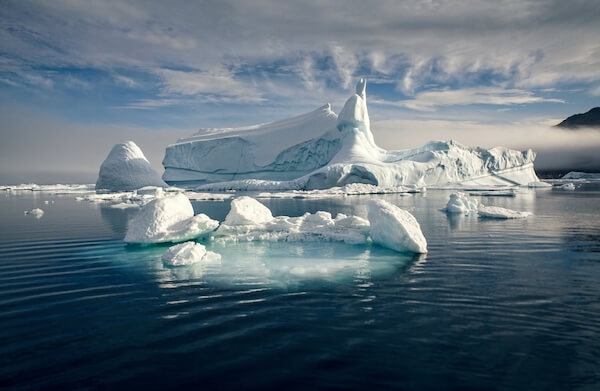 Icebergs seen from Kangerlussuaq
The icebergs can be seen from most towns in Greenland, however, only one road from Kangerlussuaq leads onto the gigantic ice sheet.
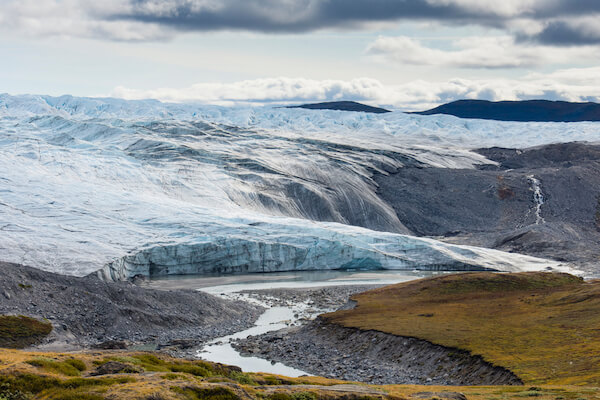 Retreating Kangerlussuaq glacier
Greenland's highest point is the summit of Gunnbjørn Fjeld, a mountain in southeastern Greenland. The summit is the highest peak in the Arctic region rising 3,694 m/ 12,119 ft above sea level. This mountain is a rocky peak that sticks out above the ice and snow of the glacier field.
The Northeast Greenland National Park is the largest national park in the world as well as the world's northernmost national park. It houses many unique Arctic species. This national park is 100 times larger than Yellowstone National Park!
Greenland Ice Sheet
|
Greenland Landmarks and Attractions for Families
- Midnight Sun: Summer is the time to visit as then the temperatures can reach up to 20° C/ 68° F in the months of June, July and August. This is the time to experience the warm magical light of the midnight sun that does not set from June 3 to July 10 in Sisimut.
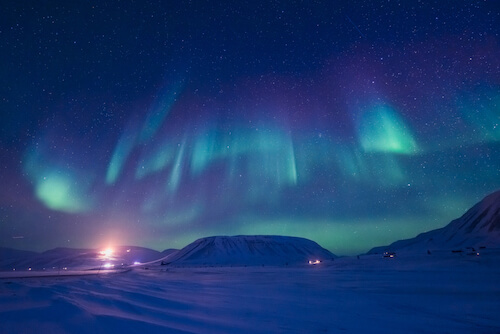
- Aurora Borealis or Northern Lights are a wonderful spectacle can best be admired on clear autumn and winter nights. They are visible during the long polar nights, especially in Sisimiut and Nuuk.
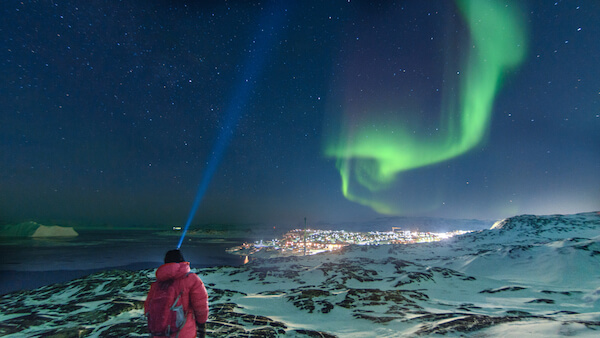
- Disko Bay: Western Greenland is a very popular dog sledding and hiking destination during the summer. A large variety of marine wildlife can be encountered in the large bay. There is also a new hydrophone station in Disko Bay which allows people to listen to the rich underwater soundscape live.
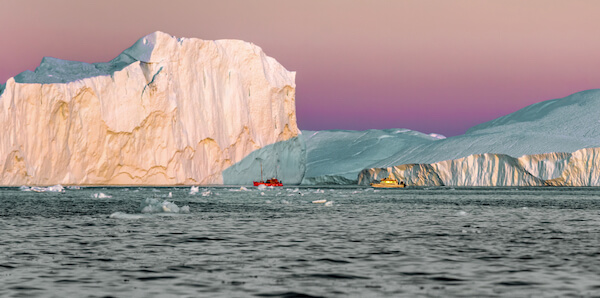 Disko Bay
- Illulisat Icefjord: This landscape has the greatest collection of floating sculptures from the Greenland Ice Sheet. This fjord is amongst the three UNESCO heritage sites of Greenland. The Illusisat glacier is one of the fastest moving glaciers in the world. This is the place where the most renowned scientists come to study climate change.
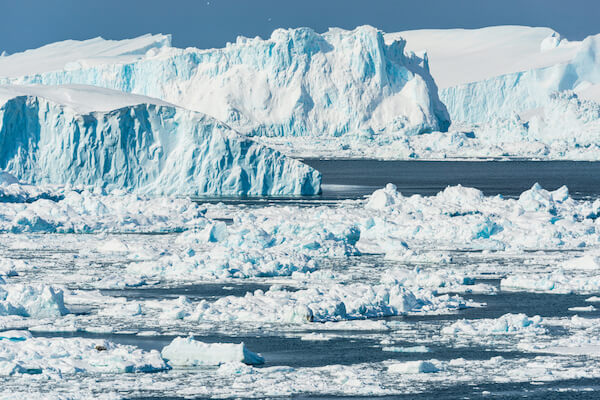 Ilulissat Fjord's ice masses
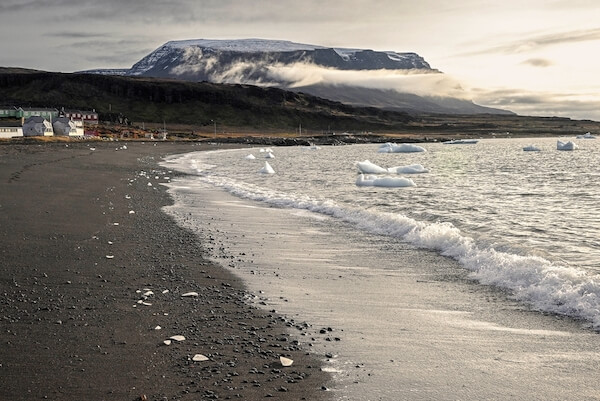 Black sandy beach of Qeqertarsuaq
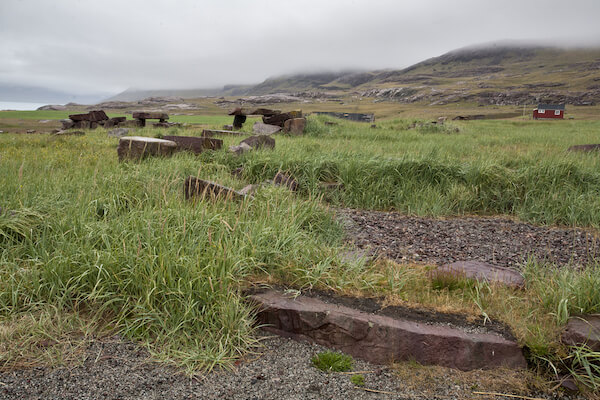 Norse ruins at Garðar
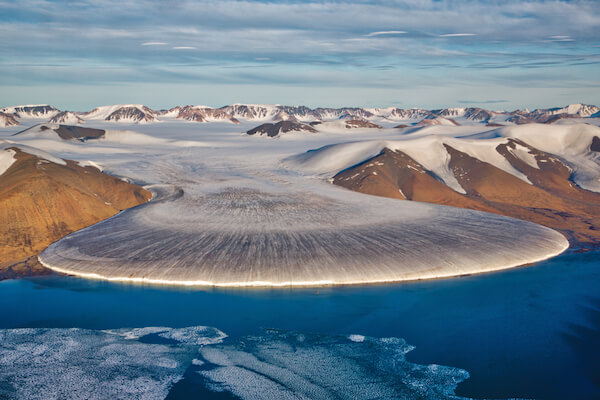 Elephant Foot Glacier off the coast of Northeast Greenland
- Kangerlussuaq: Dog sledding is very popular in Greenland. This is Greenland's most common entry destination for dog sledding adventure travel and experiencing Arctic nature.
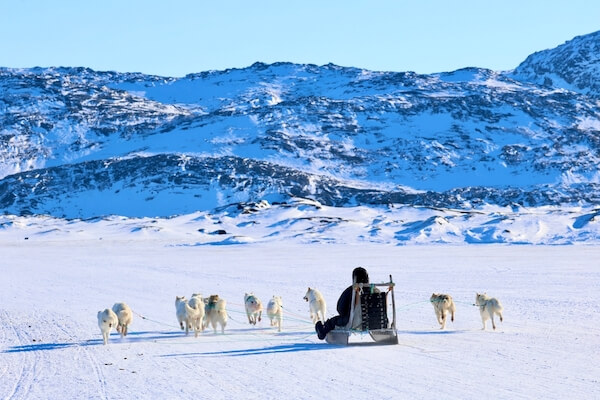 Dog sledding in Greenland
Dog sledding in Greenland is known by the local as main way of transportation and hunting for more than 5,000 years. Tourists now can take part in a more leisurely activity in many towns of the Arctic circle and along the eastern coastline.
Greenland Climate
Greenland has a cold Arctic climate. Winters on the island are long, dark and freezing with lots of snow and ice, while summers are short and cool. In many places, the temperature stays below freezing for most of the year as Greenland is covered by a huge ice sheet. Near the Arctic Circle the sun does not rise in winter and does not set in summer.
Parts of northern Greenland are an Arctic desert. Some areas receive less rainfall than the Sahara Desert, making them some of the driest places on Earth.
Greenland People & Culture
Greenland has only a few cities and towns and is very sparsely populated.
About 57,000 people live on the island, mostly along the southwestern coast and the fjords. The capital city, Nuuk, is the main economic and cultural centre, and around one third of Greenland’s people live there.
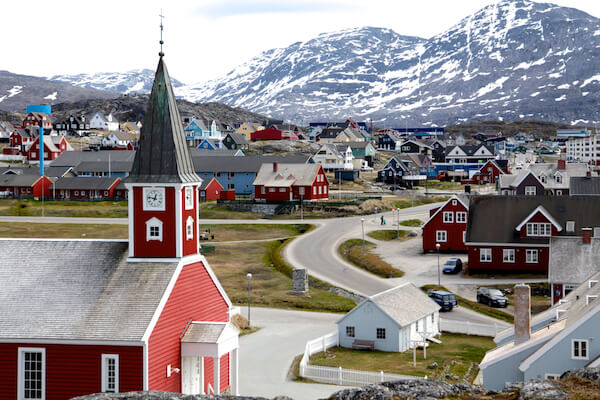 Nuuk with Church of Our Saviour in summer
The capital city Nuuk is located on the southwestern coast and has about 20,000 residents. It was founded in 1728 by the Danish-Norwegian missionary Hans Egede. The name "Nuuk" comes from a Greenlandic word meaning "point of a peninsula."
Other larger towns include Sisimiut and Ilulissat, Qaqortoq, Aasiaat and Ummannaq.
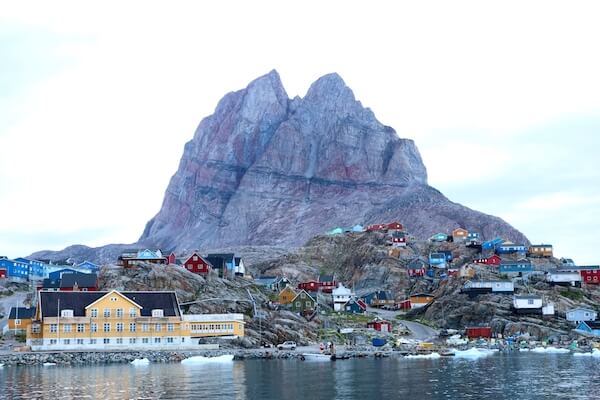 Uummannaq is home to about 1,400 people.
Greenland is also home to the northernmost settlements in the world. These include the town of Qaanaaq (formerly called Thule). Only a small number of people live in these far-northern settlements. There are only 13 towns in Greenland that have more than 1,000 residents, most settlements are very small.
The population in Greenland is mainly made up of Inuit or Kalaallit people (88%) and the reminder are mainly people of Danish and other European descent. The indigenous people are referred to as Kalaallit and this is the largest ethnic group in Greenland.
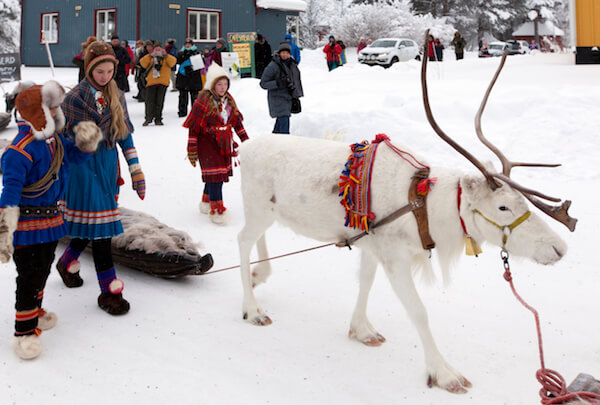
The main traditional festival of Greenland is celebrated on 21 June, the longest day of the year. Then everybody wears the traditional colourful costume.
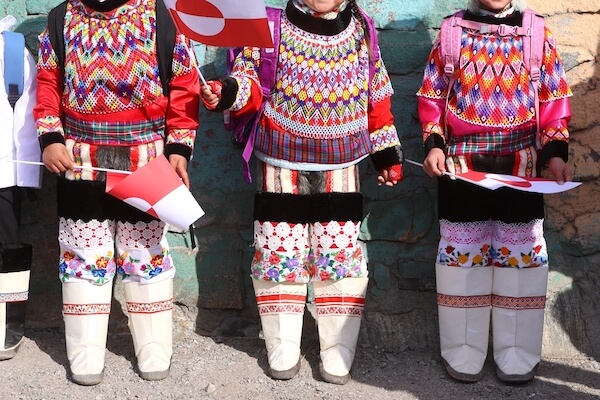 Children celebration in traditional Greenlandic costume - image by Elke Kohler
The traditional dress consists of an "anorak" of which the top half is decorated. The traditional costume is white and has a colourful bead collar. Each colour has a special meaning. Sealskin and sheepskin are part of the national dress as well.
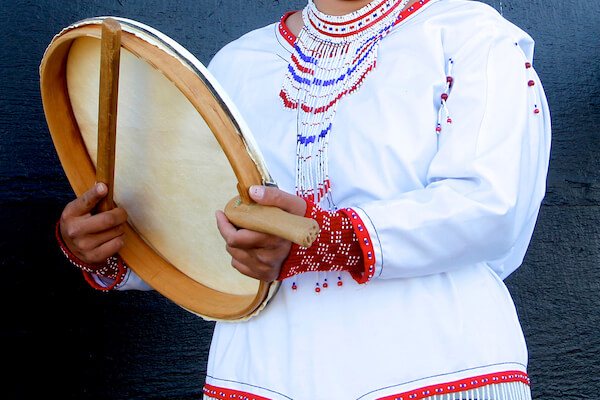 National costume of Greenland and traditional drum
The head of state of Greenland is King Frederik X. (born 1968). King Frederik (the Tenth) is married to Queen Mary, who is originally from Australia. They have four children.
The Greenlandic government is led by Prime Minister Jens-Frederik Nielsen, who is the head of the self-governing territory since 2025.
Musk ox and sheep wool and tupilaks, which are little magical creatures carved out of wood or walrus tusks as well as bone jewellery are fascinating Greenlandic traditional arts and crafts.
The majority of Greenlandic people are Christians and as such Lutheran protestants.
Greenlandic - Language
Greenlandic (Kalaallisut) is recognised as the only official language in Greenland. However, Danish is spoken widely and English is also spoken by many as second language and taught already in primary school in Greenland. Only about 1 in 8 speak Danish as home language. The Greenlandic spoken in most parts of the island is close to the Inuit languages spoken in Canada.
How to say "hello"? The greeting is "aluu" and for goodbye” simply say "baaj".
Facts about Greenland
Economy
Greenland is rich in natural resources such as minerals like zinc, gold and rare earth metals, as well as there are huge potential oil and gas reserves. However, the islands main natural resource is the sea. Greenland's biggest exports are seafood such as halibut, cod and shrimp. Royal Greenland is a major seafood company that specialises in Arctic fish.
Greenland mines some of the valuable minerals and uses hydropower for energy, but mining is difficult because of ice, lack of road infrastructure and the harsh climate.
There are only a few roads in Greenland, most of them are inside the towns and settlements. There are no roads connecting most towns! People usually travel between places by airplane or helicopter. Boats and ferries are also important, especially along the coast in summer. In winter, people often use snowmobiles and dog sleds to travel over snow and ice.
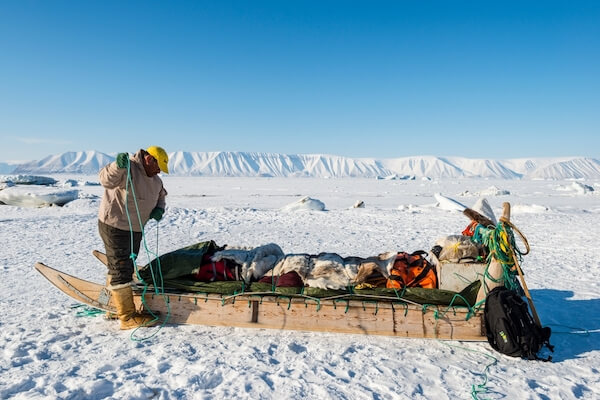 Inuit sledge in Qaanaaq - image by Kedardome/shutterstock.com
Many Greenlanders still hunt and fish for food and live in small settlements. They often combine a traditional way living with jobs in the modern economy.
The main farming area of Greenland is near Narsaq in southern Greenland. The flat land there is used for sheep farming and for growing crops such as potatoes and turnips as well as animal feed for the long winter.
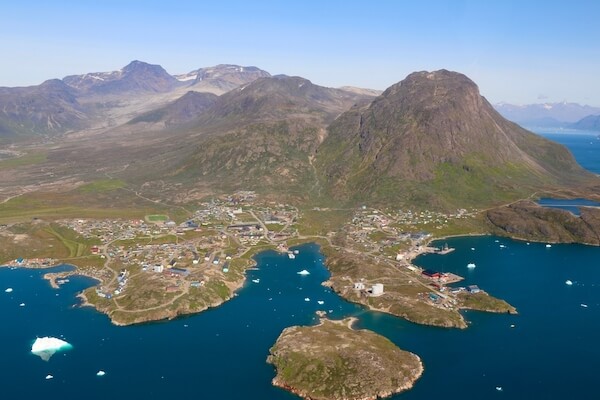 Narsaq in Southern Greenland
The main trading partners are Denmark and the European Union. Greenland also receives financial support from Denmark to pay for schools, hospitals and services.
Tourism is a growing industry in Greenland. About 150,000 people visit the island each year, and around 6% of Greenlanders work in tourism. Greenland is one of the most remote and least visited places on Earth.
Greenland Facts | Animals in Greenland
Wildlife in Greenland includes reindeer, arctic foxes and musk oxen, polar bears, humpback whales, seals and many more.
There are six species of seals in Greenland. Learn more about the different seals here.
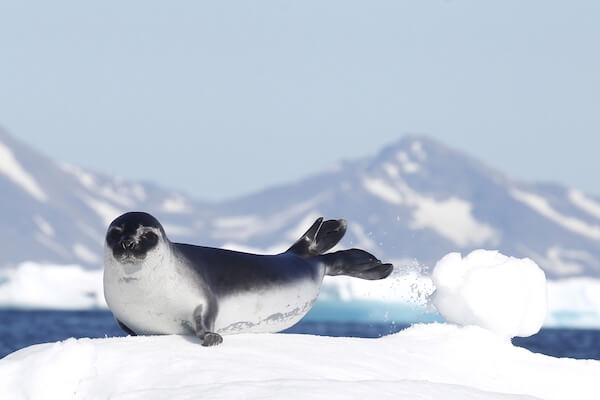 Seal
SealThe Northeast Greenland National Park is the largest national park in the world. The northernmost land area is here as well as the largest ice mass, the Greenland Ice Sheet. If this park's area would be a country, it would be just a bit smaller than Egypt in land area!
The Arctic tern breeds in Greenland and has the longest migration route of any animal! It travels from Greenland to Antarctica to spend the winter there.
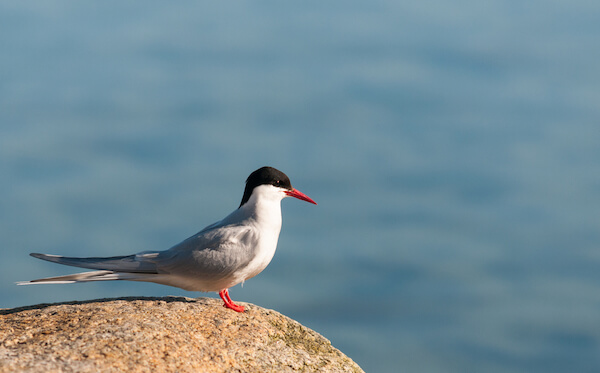 Arctic tern in Greenland
Nine land mammal species live in Greenland. Among these are Arctic wolves, Arctic lemmings, stoats (ermines) and wolverines.
The Greenland dog species found here is one of the purest dog breeds. Most of the husky type dogs are kept and trained as sled dogs. The dog puppies you see in the image below, will be trained to pull the sleds over the snowy landscape. The shorthaired dogs are known as strong, independent and very patient dogs but they also are determined and energetic.
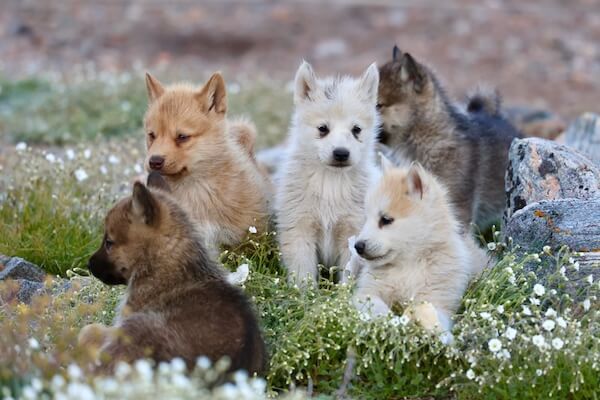 Sled dog puppies
Facts about Greenland | Food
The traditional cuisine is based on hunting and fishing and thus the main dishes use seabirds, whale or seal meat or fish. Muskox, reindeer as well as lamb meats are used in many dishes.
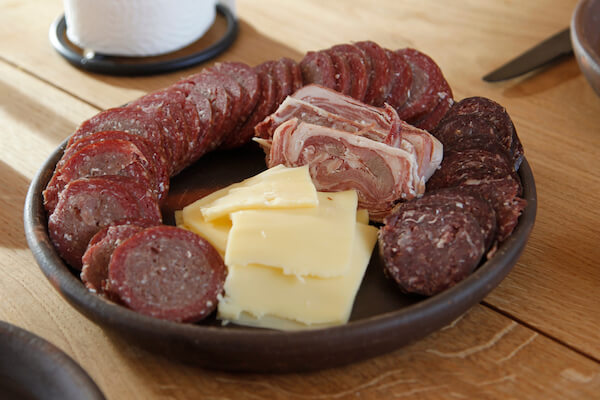 Greenlandic meat platter
Greenlandic halibut (fish), huge snow crabs, shrimps and prawns are popular catch.
Many Greenlandish dishes contain potatoes, onions and wild berries such as crowberries and blueberries that are also found in the Arctic.
Many typical Greenlandic dishes contain smoked, salted and dried produce. Amongst the most traditional food is:
- Suaasat: considered by many as the Greenlandic national dish, this thick soup is made with seal meat or fish, potatoes, and onions.
- Kiviak: A unique Inuit fermented dish made from seabirds that are covered and aged in seal skin and then eaten raw.
Resources for Greenland Facts
These are useful resources for Facts about Greenland:
- Central Intelligence Agency. "Denmark" World Fact Book. Updated 27 December 2024. Last accessed 14 January 2025
- Greenland National Museum."Kalaallisuut." NKA.gl. Last accessed 14 January 2025
- Government of Greenland. "Explore Greenland." Visit Greenland. Last accessed 14 January 2025
- Greenland Tourism. "Kangerlussuaq." Visit Greenland. Last accessed 14 January 2026
- Greenland. "National Day." VisitGreenland. Last accessed 14 January 2025
- The Prime Minister's Office. "Greenland." Statsministeriet.dk. Last accessed 14 January 2025
Learn more about the Nordic Countries
Popular Pages
 |
 |
Images on Facts about Greenland for Kids: images are licensed by shutterstock, sxc.hu, wikicommons and own images - Most images by Chris Christopherson/ shutterstock.com
Return from Facts about Greenland to KidsWorldTravelGuide Homepage
Competition
2026
Recent Articles


-
Facts about Tuvalu for Kids: Geography, People and Wildlife
Sep 11, 26 07:15 AM
Explore our facts about Tuvalu and learn about the Polynesian island nation and its geography, people, economy, culture and animals - Worksheets included -
Animals in Norway for Kids: Wildlife Facts
Sep 03, 26 10:50 AM
Animals in Norway explained: meet reindeer, moose, polar bears, whales and puffins, with habitat facts and a short quiz for class. -
Norway Facts for Kids: Fjords, Vikings and Reindeer
Sep 01, 26 09:01 AM
Learn Norway Facts about the land of the Nobel Prize, the Vikings, reindeers, trolls and other attractions
***
More about Countries in Europe
Temperature in Celsius
NUUK WEATHERTemperature in Fahrenheit
NUUK WEATHERFun Facts
Food around the World






Fun Games

Like what you read?

Like us






Competition 2026