- Homepage
- Vanuatu
Facts about Vanuatu
for Kids
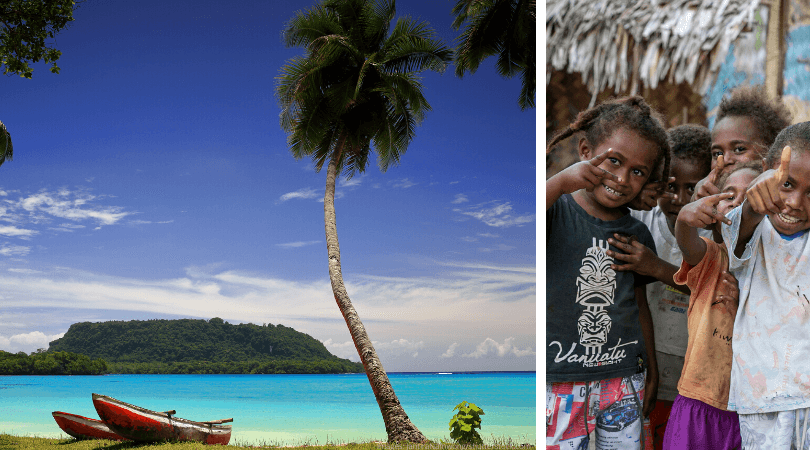 Facts about Vanuatu: Tropical islands and friendly people
Vanuatu - Quick Links |
25 Vanuatu Facts for Kids
Here are some interesting facts about Vanuatu which were chosen and researched especially for kids.
Facts about Vanuatu
Location and Map
1. Vanuatu is located in the South Pacific Ocean in Oceania. Vanuatu is an archipelago of 83 smaller islands, 65 of the islands are inhabited.
2. The Melanesian country of Vanuatu is located in the South Pacific Ocean 1,750km east of Australia. A flight from Sydney/ Australia to Vanuatu only takes about 3.5 hours!
Vanuatu is also to the north-east of New Caledonia, west of Fiji and south of the Solomon Islands.
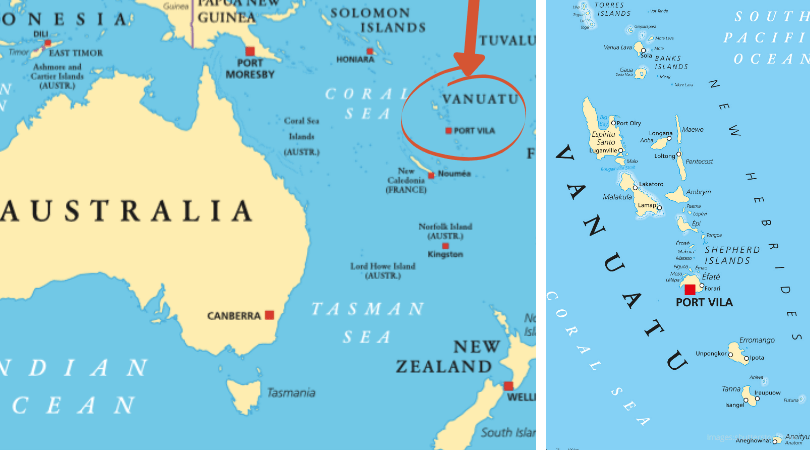 Maps of Vanuatu and her islands
3. The Republic of Vanuatu belongs to Melanesia, which is is a region in Oceania. Vanuatu is the smallest country of the five independent countries in Melanesia.
The other four countries are Fiji, East Timor, Papua New Guinea and the Solomon Islands. Parts of Indonesia and French New Caledonia also belong to Melanesia.
Facts about Vanuatu
Name and National Symbols
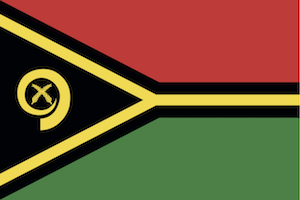 Vanuatu Flag
4. The name Vanuatu comes from the two Melanesian words vanua meaning 'land' and tu meaning 'to stand or to remain' and symbolises the independence or belonging to 'our land'. Independence of the Republic of Vanuatu was declared in 1980 and Independence Day is celebrated on 30 July.

5. The national anthem of Vanuatu is in Bislama and called "Yumi, yumi, yumi." Yumi means 'we' in English.
The national symbols of Vanuatu are the national flag and the coat of arms that shows a Melanesian warrior with a spear standing before the country's highest mountain. The national flag has three colours with red, green and black bands and a yellow horizontal line in 'Y' form which represents how the islands appear on a map. The flag also shows two crossed Namele fern leaves and a tusk of a boar.
Did you know?
|
The national flower is the Hibiscus flower and the national animal is the iguana.
6. The current head of state of Vanuatu is President Nikenike Vurobaravu.
Facts about Vanuatu
History
7. Vanuatu was first inhabited by Melanesians as far back as in 2000 BC. In the 15th century, the islands were visited by various explorers and later settled by British and French settlers.
British explorer James Cook named the islands "New Hebrides" in 1774. In the 18th and 19th century British and French missionaries, farmers and planters settled on some of the islands. In 1906 the New Hebrides became part of an Anglo-French condominium. The archipelago gained independence in 1980, changed the name into Vanuatu and joined the Commonwealth.
Vanuatu for Kids
Geography
8. The three largest islands of Vanuatu are called Efate, Espiritu Santo (also referred to simply as Santo) and Malakula. There are only two bigger cities which Port Vila, on Efate island, and Luganville, on Santo island.
9. The capital city of Vanuatu is called Port Vila is also the largest city of the country with about 53 000 inhabitants.
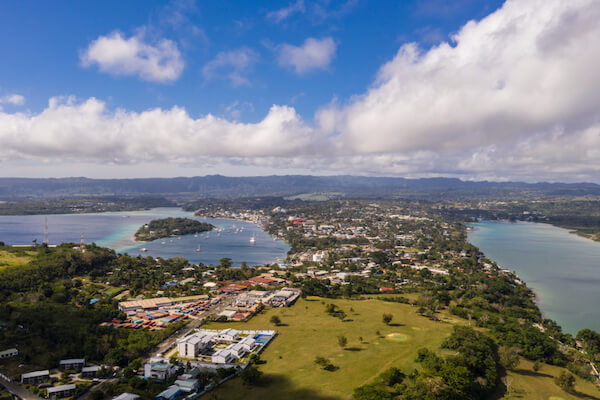 Aerial view of Port Vila, the capital city of Vanuatu
10. The highest mountain of Vanuatu is called Mount Tabwemasana and is 1,879 metres/ 6,165 ft high. The mountain is located on Espiritu Santo island.
Most of the islands of Vanuatu are steep and don't have stable soil for agriculture. There is also little permanent water on the islands. Thus only about 9% of the land are used for agriculture.
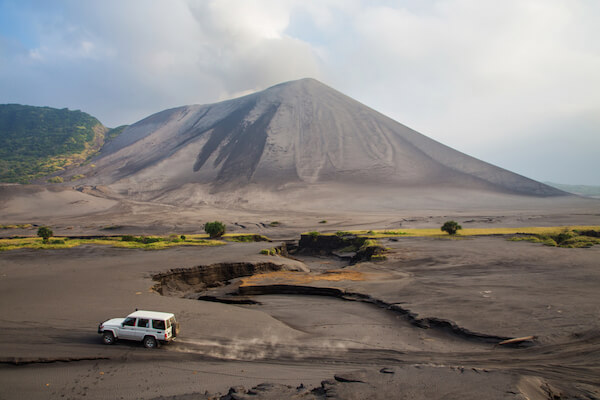 Volcanic earth on Vanuatu
11. Some islands have active volcanoes and most of the islands are rocky or even mountainous. One of the most active volcanoes is Mount Yasur on Tanna island.
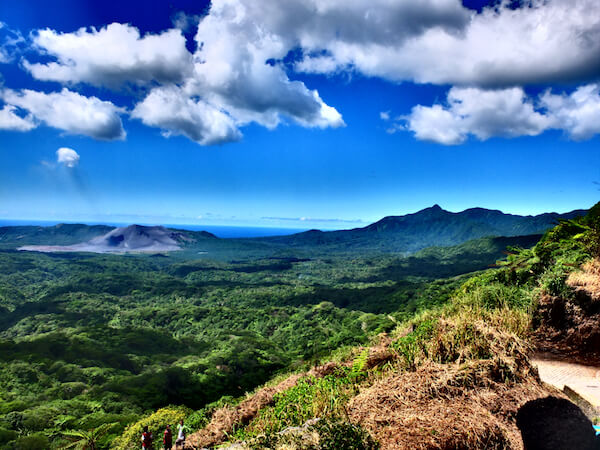 Mount Yasur
Facts about Vanuatu
Climate
12. Vanuatu has a tropical climate with two main seasons. The colder months are from May to September. The months from October to April are hot and humid. December to April are the most rainy months, sometimes with cyclones.
13. The water temperatures in Vanuatu range between 22°C/ 72°F in winter and 28°C/ 82°F in summer.
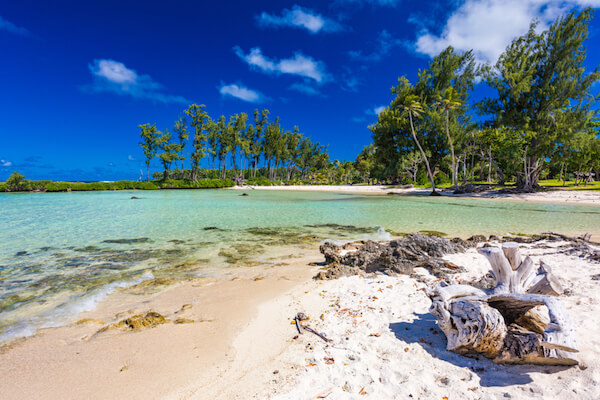 Eton Beach in Vanuatu
Facts about Vanuatu
People
14. About 334,000 people live in Vanuatu, the vast majority (about 82%) of the people are Christians. The citizen of Vanuatu are referred to as Ni Vanuatu or Ni Van.
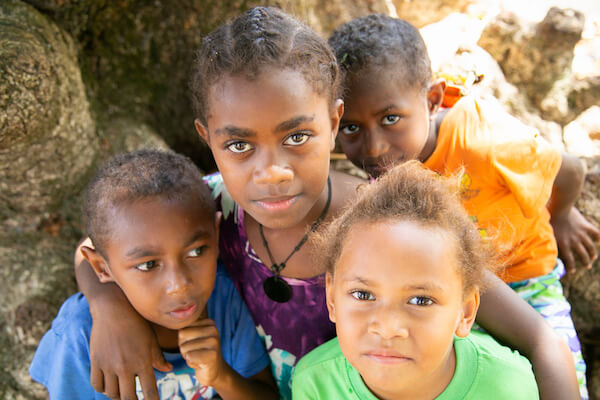 Children in Vanuatu - image by Jantira Namwong
15. The national languages of Vanuatu are Bislama, English and French. Bislama is a Creole language and spoken by all Ni Vanuatu people either as first or second language.
16. Most people on the Vanuatu islands work in the agricultural sector. Fishing and tourism are also among the main income sources. 87% of the Ni Vanuatu people can read and write.
17. About 300 000 tourists visit Vanuatu every year, about the same number of inhabitants on islands! Most tourists visiting Vanuatu come from Australia and New Zealand. Many come for the scenic landscape, traditional island living, sandy beaches and clear blue lagoons.
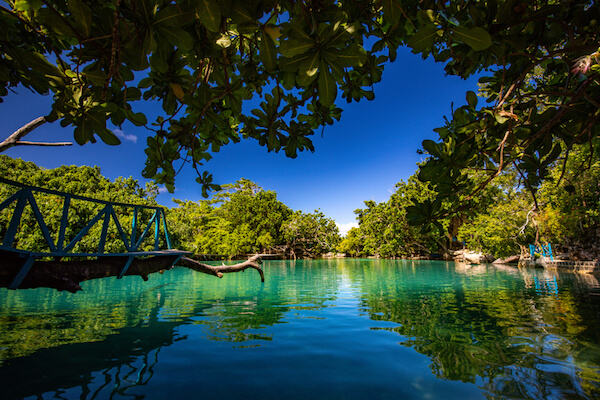 Blue Lagoon
18. The most famous cultural tradition for the islands is the Kastom culture. The term "kastom" refers to the unique way of life of the Vanuatu people. Kastom means traditional ceremonies, dances and storytelling is passed down for generations.
In the ancient tradition of land diving on Pentecost Island, men jump from tall wooden towers with vines tied to their ankles. This is a tradition that led to the modern bungee jumping!
Facts about Vanuatu
Animals
19. Vanuatu is also known for its dense rainforests. Home to flying bats, Vanuatu has an endemic bat species, the flying fox. They are important for pollinating the native trees and are important for the rainforest.
There are about 180 bird species in Vanuatu, among them the colourful rainbow lorikeet.
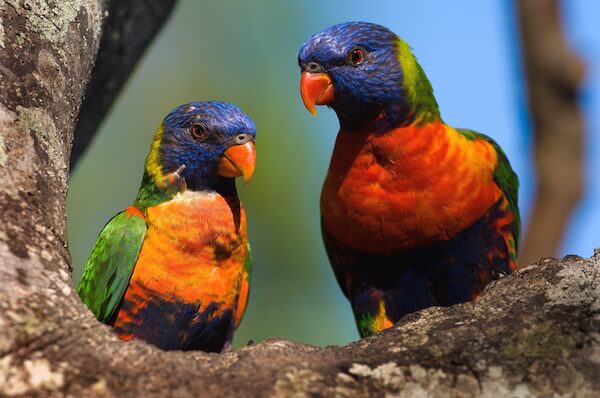 Rainbow lorikeet
Although there are no other indigenous land mammals except the flying bats, there are lots of introduced mammals such as cattle, dogs or cats on the islands.
20. The ocean waters surrounding the islands are home to a rich marine life including humpback whales, dugongs and dolphins. There are over 400,000 marine molluscs, which are invertebrates that live in the ocean. These soft bodied animals include various species of giant clams, sea snails, scallops and octopuses.
Facts about Vanuatu
Economy
21. The currency of Vanuatu is called vatu.
22. The main economic sectors are agriculture, cattle ranching, fishing, tourism and offshore financial services. Natural resources are manganese, timber (hardwood) and seafood.
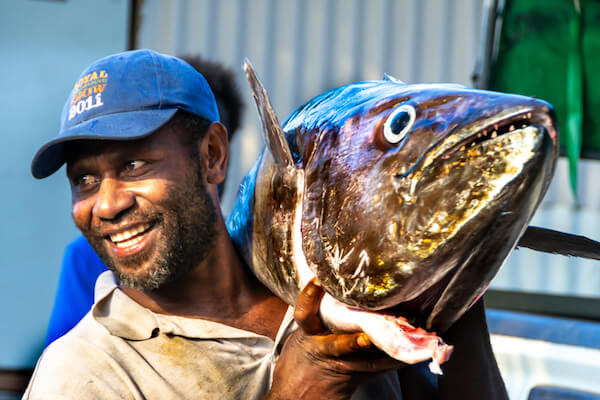 Vanuatu fisherman - image by Tatyana Dotshenko
23. The main agricultural products also include tropical fruits such as pineapples and bananas, cabbage, vanilla, cocoa, coconuts, and yams or taro (which is a starchy root vegetable).
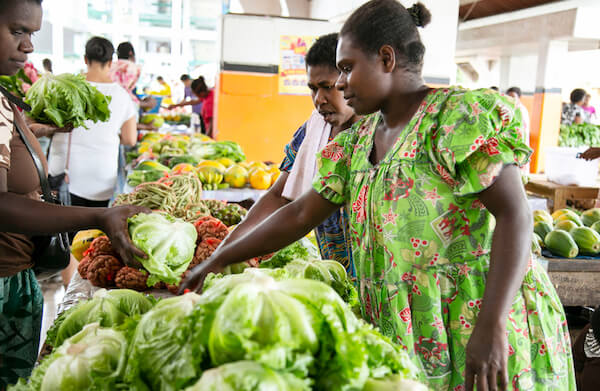 At the Market in Vanuatu
The main exports are frozen fish and molluscs, special purpose ships, perfume plants and cocoa beans. The main export partners are the Thailand, Japan, China, the USA and the Philippines, while China, Australia, Malaysia and New Zealand are the main import partner of Vanuatu.
Vanuatu Facts
Food
24. Food in Vanuatu includes the different fruits and vegetables grown on the islands. Coconuts and coconut milk is used in many dishes. Food is mostly steamed or cooked over fire and rarely fried.
Lap-lap is considered by many the national dish of Vanuatu.
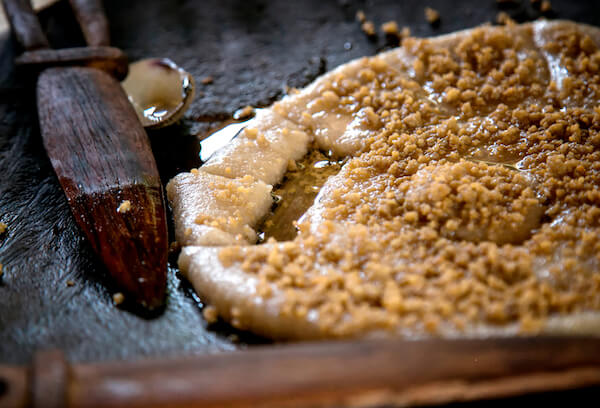 Lap lap is a Typical Vanuatu Dish - image by Jandira Namwong
Lap-lap is baked in banana leaves. This Vanuatu dish is made by grated root vegetables such as taro and yam. The paste of the grated roots and mashed bananas are then made into a dough which is then covered by coconut milk and cabbage and more dough layered on top. Sometimes cooked meats such as beef or pork or fish is then added on top as well before baking the whole wrapped dish in a rock oven.
25. Other popular dishes in Vanuatu include:
- Simboro: Popular creamy dish made with coconut milk. Root vegetables are grated and then rolled in local green cabbage which is similar to bok choy and then simmered in the milky sauce.
- Tuluk: These dumplings are made with gated cassava dough and then wrapped similar to tamale. They are made with minced meat such as pork or beef and steamed in banana leaves. This is a popular streetsnack.
- Coconut Crab: the local crabs are huge and known for their sweet flavour. Crab dishes are often used in coconut-based recipes
Vanuatu Facts
Resources
Sources for Vanuatu Facts page:
- Vanuatu Bureau of Statistics (VBOS). "Vanuatu." VBOS. Last accessed 21 May 2026.
- Vanuatu Investment Markeing Bureau. "The Vanuatu Flag." VIMB. Last accessed 21 May 2026.
- Project Management Unit. "Facts about Vanuatu." Government of Vanuatu. Last accessed 21 May 2026.
- BBC News. "Vanuatu Country Profile." BBC. Last updated 27 October 2023. Last accessed 21 May 2026.
- Commonwealth Secretariat. "Vanuatu." The Commonwealth. Last accessed 21 May 2026.
- Tourism Vanuatu. "About Vanuatu." Vanuatu.travel. Last accessed 21 May 2026.
- Answer the Call of Vanuatu. "Taste." Vanuatu Tourism. Last accessed 21 May 2026.
- Gregg Watt. "anyone for some Lap-Lap? Vanuatu Cuisine. Watt.nz Last accessed 21 May 2026.
- Alex. "Vanuatu Birds and Where to Find Them. Turtle Bay Beach House. 20 November 2017. Last accessed 21 May 2026.
- OEC World. "Vanuatu." OEC. Last accessed 22 May 2026
Image Credits on Facts about Vanuatu: photo stock from shutterstock and wikicommons, if not otherwise stated.
We hope you enjoyed reading our Vanuatu Facts. Please bookmark this page and spread the word.
Popular Pages
 |
 |

Competition
2026
Recent Articles


-
Jamaica Facts for Kids: Geography, People, Culture and Wildlife
Oct 02, 26 08:16 AM
Our Jamaica Facts for Kids will provide an overview of the Caribbean island nation, about Jamaican geography, people, culture animals, food and economy -
Facts about Tuvalu for Kids: Geography, People and Wildlife
Sep 11, 26 07:15 AM
Explore our facts about Tuvalu and learn about the Polynesian island nation and its geography, people, economy, culture and animals - Worksheets included -
Animals in Norway for Kids: Wildlife Facts
Sep 03, 26 10:50 AM
Animals in Norway explained: meet reindeer, moose, polar bears, whales and puffins, with habitat facts and a short quiz for class.
More about Oceania
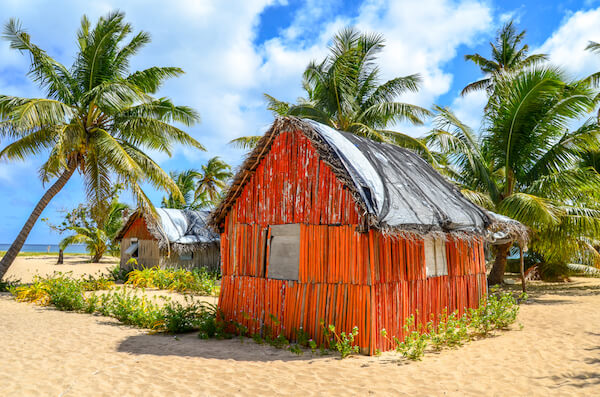
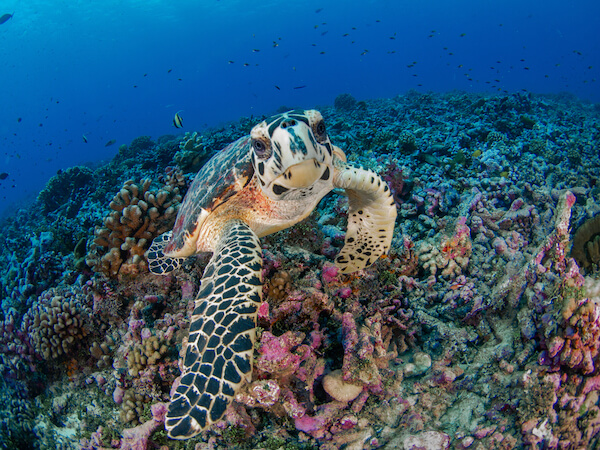
More about Oceania
 Pacific Ocean Facts
Fun Facts
Fun Games

Like what you read?

|
Simply share the html code below. Copy and paste onto your website, blog or Facebook page: <a href="https://www.kids-world-travel-guide.com/facts-about-vanuatu.html">Kids World Travel Guide: Facts about Vanuatu for Kids</a> |
Like us on Facebook
View our Pinterest boards










Competition 2026