- Homepage
- Canada
Canada Facts for Kids
Key Geography, People, and Wildlife
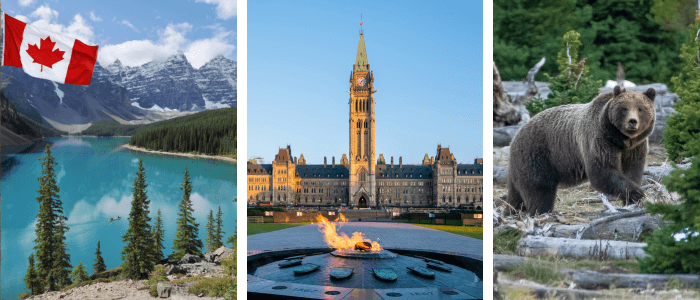 Canada Facts for Kids: Lakes, Ottawa Parliament, Grizzly Bear
Here are some interesting Canada Facts for Kids which were chosen and researched by kids especially for kids.

What you will find on our Canada Facts for Kids page:
First let's have a quick glance at the most important basic facts about Canada:
Canada Facts - Snapshot
Last updated: 23 February 2026 - Sources: Statistics Canada, Destination Canada |
Canada - Basic Facts
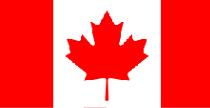 Canada Flag
- Population: 40 million people (2026)
- Capital: Ottawa with about one million inhabitants
- Name: Canada, originally from Iroquois name 'kanata' which means settlement or village
- Government: Federal parliamentary democracy under constitutional monarchy
- Official Languages: English, French
- Religion: mainly Christians (Roman Catholics and Protestants)
- Currency: 1 Canadian Dollar (CAD) = 100 Canadian cents

- National Anthem: O Canada!
- National Colours: Red and white
- National Symbols: Maple leaf, red and white flag, maple tree (national tree), beaver (national animal), Canada goose (national bird)
- History: Canada's biggest bay, Hudson Bay, was explored by Europeans in 1610. Since the 16th century, first France controlled large parts of what is now Canada and later Britain took control of the country after the 1763 Treaty of Paris. Canada became a country, or confederation, in 1867. However, only in 1982, Canada gained full independence. Today, King Charles III is still the head of state and the King of the United Kingdom and Canada.
- Government: The prime minister is Mark Carney (in office since March 2025)
- National Day: 1 July is Canada Day
Canada Facts for Kids|
Canada Geography
Where is Canada?
Canada is the second largest country in the world and in the northern hemisphere. It is the largest country in the western hemisphere. The country is on the North American continent.
Canada borders the Atlantic Ocean in the east, the Pacific Ocean in the west and the Arctic Ocean in the North.
Canada shares a land border with the United States of America in the south and in the northwest where it borders Alaska, the largest state of the USA.
Canada Map with Provinces and Territories
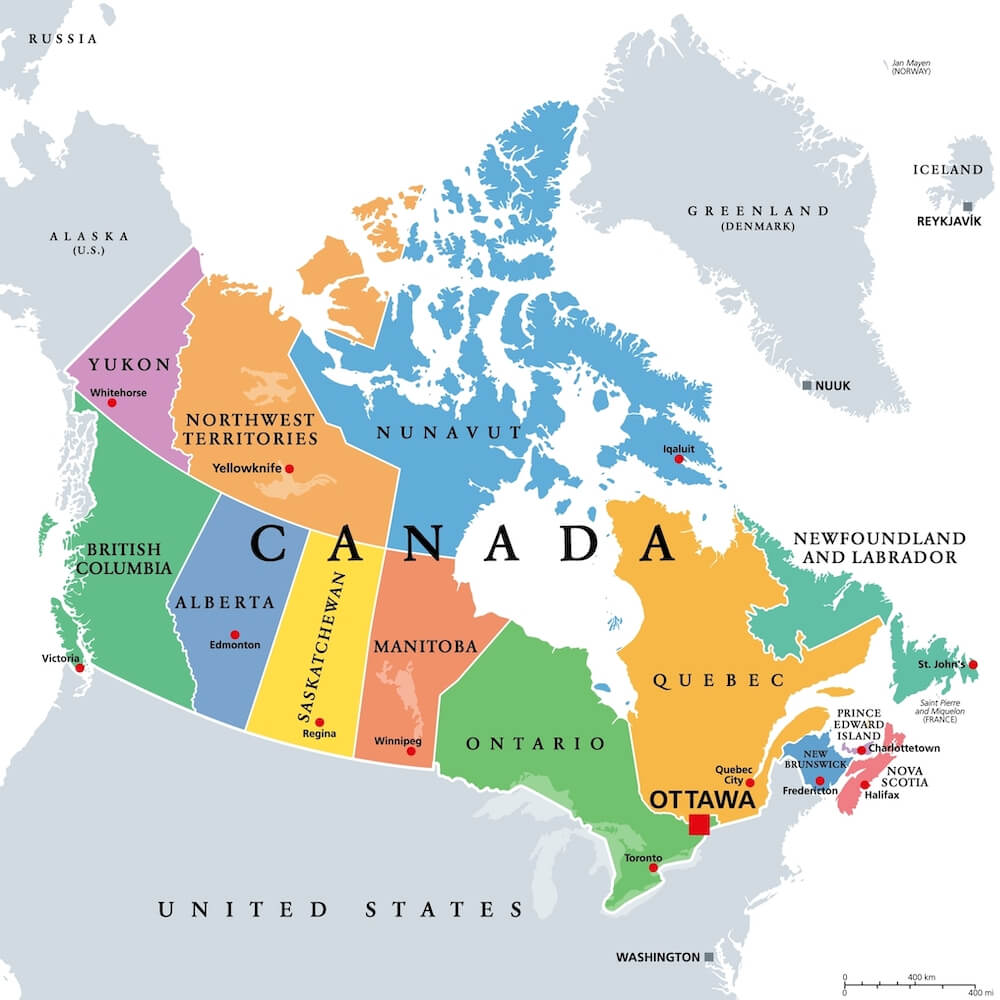
Canada is divided into 10 provinces, such as Alberta, Ontario, Quebec and British Columbia and the three territories called Yukon, Northwest Territories and Nunavut.
Did you know?
|
Canada Facts for Kids
Canada Geo Superlatives
- Canada is known for having more lakes than any other country. There are about three million lakes in Canada and about 31,750 lakes larger than 3 km² or 1.1 square miles! In total, Canada holds about 60% of the world's natural lakes. The Northwest Territories alone has more lakes than most countries of our planet!
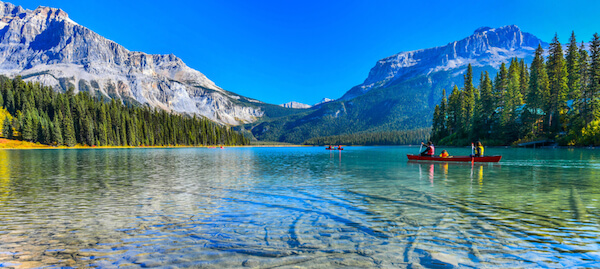 Emerald Lake in Canada's Yoho National Park
- Canada is the second largest country in the world, after Russia. The capital city of Canada is Ottawa. The metropolitan area of Ottawa houses about 1.4 million people.
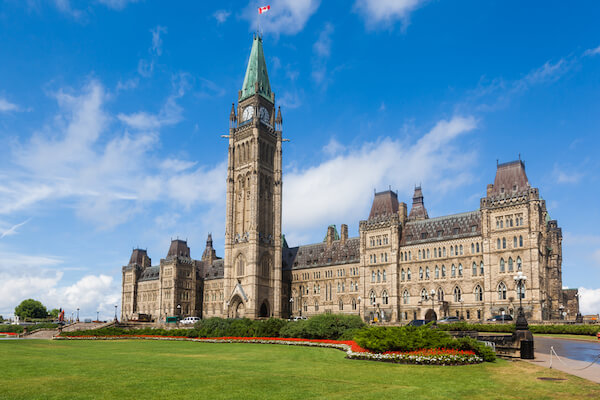 Canadian parliament with Peacetower in Ottawa
- Canada is among the ten most sparsely populated countries in the world. More than half of the population live in the Canadian provinces Ontario and Quebec. Close to the USA-Canada border, there are also the main urban areas such as Vancouver, Ottawa, Montreal and Toronto.
- Toronto is the largest city in Canada. The Toronto metropolitan area houses about seven million people.
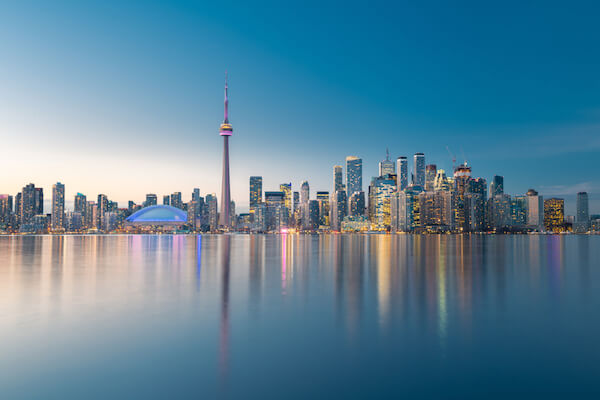 Toronto skyline
- Canada's longest river system is the MacKenzie River in the country's Northwest Territories. The river is 4,241 km/ 2,635 miles long and the MacKenzie River is the largest river flowing from North America into the Arctic.
- The fascinating and unique phenomenon of a confluence is seen in British Columbia where the Thompson River and the Fraser River meet. At the confluence, the rivers can look like they don’t mix at first because of differences in sediment, temperature and flow.
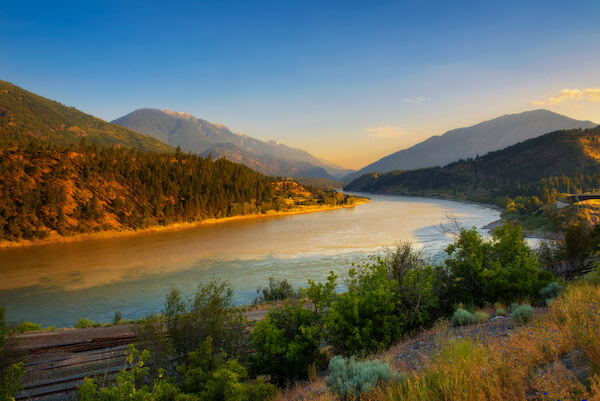 Lytton in British Columbia where the confluence of the two rivers can be clearly seen
- The largest lake that is entirely in Canada is Great Bear Lake. Lake Superior, the largest lake in North America, is shared with the United States of America.
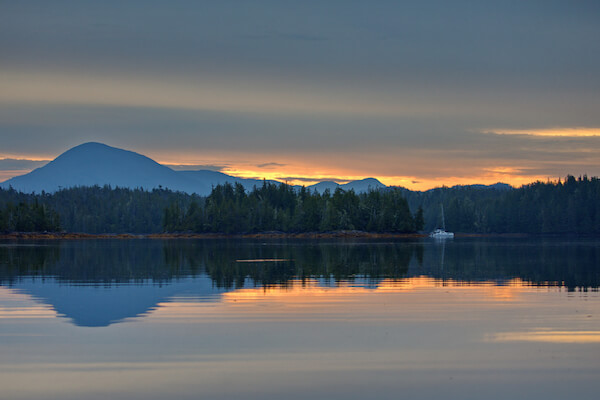 Great Bear Lake in Canada
- The highest mountain in Canada is Mount Logan with 5,959 m/ 19,551 ft. Mount Logan is located in Kluane National Park in the Yukon Territory at the border with Alaska. This mountain is also the second highest peak of the North American continent - after Mount Denali. Kluane National Park is known for its extremes and not only is home to Canada's highest peak and the largest ice fields in Canada but also to the most grizzly species in North America.
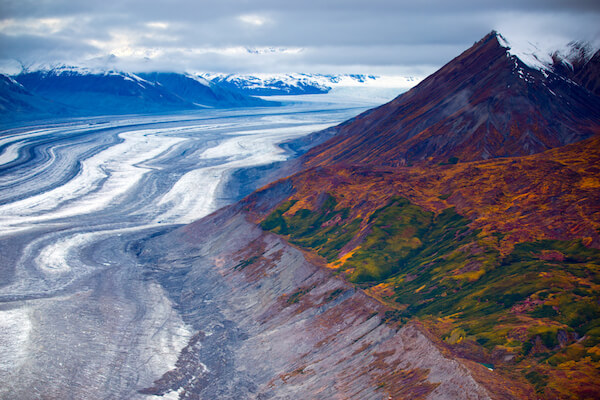 Kluane National Park
- Niagara Falls is one of the most famous and powerful waterfalls in North America, on the Canada–USA border. The Horseshoe Falls on the Canadian side is the most powerful waterfall in North America.
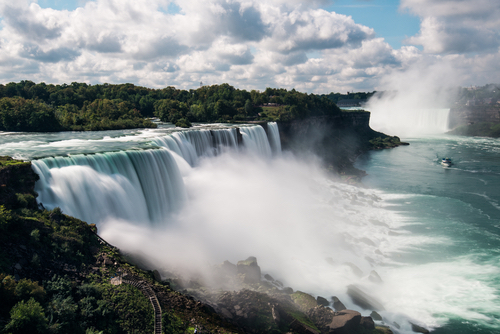 Niagara Falls
- Canada shares five enormous freshwater lakes with the USA: Superior, Michigan, Huron, Erie, and Ontario (remember: SMHEO or 'Super Man Helps Every One'!)
Lake Superior is the world's largest freshwater lake by surface area at 82,100 km². Together the Great Lakes hold more than 20% of Earth's fresh surface water.
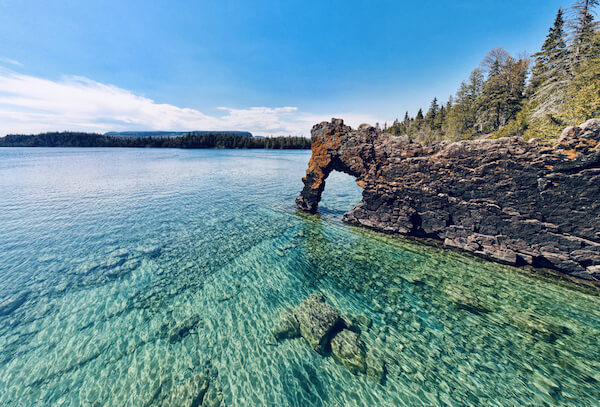 Lake Superior in Canada
- Baffin island in Nunavut is the largest island in Canada. Most Canadian islands are located in the Nunavut Territory in northern Canada in the Arctic Archipelago which is a group of 36,563 islands! This region is permanently frozen in places and home to polar bears, walruses, and narwhals.
Did you know?
|
- Mount Thor on Baffin island is known for the world's highest vertical cliff with the greatest drop of 1,250 m/ 4,101 ft or an angle of 105 degrees!
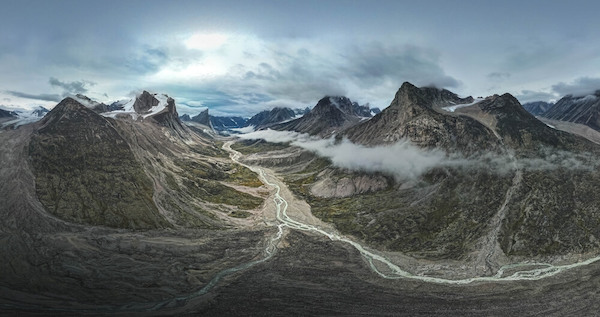 Mount Thor on Baffin island
- Canada has a wide range of climates. In the north, it is very cold with long winters and snow. Most of northern Canada experiences temperatures below –30°C/ -22°F in winter! Canada recorded one of the coldest temperatures in North America: –63°C/ -81°F at Snag in Yukon in February 1947!
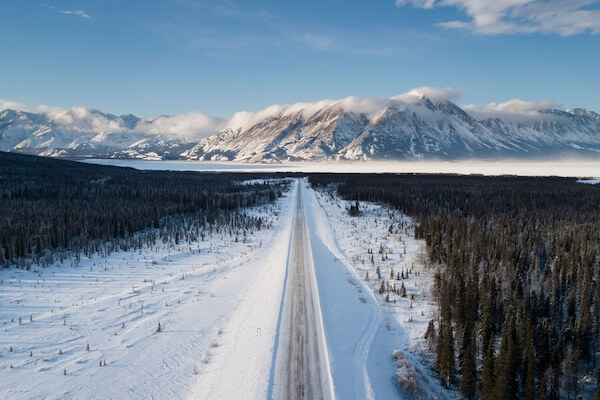 Winter landscape in Yukon
- The Bay of Fundy, located between the provinces of New Brunswick and Nova Scotia in eastern Canada, is famous for having the highest tides in the world. The water level can rise and fall by up to 16 metres. This is taller than a 4-storey building! This happens because the shape of the bay and the pull of the Moon’s gravity work together to push huge amounts of water in and out twice a day. At places like the Hopewell Rocks, you can walk on the seabed at low tide and then kayak over the same area just a few hours later. About 160 billion tonnes of water move with each tide cycle.
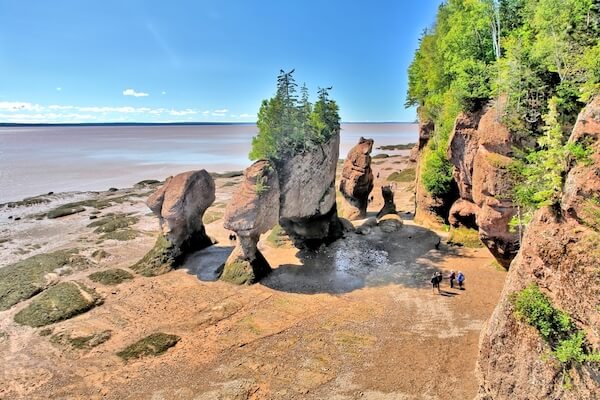 Bay of Fundy at low tide
- Canada is home to 22 UNESCO world heritage sites in 2026. These include amongst others the fascinating Dinosaur Provincial Park in Alberta where once 35 species of dinosaurs lived, the historic district of Old Québec, the Rocky Mountains national park and the sacred site of Writing-on-Stone/ Áísínai’pi, where the indigenous Blackfoot people left their rock art, engravings and spirit messages on the sandstone walls.
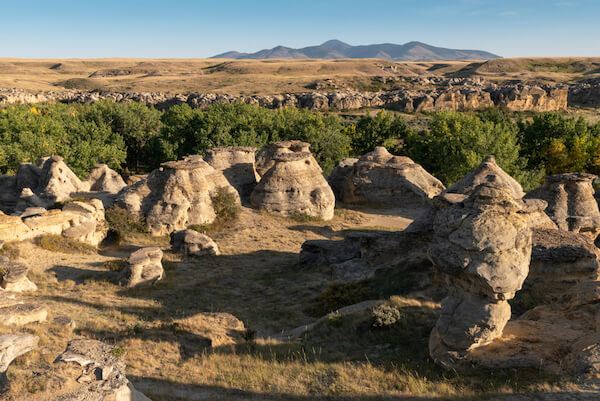 Writing-on-Stone National Park
Canada Facts for Kids:
Canada is great for families!
Canada is one of the most popular tourist destinations in the world. There are many attractions for Canada visitors and kids will love to explore the amazing nature with open landscapes and fascinating wildlife, learn about the multicultural Canadian people and their diverse way of life. Let's discover Canada! Who are we? What makes Canada Canada? Learn more in this fabulous short video:
Canada is one of the most popular tourist destinations in the world. There are many attractions for Canada visitors and kids will love to explore the amazing nature and learn about the Canadian wildlife.
There are 48 national parks and national reserves in Canada, the largest of these is Wood Buffalo National Park in Alberta. Banff National Park which is Canada's most popular park is also the oldest national park of the country and exists since 1885.
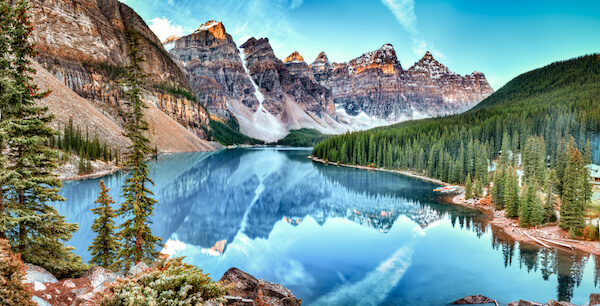 Banff National Park
Canada family trips can include great day hikes or canoe trips in the national parks. In winter, families can enjoy skiing, snowboarding and other winter fun activities such as tobogganing in the mountains.
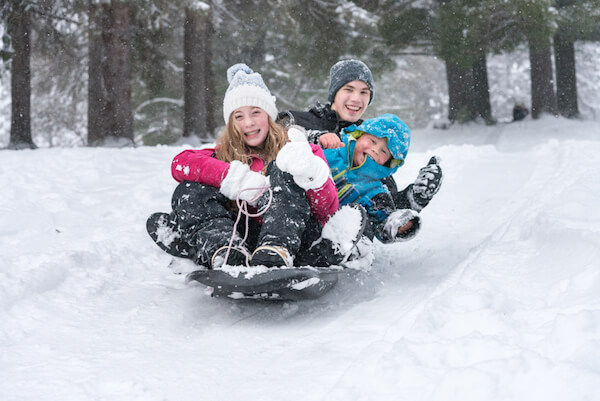 Toboggan fun in winter
Among the most popular ski resorts are Banff and Lake Louise in Alberta and Whistler in British Columbia. But these resorts can also be enjoyed in summer! For example, you can walk over the Cloudraker Skybridge on Whistler Peak in summer. This suspension bridge makes for an awe-inspiring adventure!
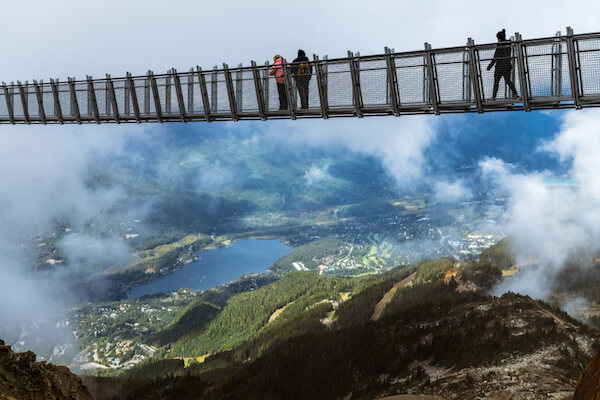 Cloudraker Skybridge in Whistler
Canada's big cities also have lots to offer to families travelling with kids with fascinating museums and wonderful city parks that invite to great outdoor activities such as cycling, climbing, sledging or iceskating.
Canada Facts for Kids
Canada Attractions
Here are our favorite Canada attractions for kids:
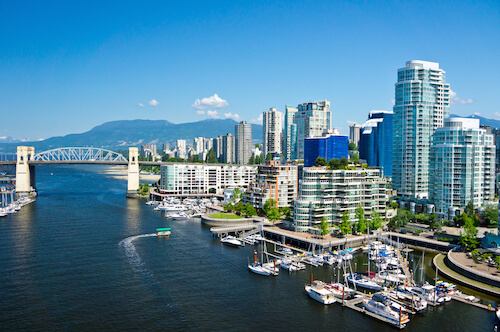 Vancouver
- Vancouver: The main city in the western parts of the country is great for outdoor sports as well as indoor explorations. Here you can find many attractions for children which include the Maritime Museum and the Science Museum as well as the fantastic Grouse Mountain Skyride or doing the cliff walk and crossing the Capilano River over the Capilano Suspension Bridge.
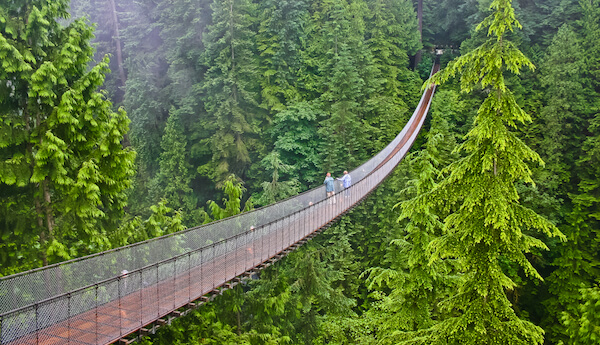 Capilano Suspension Bridge
- Niagara Falls: One of Canada's biggest tourist attractions, they were formed in the last Ice Age. The Niagara Falls are the largest waterfalls in Canada by volume of water. The Niagara Falls are better viewed from the Canadian side where the waterfalls are truly a spectacular sight.
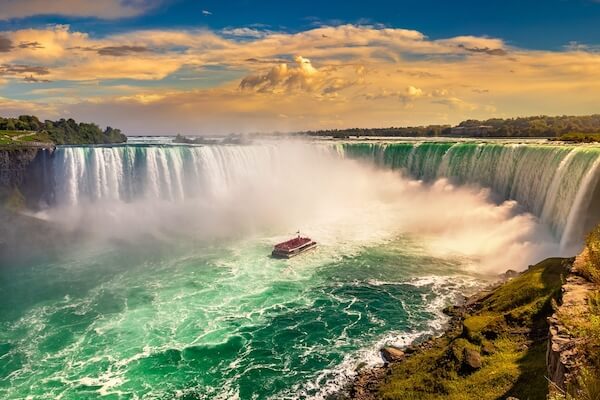 Niagara Falls
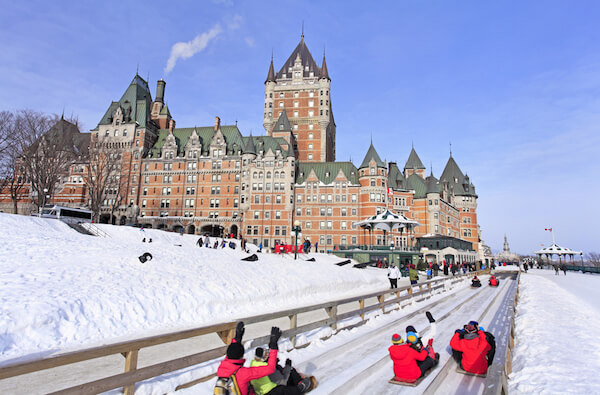
- Quebec City: The Old Town was founded already in 1608. You must see the Frontenac castle buildings from the 18th and 19th century and in winter have fun on the ice slide!
- Toronto: The CN Tower and the Rogers Center are great attractions in this city at the shores of Lake Ontario. The CN Tower is actually the tallest freestanding structure in the western hemisphere! Here you can experience a special adventure when doing the Edge Walk, which is open to all over 13 years of age. Rogers Centre adjacent to the CN tower is a huge stadium and spots the world's first retractable roof.
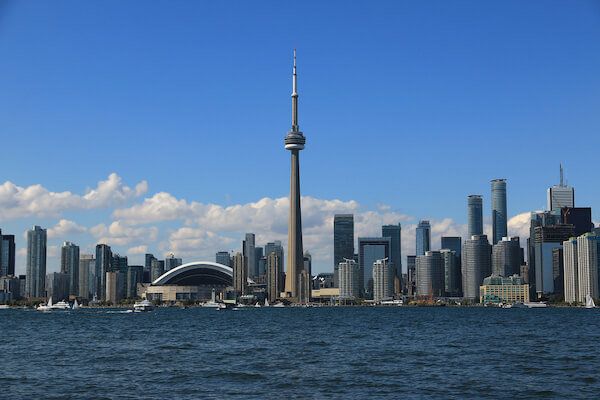 CN tower
- Banff National Park: For amazing wildlife spotting, but make sure to watch your belongings, as bears tend to chew up everything they find laying around, such as stray hiking boots;-) We had our experiences...
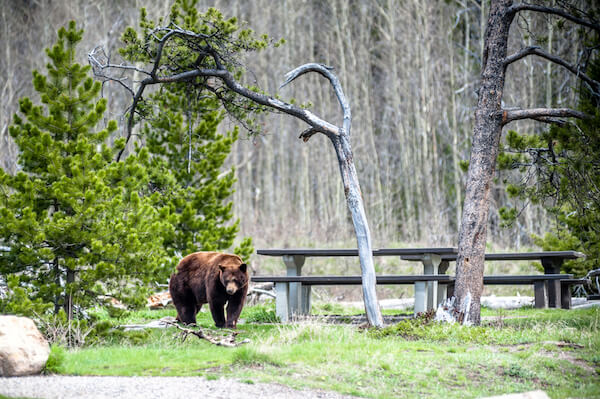 Grizzly bear on camp ground in Alberta
- Icefields Parkway: This scenic drive in Alberta is rated as one of the top drives in the world. The 227 km/ 141 miles long drive which is named after the Columbia icefields leads through stunning mountain and glacier landscape and links the town of Jasper with Lake Louise.
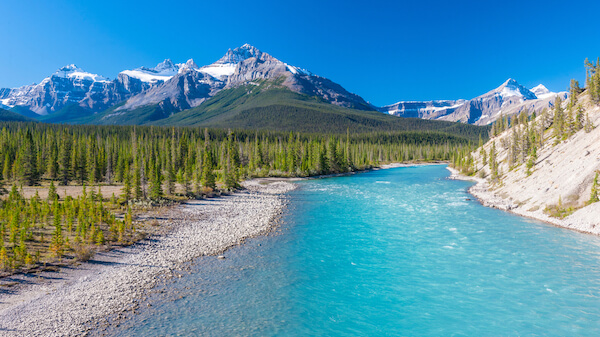 Icefields Parkway with Athabasca glacier
Canada Facts for Kids
Canada Economy
- Canada is the third largest oil reserve holder after Venezuela and Saudi Arabia. The province of Alberta leads in the production of oil and natural gas in Canada.
- Canada is one of the world’s top uranium producers. Cigar Lake in Saskatchewan is one of the world’s highest-grade uranium mines. Uranium is used in nuclear power plants for producing electricity.
- The province of Saskatchewan is also the main agricultural province in Canada. Here farmers grow 45% of Canada's grains such as wheat, canola, flax or rye.
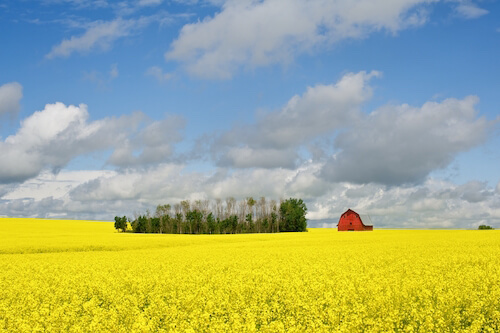 Canola field in bloom in Saskatchewan/Canada
- Canada is one of the world leaders of hydro electricity which uses the power of the water to produce electricity.
- Canada is a huge timber producer and second in the world in regards to the sawn softwood production -after the USA. This includes timber or lumber planks or furniture wood. Lumber is the North American term for timber.
- The USA and China are the main trading partners of Canada.
Canada Facts for Kids
Canada People & Culture
Canada is one of the most multicultural countries on Earth. People of over 200 ethnic origins live here, and more than 7 million people were born in another country. The government officially celebrates multiculturalism as a key part of Canadian identity.
Most of the Canadian families have roots in England and France, as during the French and British colonised the country and thus many families immigrated into Canada. About one third of the Canadian refer to themselves as Canadian. Almost 40% of the Canadians refer to belonging to the English, Scottish or Irish ethnic groups and about 13% are refer to belonging to the French ethnic group.
Did you know?
|
Indigenous People in Canada
First Nations, Métis, and Inuit peoples are Canada's Indigenous communities. There are over 630 First Nations communities and around 1.8 million Indigenous people in Canada. Their cultures, languages, and art are an important part of Canadian heritage.
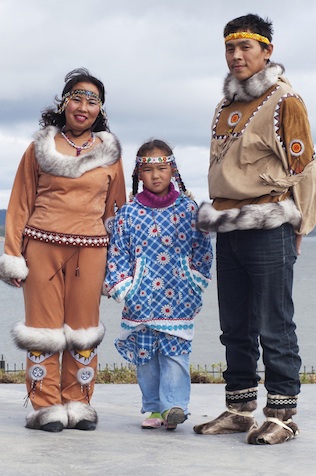 Inuit Family
About 5% of Canadians identify as Indigenous and belong to First Nations, Métis, or Inuit people. Inuit make up well under 1% of Canada’s population.
The Inuit people live today in modern houses but still build igloos, especially when hunting. The Inuit children go to the community's schools, but there are no universities in the North. So if the children decide to go on studying, they have to leave their communities and move to university cities. In the Inuit language, writing text was only begun in the 19th century before they mainly used symbols for writing.
Over 70 Indigenous languages are still spoken in Canada, including Cree, Ojibwe, Inuktitut, and Dene. Inuktitut is an official language of Nunavut. Many communities are working hard to protect and revive these ancient languages.
Facts about Canada
Languages
Canada has two official languages: English and French. The government, courts, and federal services must operate in both languages. All product labels in Canada must be written in both English and French.
About 1 in 5 Canadians are bilingual which means they can speak both English and French (with higher rates in Quebec and parts of New Brunswick and Ontario) fluently. The majority of Canadians speak English as first language (56%). However, French is the main language in Quebec. The province of Quebec is the heartland of French Canada, with over 7 million French speakers.
Did you know?
|
Canada Facts for Kids
Animals in Canada
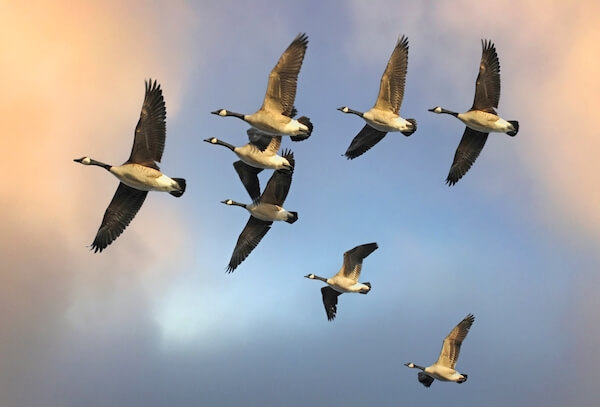
Canada's national animal is the beaver, which once made Canada famous for the fur trade. The Canada Goose is the national bird and one of the most recognisable birds in North America. These large geese migrate thousands of kilometres each year in their famous 'V' formation, which helps save energy. They can fly at up to 96 km per hour which is about 60 miles per hour!
Canada is home to the world's largest moose population. There are 1 million moose, which are the largest member of the deer family, in Canada. A male moose (bull) can weigh up to 700 kg and stand 2.1 m at the shoulder. They love cold forests and wetlands.
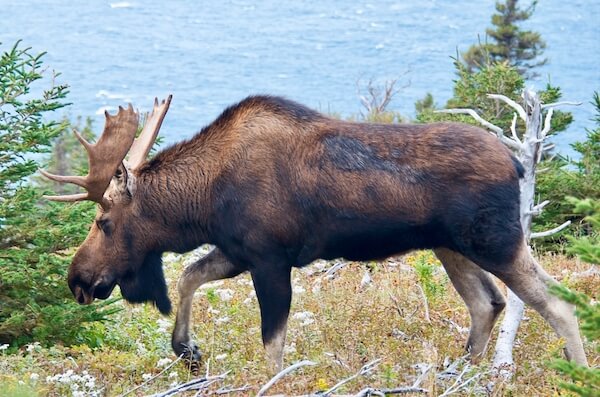 Moose bull in Nova Scotia - image by Marcel Hamonic/ shutterstock.com
Among the animals you will most likely encounter on your Canada travels will be moose, bighorn sheep, mountain goats and the bison as well as the muskox.
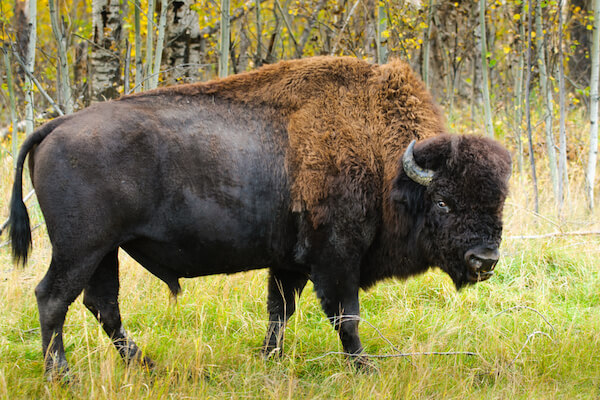 Wild bison
Canada FAQs
Frequently Asked Questions
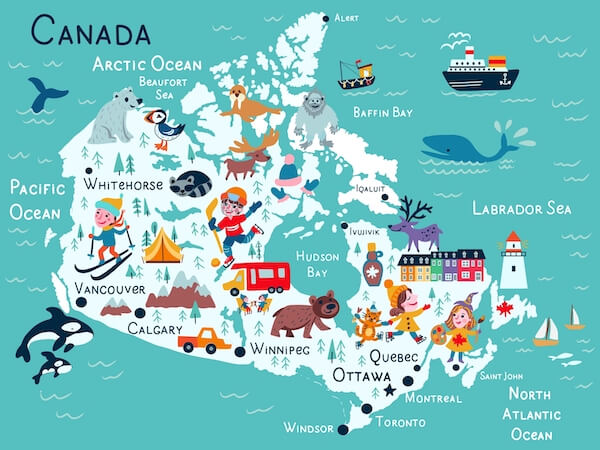
Where is Canada located?
Canada is in the northern part of North America. It stretches from the Atlantic Ocean in the east, up to the Arctic Ocean in the north and to the Pacific Ocean in the west. It shares the world’s longest land border with the United States.
What is the capital city of Canada?
The capital city of Canada is Ottawa. It is located in the province of Ontario and is home to Canada’s government buildings, including Parliament Hill.
How big is Canada?
Canada is the second-largest country in the world - after Russia. It covers about 9.98 million square kilometres (or 3.58 million square miles!
How many provinces and territories does Canada have?
Canada has 10 provinces and 3 territories. The provinces include places like Ontario and British Columbia, while the territories are Yukon, Northwest Territories and Nunavut.
What languages are spoken in Canada?
Canada has two official languages: English and French. French is mainly spoken in the province of Quebec, while English is spoken in most other parts of the country. Many people are bilingual. Other languages such as Mandarin, Cantonese, Punjabi, Arabic or Spanish are also spoken by many people living in Canada.
What is Canada’s climate like?
Canada has a wide range of climates. In the north, it is very cold with long winters and snow. In the south, summers can be warm or even hot. Coastal areas are usually milder than inland areas.
What are some famous landforms or physical features in Canada?
Canada has many amazing natural features, including the Niagara Falls, the Rocky Mountains with Canada's highest peak Mount Logan and Banff National Park, the Great Lakes and the Bay of Fundy. The Northern Lights (Aurora Borealis) are often seen in northern Canada too!
What are Canada’s main natural resources?
Canada is rich in natural resources such as timber (wood), oil, natural gas, minerals, and freshwater. It has some of the largest forests and freshwater lakes in the world.
What is Canada famous for?
Canada is famous for landmarks such as the Niagara Falls, Quebec's Frontenac Castle or Toronto's CN Tower, wildlife such as moose and polar bears, maple syrup, ice hockey and being one of the world’s most multicultural countries.
More about Canada
Other popular pages
 |
 |
Canada Facts for Kids | Resources
Canada Facts for Kids References include:
- Government of Canada. "Culture, History and Sport." Canada.ca 17 February 2026. Last accessed 23 February 2026
- Destination Canada. "Best Family Vacations in Canada." Travel.DestinationCanada.com Last accessed 23 February 2026
- The Canadian Encyclopaedia. "Geography Quiz." Historica Canada. Last accessed 23 February 2026
- Government of Canada. "O Canada." Canada.ca Last updated 2 May 2025. Last accessed 23 February 2026
- BBC News. "Canada Country Profile." BBC. 8 January 2025. Last accessed 23 February 2026
- TravelAlberta. "Banff National Park." TravelAlberta. Last accessed 23 February 2026
- Megan Wilson. "Insider's First Look: The Whistler Peak Suspension Bridge." The Whistler Insider. 11 July 2024. Last accessed 23 February 2026
- Parks Canada. "Ten Animals You Might See When Visiting Canada's Protected Areas." Government of Canada. Last updated 9 November 2021. Last accessed 23 February 2026
- The Icefields Parkway. "Plan Your Trip. Maps." TheIcefieldsParkway. Last accessed 23 February 2026
***
We hope you enjoyed reading out Canada Facts for Kids. Make sure to bookmark this Canada Facts for Kids page, as we plan to add on more information. Feel free to contact us if your school would like to work on a school project about Canada (animals, food, people, traditions, games, sport etc.) with us.
Picture credits on Canada Facts for Kids: Shutterstock.com and sxc.hu (Clipboard: 1.Meysam Sadat-Mansouri, 2.Sumair ur Rahman and 3.Cindy Pepper)
Return from Canada Facts to Kids World Travel Guide Homepage
Competition
2026
Recent Articles


-
Jamaica Facts for Kids: Geography, People, Culture and Wildlife
Oct 02, 26 08:16 AM
Our Jamaica Facts for Kids will provide an overview of the Caribbean island nation, about Jamaican geography, people, culture animals, food and economy -
Facts about Tuvalu for Kids: Geography, People and Wildlife
Sep 11, 26 07:15 AM
Explore our facts about Tuvalu and learn about the Polynesian island nation and its geography, people, economy, culture and animals - Worksheets included -
Animals in Norway for Kids: Wildlife Facts
Sep 03, 26 10:50 AM
Animals in Norway explained: meet reindeer, moose, polar bears, whales and puffins, with habitat facts and a short quiz for class.
***
Countries in
North America
News for Kids

Fun Facts
Continents


Fun Games





Did you like what you read?

|
Simply use the html code below. Copy and paste onto your website, blog or Facebook page: <a href="https://www.kids-world-travel-guide.com/canada-facts-for-kids.html">Kids World Travel Guide: Canada Facts for Kids</a> |
Like us on Facebook













Competition 2026