- Homepage
- Spain
Spain Facts for Kids
Interesting Facts for Kids
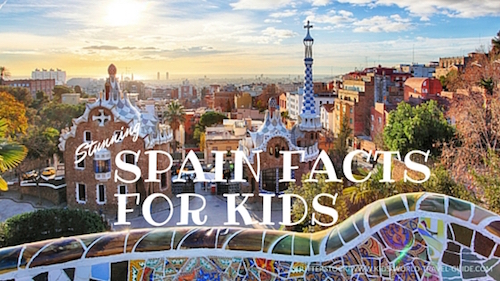
Here are some interesting Spain Facts which were chosen and researched by kids especially for kids.
Spain - Snapshot
|
What you will find on our Spain Facts page:
First let's have a quick glance at the most important basic facts about Spain:
Spain Facts
Basic Facts about Spain
- Population: 49.6 million people live in Spain (2026)
- Capital: Madrid, with 6.7 million inhabitants
- Continent: Europe
- Name: Reino de España (Kingdom of Spain), short form: España
- Area: 506,030 km²/ 195,380 sq mi
- Government: Parliamentary Monarchy
- Languages: Castilian Spanish 74%, Catalan 17%, Galician, Basque
- Literacy: More than 98% can read and write.
- Religion: 69% Christians (mainly Roman Catholics)
- Currency: 1 Euro = 100 cents, before 2001 Spanish peseta
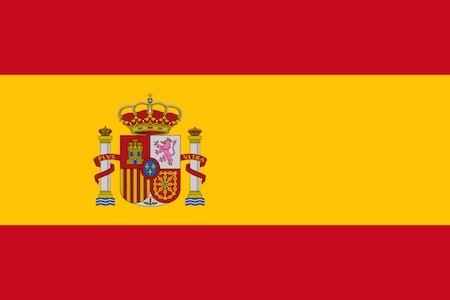
- National Symbol: National flag and coat of arms, the short-toed eagle (national bird), red carnation (national flower), the bull (national animal). The official Spanish anthem "La Marcha Real" (the Royal March) is one of only four anthems in the world without lyrics.

- History: From 711 to 1492 Islamic Moors ruled in Spain. In 1492 Christopher Columbus reaches America and the Spanish rulers start forming their empire, building colonies in the Americas. In the 16th century Spanish kings also ruled over many European countries: Portugal, Netherlands, parts of France, Germany, Italy and Austria. The Spanish Civil War rages in Spain from 1936 to 1939 when dictator General Franco takes over the country. In 1975 Franco died and Juan Carlos I became King of Spain. In 2014, his son Felipe followed him on the throne.
- National Day: 12 October (Fiesta Nacional de España)
- Head of State: King Felipe VI
- Head of Government/ prime minister: Pedro Sánchez since 2018
Sources: INE, SpainInfo - 20 July 2026
Spain Facts
Spain Map & Where is Spain?
Spain is a country in southwestern Europe on the Iberian peninsula. Spain is the second-largest country in the European Union.
Spain borders the countries Portugal, Andorra, France and the UK with Gibraltar, which is a British Overseas Territory. The longest border is shared with Portugal.
Spain also shares borders with Morocco, as the two Spanish enclaves Ceuta and Melilla are located within Morocco.
Spain is separated from the African continent by the Straits of Gibraltar. This passage connects the Atlantic Ocean with the Mediterranean Sea. Gibraltar is a British overseas territories and thus belongs to the UK.
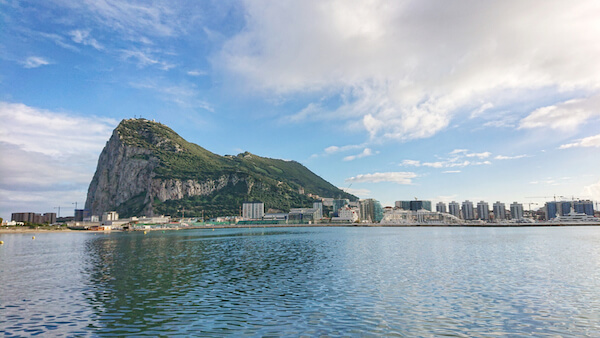 Rock of Gibraltar
The narrowest point of the Straits of Gibraltar between the two continents Europe and Africa is 14.3 km/ 8.9 miles wide.
The Spanish nation is divided in 17 autonomous communities which are regions where people have their own regional government.
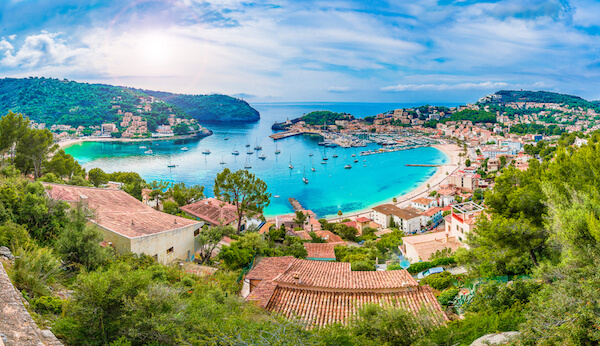 Port de Sollér in Mallorca
Spain is slightly larger than twice the size of the United Kingdom and about twice the size of the state of Oregon in the USA.
A flight to Madrid/ Spain takes about 2.5 hours from London/ England and 7 hours from New York/ USA.
Spain Facts
Geography
Spain borders the Mediterranean Sea in the South and East and the Atlantic Ocean in the Northwest.
Spain is the fourth largest country in Europe after Russia, Ukraine and France.
In the North, the Pyrenees mountain ranges form a natural border with the tiny country of Andorra and with France. Portugal lies to the west of Spain.
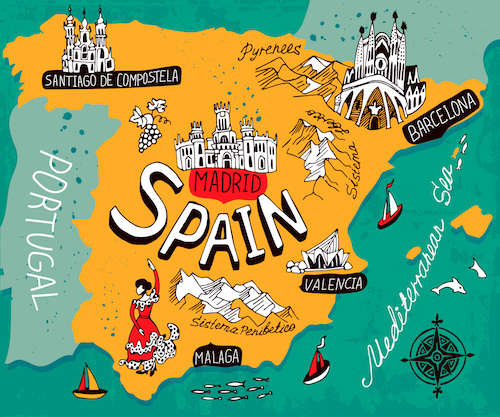 Peninsular Spain Map
The three largest cities in Spain are Madrid, Barcelona and Valencia.
Madrid is the capital city of Spain and the second largest city of the European Union countries - after Berlin in Germany.
Among the most popular tourist destinations in Spain are the capital Madrid, Barcelona in Catalonia as well as Málaga, Sevilla and Granada in Andalusia and also Santiago de Compostela in Galicia which is the endpoint of the famous Camino pilgrimage trail.
Spain not only occupies land area on the European mainland, but also has several islands. The Balearic islands Formentera, Ibiza, Menora and Mallorca in the Mediterranean Sea belong to Spain as well as the Canary Islands in the Atlantic Ocean.
Spanish words to know
|
Spain Facts
Climate in Spain
The climate in Spain varies considerably between the different regions. In the northern mountainous regions the climate is alpine and the interior experiences a hot and arid climate, still most of the country appreciates a temperate and mild climate.
The climate in the southwestern parts is semi-arid while the northwestern parts experiences an oceanic climate. On the Canary islands the climate is subtropical and semi-arid.
Here some impressions from summer in Spain. Even if this official tourism video is from 2023, it still gives us a good picture about the fabulous Spain summer.
Spain Facts
Islands of Spain
There are about 179 islands in Spain, only 48 of them are inhabited. Here are some more interesting facts regarding the major island groups of Spain:
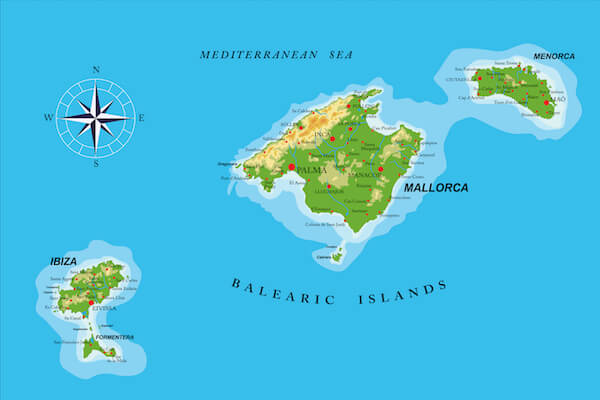 Balearic Islands
The Balearic Islands lie roughly 80 km/ 50 miles of Spain's easter coastline in the Mediterranean Sea. The four islands belonging to the Islas Baleares (Balearic Islands) are:
- Mallorca
- Menorca
- Ibiza
- Formentera
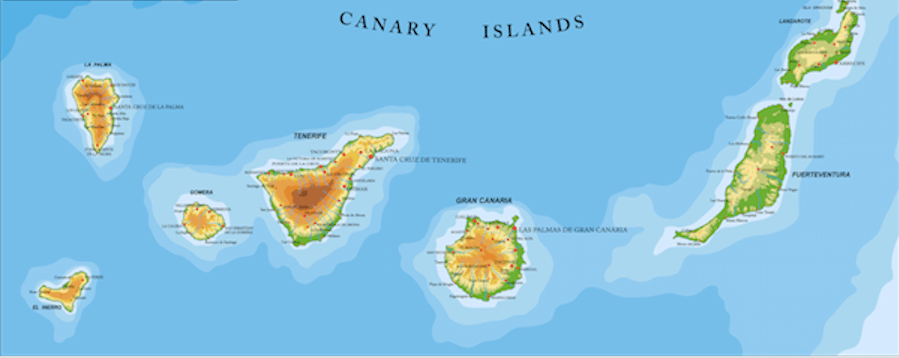 Canary Islands
The Canary Islands or Canaries lie roughly 100 km/ 62 miles off the African continent's coastline or to the west of Morocco. The islands were formed by volcanic eruptions of the Canary hotspot.
The eight largest islands belonging to the Islas Canares (Canary Islands) are:
- Tenerife or Teneriffa (the largest and most populous island of the Canary islands)
- Fuerteventura
- Gran Canaria
- Lanzarote
- La Palma
- La Gomera
- El Hierro
- La Graciosa (the smallest island of the Canaries; counted as the eighth island since 2018; before it was recognised only as an islet!)
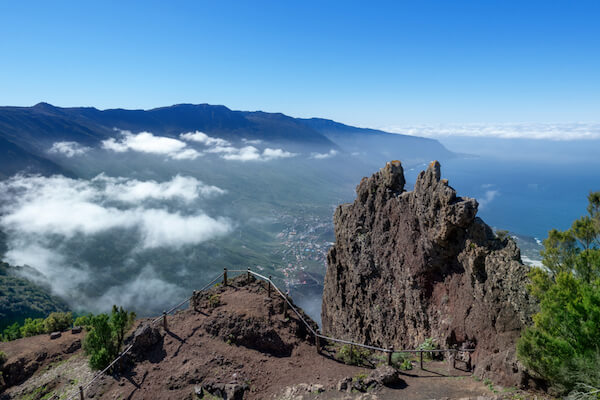 El Hierro
There are several other much smaller islands referred to as islets. More than 2 million people live on the Canary Islands.
Spain Facts
Geo Superlatives
- Longest river: Rio Ebro with 910 km/ 566 miles. Please note that the Tagus which is the longest river on the Iberian peninsula only passes through Spain over 716 km/ 446 miles.
- Highest mountain of Spain: El Teide on Tenerife (Canary Islands) with 3,718 m/ 12,198 ft. El Teide is a dormant volcano and the world's third tallest volcano that is located on an ocean island
- Highest mountain on the Spanish mainland: Mulhacén with 3,479 m/ 11,414 ft.
- Largest island: Mallorca which is one of the Balearic Islands
- Largest natural lake in Spain: Lake Sanabria
- Largest saltwater lagoon: Mar Menor, which is also considered as the largest salt lake in Europe
- Largest desert: The Tabernas desert in Andalusia is Europe’s only true desert!
- Largest city: Madrid
- The five biggest cities in Spain are:
- Madrid with 6.7 million inhabitants
- Barcelona with 5.6 million inhabitants
- Valencia with more than 835,000 inhabitants
- Sevilla with about 700,000 inhabitants
- Zaragoza with more than 600,000 inhabitants
10. The most densely populated metropolitan area in Spain is around the city of Barcelona. In some parts of the city, up to 36,000 people live in every square kilometre. That is similar to places such as Hong Kong and Old Delhi in India, which are famous for having very large numbers of people living in a small area.
11. Westernmost point of Spain: Kap Finisterre
12. Southernmost point of Spain and the European mainland: Punta de Tarifa
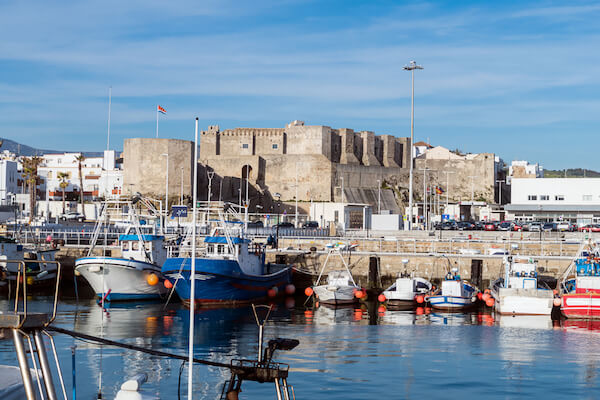 Tarifa in Spain
Spain Landmarks
Attractions for Kids
- Madrid: Spain's capital city is known for the royal palace and the Prado museum which is on the most important fine arts museums in the world. There some of the greatest paintings of European artists are displayed. Plaza de Cibeles with its fabulous fountain is another one of the main landmarks of the city.
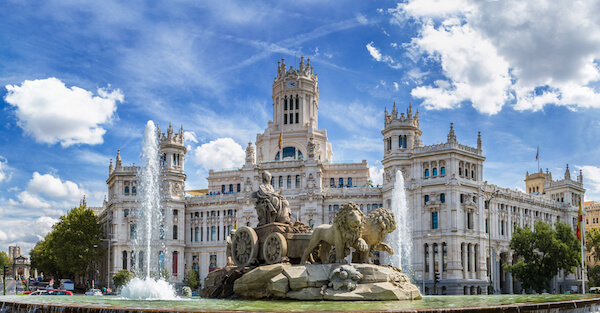 Cibeles Fountain in Madrid
Did you know?
|
- Barcelona: Explore the amazing buildings designed by artist and architect Gaudí such as the iconic landmark Sagrada Familia, the unfinished basilica, or the colourful mosaics in Park Guëll.
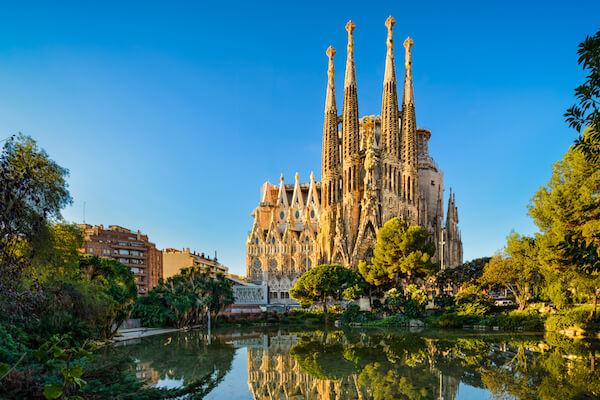 Sagrada Familia basilica
The beach is close to the city centre and the Barceloneta suburb is the most popular beach suburb of Barcelona. More than 500,000 visitors from all over the world visit this popular beach every summer. Did you know that Barcelona is ranked as one the best beach cities in the world?
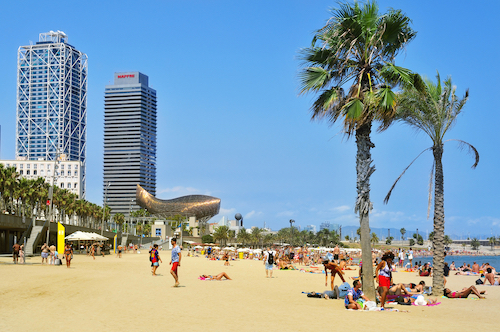 Popular Barceloneta Beach in Barcelona
- Valencia: The city which was once founded by the Romans, is famous for the annual Las Fallas spring festival in March which features giant puppets, fireworks and the Spanish national dish called Paella. The futuristic 'City of Arts and Sciences' complex with its awe inspiring exhibitions is much worth a visit as well.
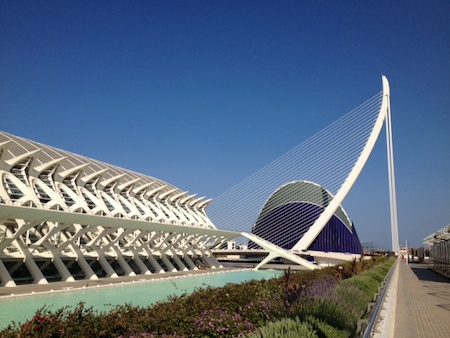 Arts and Sciences Museum Complex in Valencia
- Santiago de Compostela: The university town in northwestern Spain is famous for the shrine of apostle St James the Great, called Santiago in Spanish. The Camino pilgrimage route leads from the French border over 800 km/ 500 miles through northwestern Spain to Santiago de Compostela. Over 200,000 people take the pilgrimage on the Camino de Santiago or the 'Way of St James' every year.
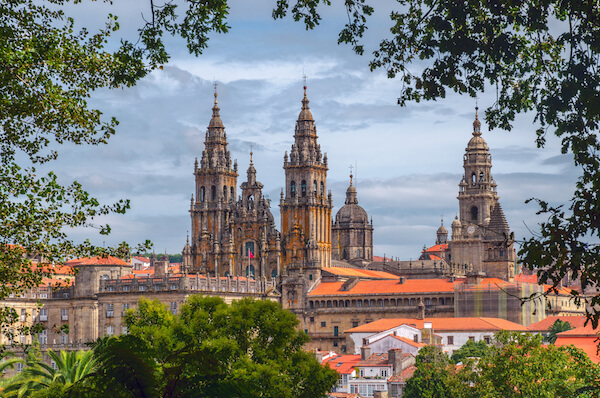 Santiago de Compostela
- Granada: The city located at the foot of the Sierra Nevada mountains is known for the majestic Alhambra palace and fortress. At this UNESCO world heritage site you can learn about Spanish history and the Spanish Islamic art while admiring the Arabic decorations and colourful mosaics.
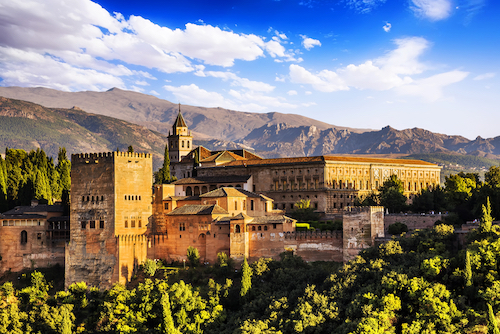 Alhambra with the Sierra Nevada in the background
- The Pyrenees: The high mountain range in northeastern Spain is popular for hiking and skiing.
Spain Facts
Spanish People
Most of the people in Spain live along the coastlines of the Mediterranean Sea and the Atlantic Ocean. Significant cities in the interior are the capital city Madrid and the cities Zaragoza and Sevilla. About 80% of the Spaniards live in urban areas.
Spain has her own royal family who lives in the royal place, the 'Zarzuela Palace', outside of Madrid. Felipe VI is the King of Spain since 2014. King Felipe VI and Queen Letizia have two daughters.
The Royal Palace, Palacio Real, in the city of Madrid is the place where official functions take place.
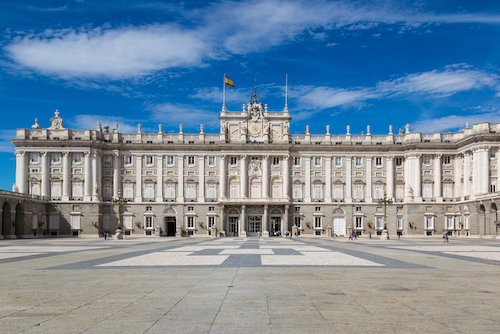 Royal Palace in Madrid - used for state functions
Many Spanish people are soccer fans. The top soccer clubs are: Real Madrid and Barça (FC Barcelona).
Spain is known for its flamenco dance. In Andalusia, in many towns and villages people dance the flamenco for special festivities. Some of the best flamenco dancers are said to be the Romani people ('gitanos' in Spanish). The gitanos arrived to Spain in the 15th century and still conserve their own language and traditions. In the image you can see girls performing the flamenco at a fiesta (festival) in Seville.
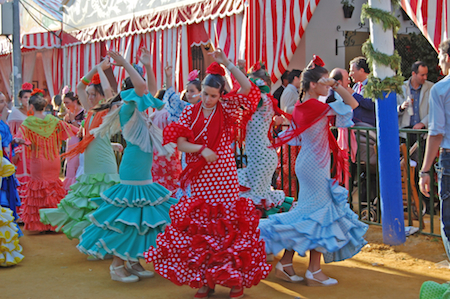 Flamenco dancers
Spain is also known for many festivals, such as the 'Tomatina' and the 'Running of the Bulls', that attract thousands of participants and visitors.
- The 'Tomatina' festival in the small town of Buñol, to the west of Valencia, is the world's biggest food fight, as the people throw tomatoes at each other. The festival takes place every year in August, but the event only takes one hour, as the people throw tomatoes at each other.
- Another famous spanish festival takes place in the town of Pamplona in Northern Spain. The highlight of the festival is the 'Running of the Bulls'. Six bulls are chasing people who try to run away in front of the animals. Bullfights also are popular events in the arenas of several cities, but are banned in others.
- The people of Tarragona gather every two years for the Concours de Castells Festival in October where participants build tall human towers.
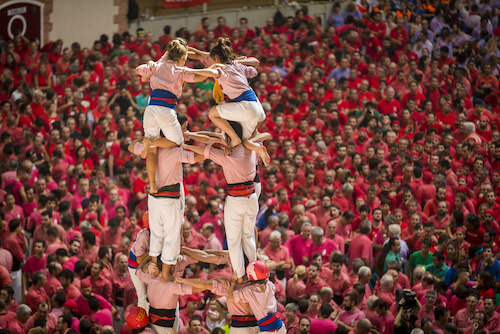 Competition in Tarragona - by David Ortega Baglietto
The competition includes four teams of athletes from the city and in total more than 40 teams from all over Spain. Sometimes the human towers reach up to 11 metres! Read more here.
As summers get very hot in the Spanish cities of the inland, many Spaniards flock to the seaside during summer holidays or visit the mountainous villages in the north of the country.
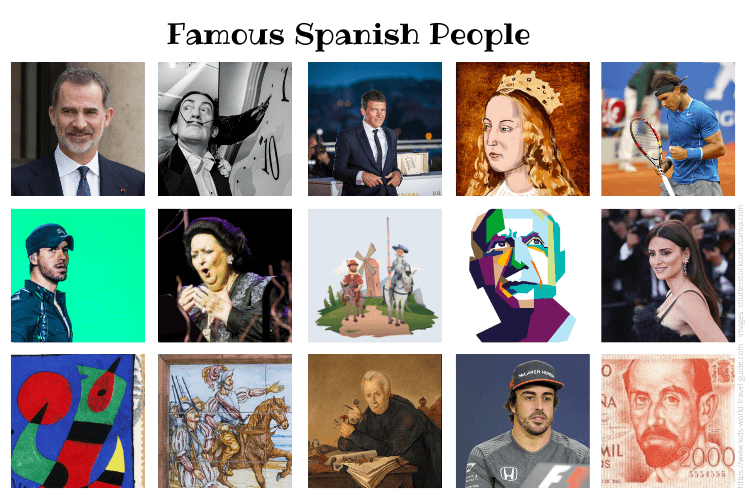
Famous Spanish People
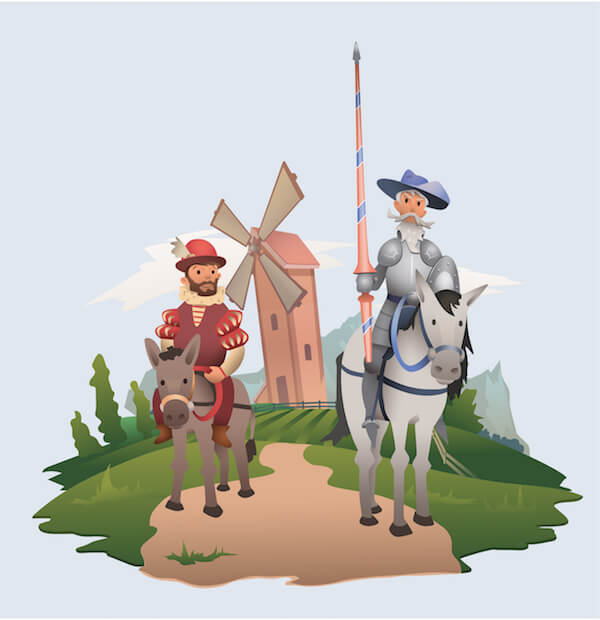 Don Quixote
Among the most well known Spanish artists are:
- Miguel de Cervantes (1547-1616): Spanish author of 'Don Quixote'
- Manuel de Falla (1876-1946): Spanish composer
- Joan Miró (1893-1983):Spanish sculptur and painter
- Salvador Dalí (1904-1989): Spanish painter who created surrealist paintings such as this one with the clock faces slipping down.
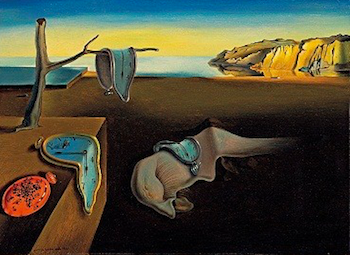 Dalí painting 'The Persistence of Memory'
- Antoni Gaudí (1852-1926): You can experience many of his great works in Barcelona, especially in the fascinating Parc Guëll and the still unfinished cathedral 'Sagrada Familia'. Read more here.
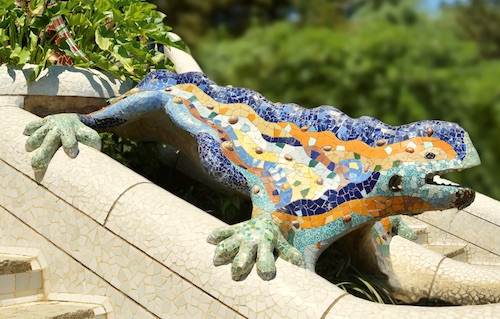 Mosaic Lizard by Antoni Gaudi - Park Guëll
- Pablo Picasso (1881-1973): painter
- Julio Iglesias (born 1943) and his son Enrique Iglesias (born 1975): both singers and songwriters
- Fernando Alonso (born 1981): Formula One racing car driver
- Rafael Nadal (born 1986): tennis player
- Julio Iglesias (born 1943) and his son Enrique Iglesias (born 1975): both singers and songwriters
- David de Gea (born 1990): soccer goal keeper, currently playing for ACF Fiorentina
- Rodrigo Hernández Cascante (born 1996): short: Rodri is a soccer player for Manchester United and winner of the Golden Ball at the 2026 Soccer World Cup
Spain Facts
Spanish Language
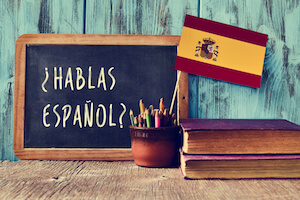 Do you speak Spanish?
Spanish is the world's second-most spoken native language. Spanish is spoken in Spain and in the South American countries, among them Argentina, Bolivia, Chile, Columbia, Ecuador, Mexico, Peru and Venezuela.
Which language is spoken in Spain? Castilian Spanish is spoken in all 17 regions, but other languages and dialects are spoken in various regions of the country:
- Castillian Spanish is recognised as 'typical' Spanish and is spoken across the country of Spain.
- Catalan is spoken in the region around Barcelona, and the province of Cataluña, as well as in Valencia. This language reads and sounds quite different to Castilian Spanish.
- Basque is spoken in the Basque Country in the north of Spain
- Galician is spoken in Galicia, in Spain's northwest.
Palabras en Español -
Spanish Words
Here are some useful Spanish words:
- Buenos días: Good day
- ¡Hola! Hello
- ¿Qué tal? How are you?
- si: yes
- no: no
- adiós: good bye
- gracias: thank you
- Te quiero: I love you
The Spanish language uses inverted question marks and exclamation marks and letters that use symbols on them, such as the ñ that has an accent called 'tilde' and is used in words such as España.
Spain Facts
Animals in Spain
In Spain you easily encounter mules and merino sheep especially in the highlands and in many place you will see are lizards and geckos.
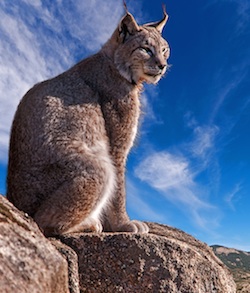 Iberian Lynx
The Mediterranean or Iberian lynx, however, is almost extinct. The lynx is one of the rarest cats in the world. There are only a few surviving mammals left in the South of Spain and Portugal. The Iberian lynx has distinctive ear tufts and spotted fur.
Other protected animals are the Iberian wild boar, the Iberian fox, the Iberian wolves and the Cantabrian brown bear.
The short-toed eagle is Spain's national bird and the bull is Spain's national animal.
Did you know?
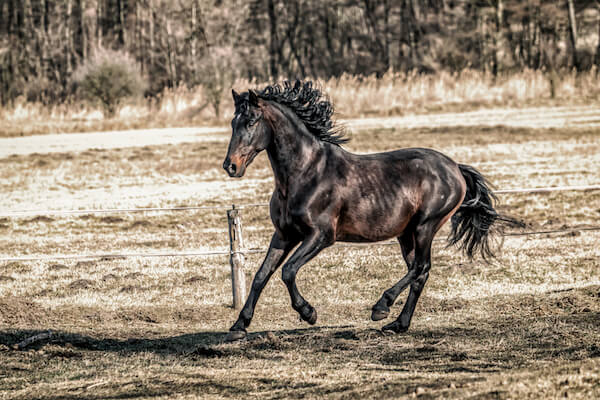 Andalusian horse Andalusian horse |
The European chameleon lives in the south of Spain near Málaga and Cádiz. This is the only wild chameleon found anywhere in Europe!
Spain Facts
Food in Spain
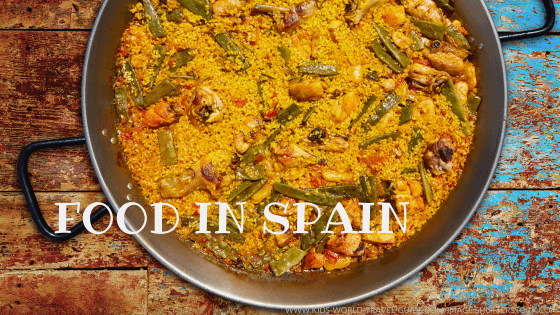
The main dishes in Spain usually contain potatoes, rice, fish, meat, beans, chickpeas and a large variety of fruits and vegetables. Olive oil is one of the main ingredients in the Spanish cuisine. Garlic, paprika (called pimentón) and bread are used in most savoury dishes.
Here are some typical Spanish dishes:
 Paella
- Paella: The traditional saffron-flavoured rice dish is cooked in a wide and flat pan. It was originally made with meat such as rabbit, chicken and snails in Valencia, but now the dish is popular in other regions too and is often served with shrimps, mussels and seafood.
- Gazpacho: Vegetable soup or stew
- Coca: A sweet bread
- Empanada: Stuffed bread or pie
- Turrón: Nougat sweet cake made with honey and nuts
- Jamón Serrano: Pork leg ham
- Chorizo: Pork sausage
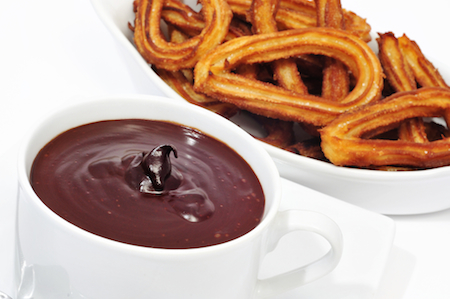 Churros
- Chocolate con Churros: Hot and very thick chocolate drink with sweet fried pastry (as you can see on the right). The fried dough sticks called Churros are dusted in sugar and then dipped in the thick hot chocolate. They are a popular breakfast treat especially in Madrid.
Spain Facts
Economy
Did you know, that Spain is the world's top olive oil producer?
Spain produces almost half of the world's olive oil. Most of Spain's olive oil comes from the region of Andalusia.
Latest update: OEC World 2024 - last accessed 20 July 2026
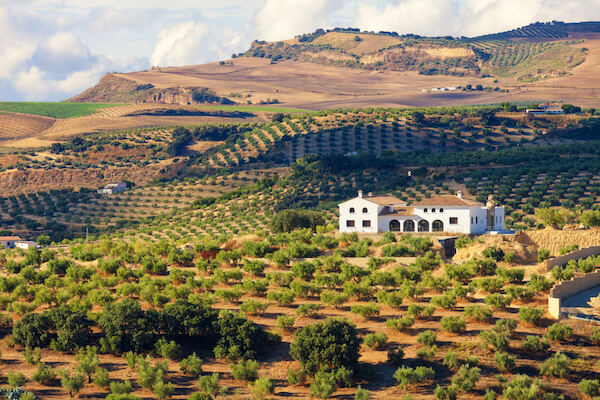 Olive farm near Cadiz
Machinery, clothing, cars and petroleum products are the main export products of Spain. Citrus fruit peel, nuts and melons are among the top agricultural products as well.
France, Germany and Italy are the main trading partners of Spain.
Spain Facts
FAQs
Where is Spain?
Spain is the largest country in Southern Europe and is located on the Iberian Peninsula.
What is the capital of Spain?
The capital of Spain is Madrid. The city is located in the center of the country.
Which languages are spoken in Spain?
The official language of Spain is Spanish, also called Castilian Spanish. Other languages that are spoken in different parts of the country include Catalan, Galician and Basque. Many people also speak English or French.
Which are the most famous attractions in Spain?
Among the most famous attractions in Spain are the Sagrada Família in Barcelona, the Alhambra in Granada, or the Royal Palace of Madrid.
Which agricultural produce is Spain famous for?
Spain is famous for producing olives and olive oil. It produces almost half of the world's olive oil and is one of the world's leading olive growers.
More about Spain
 |
 |
 |
 to be added soon... to be added soon... |
Popular Pages
 |
 |
 |
 |
Spain Facts for Kids | Resources
- Instituto Nacional de Estadística. "Population." INE. Last updated 12 February 2026. Last accessed 20 July 2026
- Spanish Tourism Office. "10 key moments of the great civilisations and the history of Spain" Spain.info. Last accessed 20 July 2026
- Madrid Official Tourism Info. "Madrid for Kids". Visit Madrid. Last accessed 20 July 2026
- Don Quijote. "Conversational Spanish". donquijote.org. Last accessed 20 July 2026
- Travel + Leisure. "Best Cities in Europe". Travelandleisure.com. 7 July 2026. Last accessed 20 July 2026
- Spain Tourism Official. "Geography and Landscape." spain.info Last accessed 20 July 2026
Images on Spain Facts for Kids: shutterstock, sxc.hu, wikicommons and own images.
Thanks a lot to Leyre, Leo and Carla for adding and checking content on this page.
Please continue to share your info and expand this Spain Facts for Kids section. Your support is much appreciated. Contact us here for any collaborations, additions or corrections.
Enjoy learning more great Spain Facts soon!
Return from Spain Facts to KidsWorldTravelGuide Homepage
Competition
2026
Recent Articles


-
Jamaica Facts for Kids: Geography, People, Culture and Wildlife
Oct 02, 26 08:16 AM
Our Jamaica Facts for Kids will provide an overview of the Caribbean island nation, about Jamaican geography, people, culture animals, food and economy -
Facts about Tuvalu for Kids: Geography, People and Wildlife
Sep 11, 26 07:15 AM
Explore our facts about Tuvalu and learn about the Polynesian island nation and its geography, people, economy, culture and animals - Worksheets included -
Animals in Norway for Kids: Wildlife Facts
Sep 03, 26 10:50 AM
Animals in Norway explained: meet reindeer, moose, polar bears, whales and puffins, with habitat facts and a short quiz for class.
***
More about Countries in Europe
Fun Facts
Fun Games
Other Spanish speaking countries

Like what you read?

|
Would you like a link to share the information with your friends, fans and readers? Simply use the html code below. Copy and paste onto your website, blog or Facebook page: <a href="https://www.kids-world-travel-guide.com/spain-facts.html">Kids World Travel Guide: Spain Facts for Kids</a> Thank You for spreading the word:-) |
Like us


Competition 2026