Animals in Norway:
Wildlife Facts for Kids
Do you want to know more about the amazing animals in Norway? You are at the right page!
Norway has a wide range of different habitats, from mountains and deep fjords to the tundra, icy Arctic landscapes and vast forests. These all are home to a large variety of wildlife.
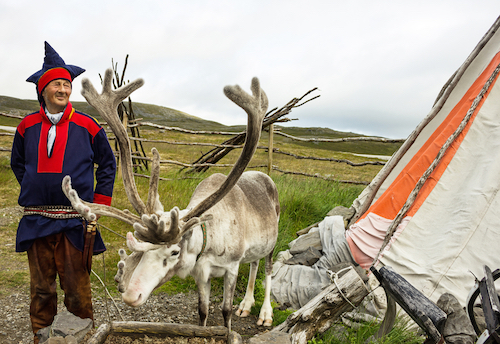
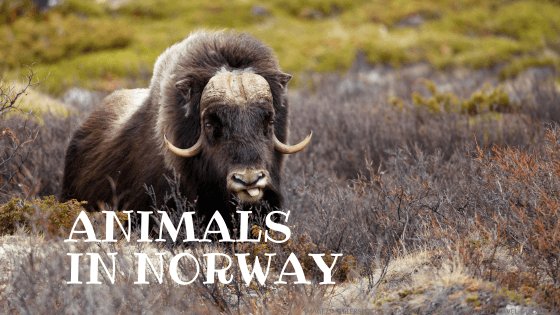 Do you know what animal in Norway this is?
From huge moose wandering through the forests to reindeer and musk oxen crossing the Arctic tundra, Norway has many fascinating animals to discover.
The coastal waters are rich in marine mammals, including whales, orcas and walruses and there are unique sea birds that only can be encountered in the North Atlantic such as the Atlantic puffins. And on the remote Svalbard archipelago, about 930 km/ 580 miles to the north of Tromsø, you might even spot a polar bear!

What you will find on our page about animals in Norway:
|
Norway's wildlife is closely connected to its varied landscape. The country stretches from forests and fertile valleys in the south to Arctic tundra in the north, while its long coastline provides an enormous marine habitat. Norway's animals are a wonderful example of how wildlife can adapt to some of the world's most challenging environments.
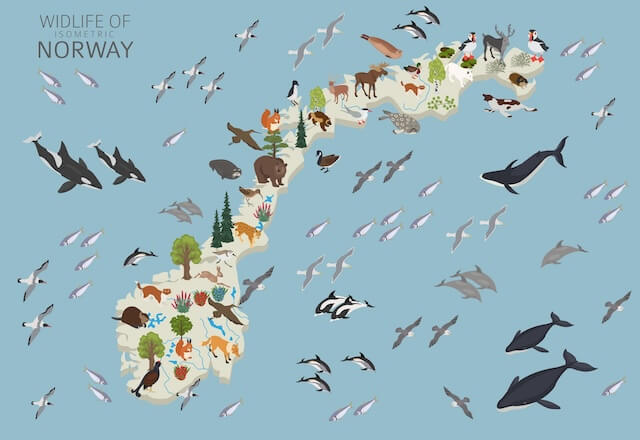 Wildlife of Norway
Some animals are very well adapted to the cold and snowy winters, while others spend much of their time searching for food among the trees or move south.
Now let’s go on a wildlife adventure and discover some of the most fascinating animals found in Norway!
Did you know?
|
For more info on where and when to spot your favourite animals, go to our special Norway wildlife spotting guide here.
Animals in Norway
Habitat: Forest and Mountain
Norway's forests, valleys and mountains provide habitats for many large mammals. Animals living in Norway's forests and mountains have developed amazing adaptations to survive their environment as you will read below. Here we encounter animals such as the reindeer, moose, Eurasian lynx, Eurasian wolf and brown bear.
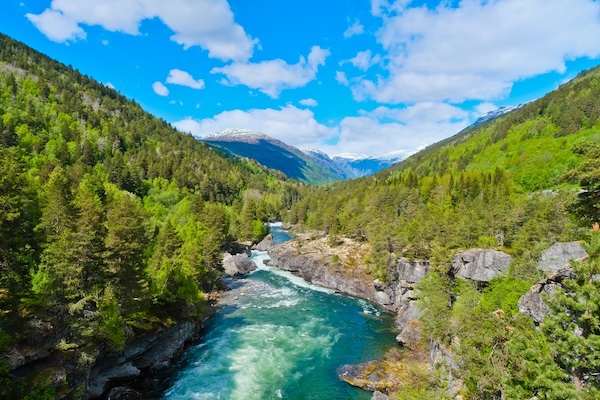 Forest landscape at Gudbrandsjuvet
Reindeer
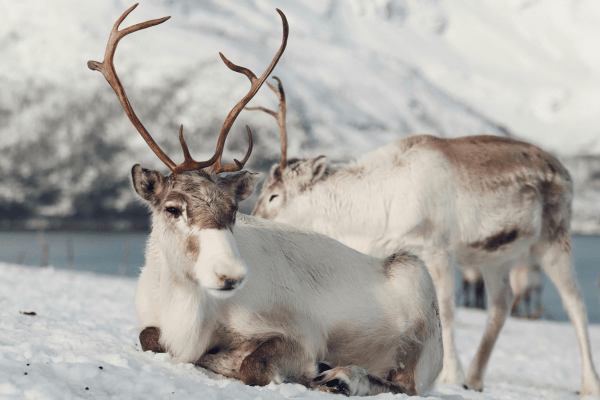
Reindeer are among the animals that we associate with Nordic countries. Reindeer can be encountered all over Norway, but most of them live in the Arctic tundra and northern forests, where they feed on lichens, grasses, leaves and other small plants.
These mammals grow up to about 1–1.2 m/ almost 4 ft tall at the shoulder.
 Reindeer
Reindeer have broad hooves that help them walk across snow and soft ground.
Did you know?
|
Moose
The moose, in Norwegian called elg, is the largest member of the deer family. In Norway, it is sometimes nicknamed the king of the forest!
Moose grow up to around 2.1 m/ almost 7 ft tall at the shoulder and use their long legs to move through deep snow and wet ground.
They live in forests, wetlands and mountain valleys and they feed on leaves, twigs, bark and aquatic plants.
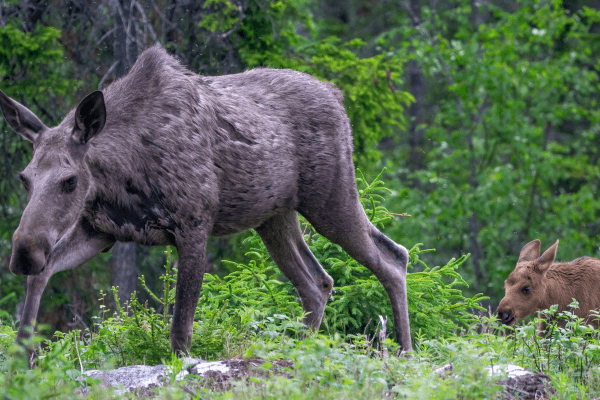 Moose female with baby
Despite their enormous size, moose are excellent swimmers and can cross lakes and rivers.
Moose can be encountered throughout Norway, but the best time to spot the animal is from May to September, especially around dawn and dusk.
Brown bear
Brown bears are mainly found in remote forests and wilderness areas close to Norway's borders with Sweden, Finland and Russia. There once were many more brown bears all across Norway, but today their population is relatively small because they were heavily hunted in the past.
Brown bears are omnivores, which means they eat both plants and animals. Their diet includes berries, roots, insects, fish, small mammals and sometimes even larger prey.
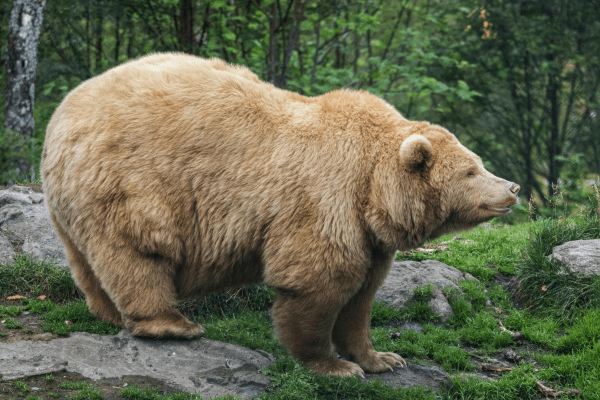 Brown bear
A larger male brown bear can weigh several hundred kilograms and can reach up to 3 m/ 10 ft in hight if it stands on its hind legs!
Did you know?
|
Eurasian wolf
Eurasian wolves lives in remote forests and wilderness areas, mainly in the southeast of the country, therefore they are not easy to spot.
Wolves are social animals and usually live in family groups called packs. These animals communicate with each other using sounds, body language and scent and also often hunt together.
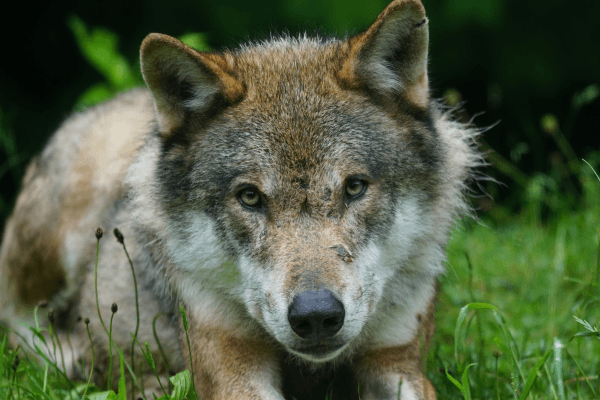 Eurasian wolf
Wolves are around 1–1.5 m/ 3.2-5 ft long and their favourite food is deer, moose and reindeer but they also eat other smaller mammals.
Eurasian Lynx
The Eurasian lynx is Norway’s only wild cat! It has large, furry paws that act like snowshoes. These help the lynx walk across deep snow without sinking in.
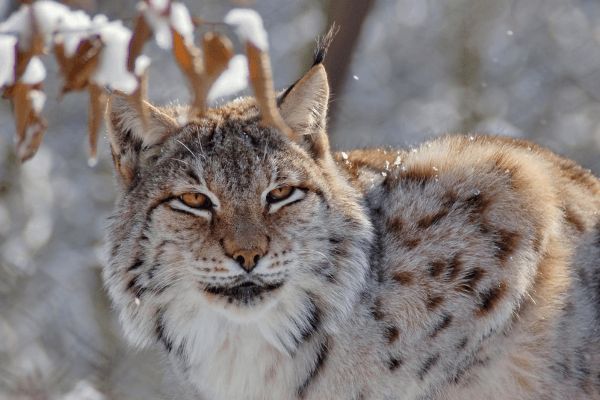 Eurasian lynx
Lynx live in forests and mountainous areas, especially in eastern and central Norway.
They grow up to 1.3 m/ 4.2 ft long and males can weigh up to about 25 kg / 55 pounds. Their diet consists of roe deer, hares, rodents and birds.
Animals in Norway
Habitat: Tundra and Arctic
In Norway's northern regions, the climate becomes colder and the landscape is much more rugged.
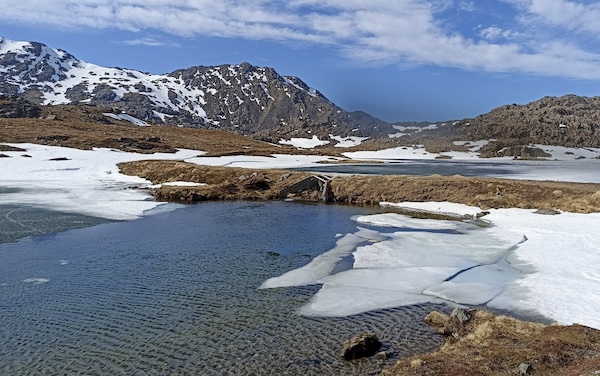 Arctic landscape at Magerøya in northern Norway
The animals that live here have developed special adaptations that help them survive freezing temperatures and snow that have to be endured especially during the long Arctic winters. Let's learn about Arctic foxes, lemmings, musk oxen and polar bears.
Arctic Fox
The Arctic fox is perfectly adapted to life in the far north. The coat of this fox changes colour with the seasons!
During winter, its fur can become almost completely white, helping the fox blend into the snowy surroundings. In summer, its coat becomes darker and brownish in colour and thus provides camouflage among rocks and vegetation.
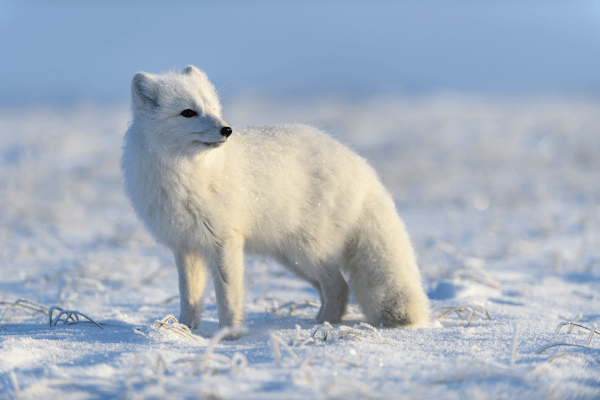 Arctic fox
Arctic foxes grow around 45–70 cm/ 17-27 inches long. Their main diet consists of lemmings, birds, eggs and small mammals
Did you know?
|
Lemming
The lemming is a small Arctic mammal. It lives in northern Norway's mountain tundra and forest areas and feeds mainly on grasses, mosses and other plants.
Only about 7–15 cm/ 3-6 inches long, lemmings are tiny compared to other mammals such as lynxes, wolves or majestic moose. However, lemmings are an important part of the Arctic food web. Predators such as Arctic foxes, birds of prey and other mammals depend on them for food.
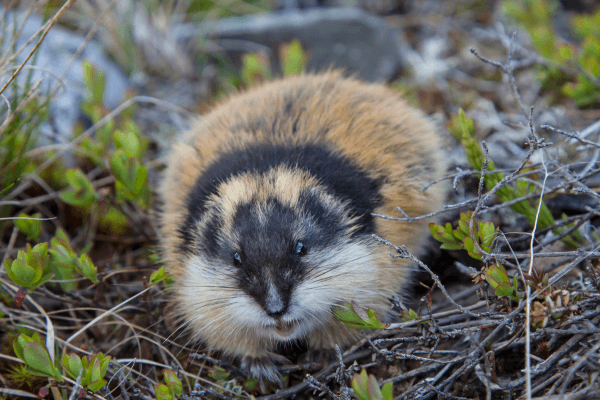 Lemming
Lemming numbers can rise and fall dramatically, depending on weather conditions and the availability of food for them. When there are lots of lemmings, predators may also have more food available and populations of foxes and other mammals will grow as well.
Musk Ox
The musk ox is a large, shaggy animal that looks a little like a mixture of a cow and a sheep.
In Norway, wild musk oxen are found in mountain tundra and the highlands in central Norway. Many of them live in the Dovrefjell mountains. Their incredibly thick coat helps them survive the harsh mountain winters.
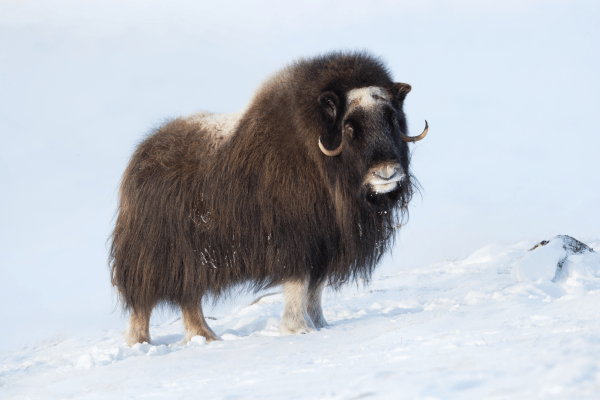 Musk ox
Their diet consits of grass, mosses, herbs and other tundra plants and the musk oxen can grow up to 1.5 m/ 5ft tall at the shoulder .
Musk oxen have incredibly thick coats to protect them from freezing temperatures of the harsh Arctic winters.
Polar Bear
Polar bears are the largest land predators in the Arctic. They live on Arctic sea ice and in Norway, polar bears are found in the coastal areas of Svalbard.
Due to the melting ice caps, they struggle to find food when hunting and thus move closer to villages where people live.
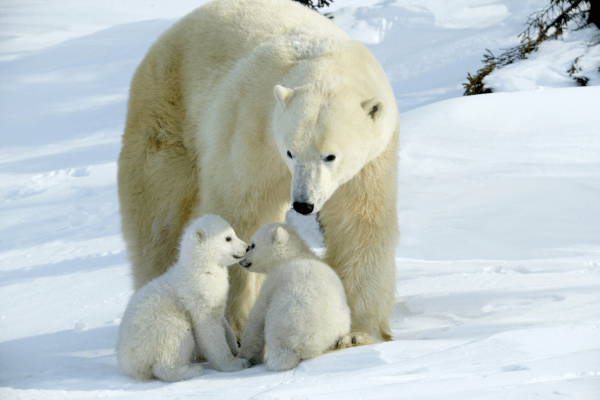 Polar bear and cubs
Male polar bears can weigh more than 500 kg and they mainly feed on seals.
Polar bears are excellent swimmers and can travel long distances through cold Arctic water as they have thick fur and a layer of fat to keep them warm.
Here some fascinating facts about polar bears in Svalbard - video by the France 24 - English channel (about 6 minutes long)
Animals in Norway
Marine Animals
Norway has a very long coastline, thousands of islands and countless fjords.
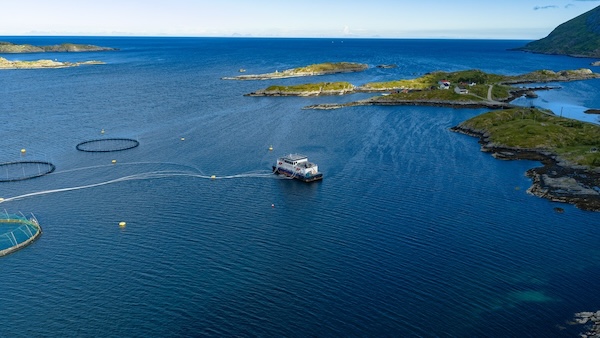 Fish farms around the Lofoten islands
The cold and nutrient-rich Atlantic Ocean provides food for an incredible variety of marine animals. Amongst these are orcas, whales, walruses and salmon.
Orca
Orcas live in the coastal waters and fjords of Norway, especially in the country's north.
Orcas are the largest members of the dolphin family and are highly intelligent. The huge animals can grow up to around 9 m/ 29 ft long .
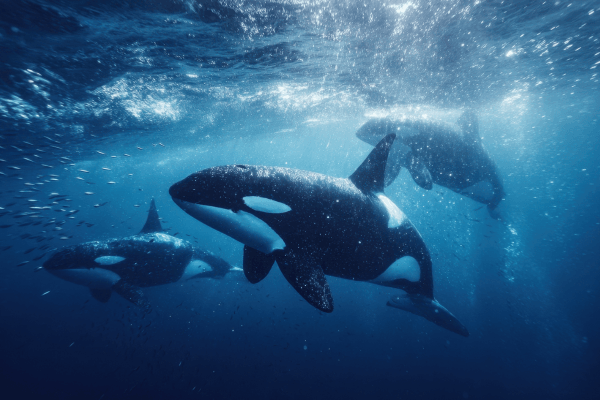
These marine mammals often hunt together in groups. They feed on fish and other marine animals.
Walrus
The walrus is another huge Arctic marine mammal. It is famous for its long tusks and enormous whiskers. In Norway, walruses are mainly found around Svalbard.
Walruses spend time both in the water and on land or sea ice.
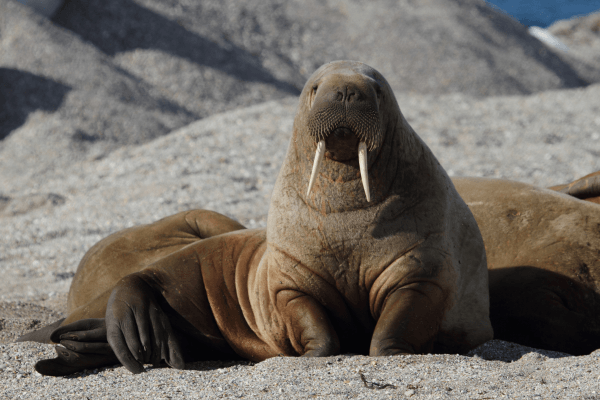 Walrus
Large males grow huge and can weigh more than 1,000 kg!
Their diet consists mainly of clams and other shellfish.
Did you know?
|
The best time to encounter walruses is summer from May to September in Svalbard, where local tour companies offer boat trips to the walrus colonies along the coastline.
Whale
Several whale species are found in Norwegian waters. These include humpback whales, minke whales, sperm whales and fin whales.
Humpback whales are very impressive because of their enormous size. The size of the whales depends on the species but some whale species can grow to more than 20 m/ 65 ft long!
Whales live in the coastal waters, fjords and the open sea and are the largest animals that live in Norwegian waters. They can sometimes be seen feeding in the waters of northern Norway as here in Tromso.
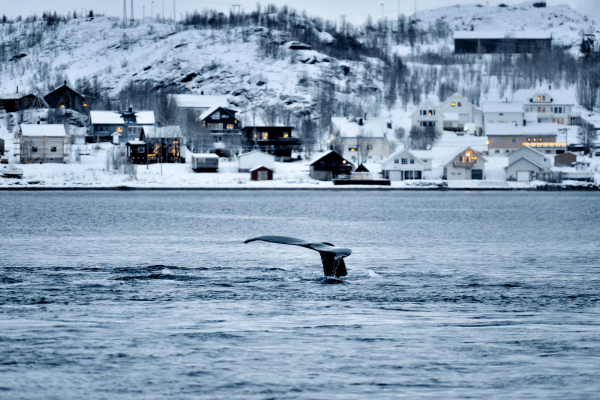 Whale fluke near Tromso
Their favourite food is small fish, krill and other small sea creatures.
The best region in Norway to watch whales is generally Vesterålen, but in winter head to Tromsø and Skjervøy where you will not only be amazed by these fantastic creatures but also enjoy the fascinating Northern Lights.
Norway has about 300 fish species, of these roughly 40 are freshwater fish. One of the most famous fish species is the Atlantic salmon.
Atlantic Salmon
Atlantic salmon are famous in Norway and are found in many of the country's clean rivers, fjords and coastal waters. There is however, not only wild salmon, but there are many salmon farms all over the country as this fish is one of the most important export products of Norway!
Salmons spend only some part of life in the ocean, but they return to freshwater rivers to reproduce.
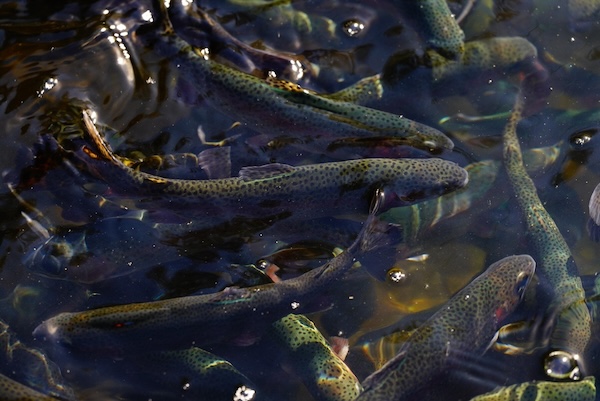 Atlantic salmon
Salmon can grow up to about 1 m/ 3.2 ft long and fees on insects and small animals when young, but also feeds on fish and other small marine animals when at sea.
Did you know?
|
Animals in Norway
Birds
The mountains, forests, cliffs and coastline provide homes for hundreds of bird species. Some are especially easy to recognise such as the puffins and the white-tailed eagles.
Puffin
The Atlantic puffin is one of Norway's most colourful seabirds. It has a black-and-white body, bright orange legs and a colourful beak.
Puffins spend most of their lives at sea and come ashore during the breeding season. They nest in burrows or rocky areas on islands and coastal cliffs and feel mainly on small fish.
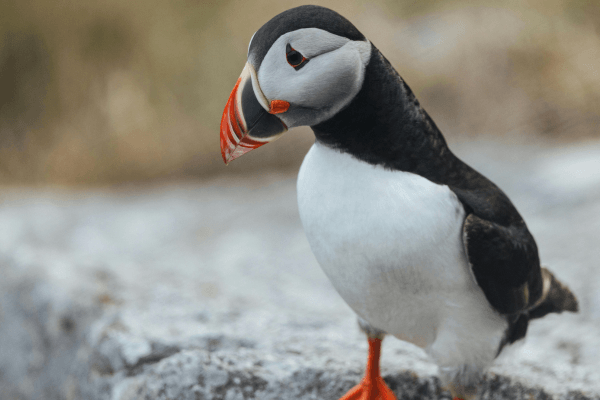 Puffin
Puffins only grow around 30 cm/ about 1 ft tall. The small birds can carry several small fish in their beaks at once. Their specially shaped beak helps them keep hold of their catch.
Puffins are best spotted along the Norwegian coast during breeding season in June and July. Røst (Lofoten), Andøya in Vesterålen, Lovund in Helgeland and Runde in Western Norway are known as some of the best destinations to watch puffins.
White-tailed Eagle
The white-tailed eagle is one of the most impressive birds of prey found in Norway. Adult eagles have a distinctive white tail, which makes them easier to identify.
This eagle has a huge wingspan of up to 2.4 m/ 7.8 ft and can often be seen soaring above the country's coastline, fjords and lakes.
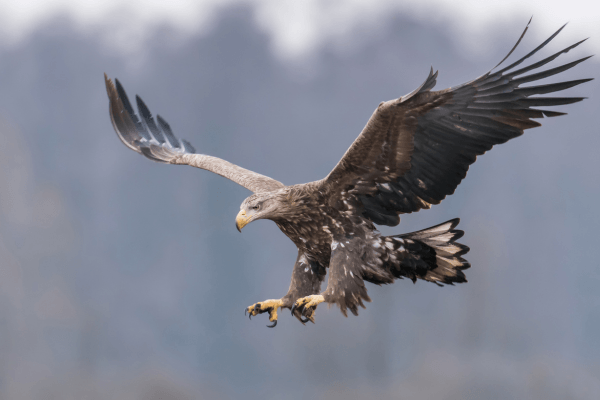 White-tailed eagle
The enormous wings allow them to soar over large distances. Their habitats are coastal areas, fjords, lakes and rivers . Their favourite food is fish, birds and carrion.
Did you know?
|
As you have learned a lot about wildflife in Norway, you certainly will find it very easy to answer our quiz questions below.
Animals in Norway
Wildlife Spotting Guide
Animals in Norway
Test your Knowledge
Test your knowledge about animals in Norway with our short multiple-choice quiz! You will find the answers to the quiz at the bottom of the page.
1. Which is the largest deer species in Norway?
A. Reindeer
B. Moose
C. Lynx
D. Brown bear
2. Which Norwegian animal changes the colour of its coat between seasons?
A. Arctic fox
B. Moose
C. Wolf
D. Puffin
3. Which animal is Norway's only wild cat?
A. European wildcat
B. Bobcat
C. Eurasian lynx
D. Snow leopard
4. Where are polar bears mainly found in Norway?
A. Around the capital city Oslo
B. Forests of southern Norway
C. Svalbard
D. Dovrefjell mountains
5. What unusual feature do both male and female reindeer have?
A. Tusks
B. Antlers
C. Stripes
D. Webbed feet
6. Which Norwegian animal is actually the largest member of the dolphin family?
A. Humpback whale
B. Walrus
C. Orca
D. Minke whale
7. Which bird has a colourful beak and spends much of its life at sea?
A. Puffin
B. White-tailed eagle
C. Raven
D. Owl
8. Which animal has large furry paws that act like snowshoes?
A. Brown bear
B. Eurasian lynx
C. Wolf
D. Lemming
Easy, isn't it? Well, if you have read our page, you will know!
And the answers are:
- Moose (B)
- Arctic fox (A)
- Eurasian lynx (C)
- Svalbard (C)
- Antlers (B)
- Orca (C)
- Puffin (A)
- Eurasian lynx (B)
So... how many did you get it right? All eight? Wow! Then you are truly a star! Well done!
Popular Pages
Animals in...
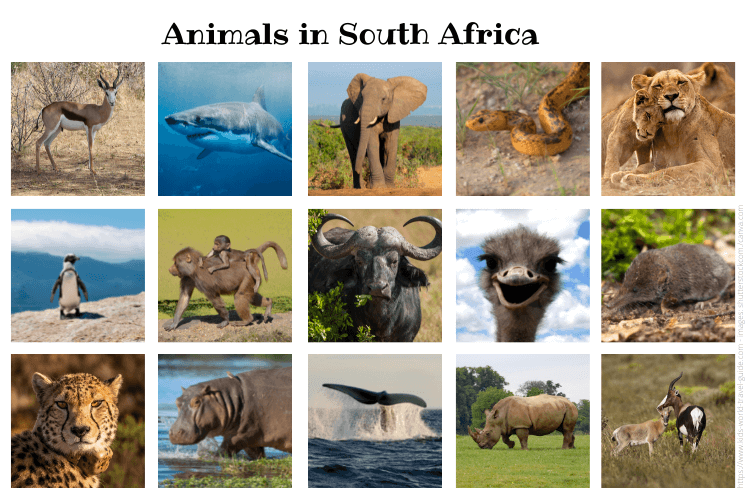
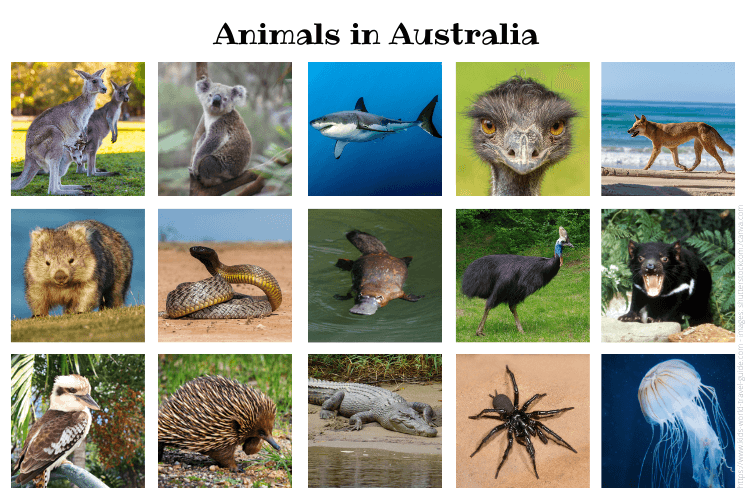
 |
 |
Learn more about Norway
Resources | Animals in Norway
- Norway Tourism. "Wildlife Safaris." VisitNorway. Last accessed 3 September 2026
- Responsible Travel. "Best time to see wildlife in Norway." ResponsibleTravel. Last accessed 3 September 2026
- Visit Tromso. "Arctic wildlife in Tromso". VisitTromso. Last accessed 3 September 2026
Competition
2026

Recent Articles


-
Facts about Tuvalu for Kids: Geography, People and Wildlife
Sep 11, 26 07:15 AM
Explore our facts about Tuvalu and learn about the Polynesian island nation and its geography, people, economy, culture and animals - Worksheets included -
Animals in Norway for Kids: Wildlife Facts
Sep 03, 26 10:50 AM
Animals in Norway explained: meet reindeer, moose, polar bears, whales and puffins, with habitat facts and a short quiz for class. -
Norway Facts for Kids: Fjords, Vikings and Reindeer
Sep 01, 26 09:01 AM
Learn Norway Facts about the land of the Nobel Prize, the Vikings, reindeers, trolls and other attractions
Fun Facts


More about Countries in Europe
















Megadiverse Countries























Join us on Facebook
Competition 2026