Facts about Malawi
Here are some interesting facts about Malawi for kids which were chosen and researched by kids especially for kids.
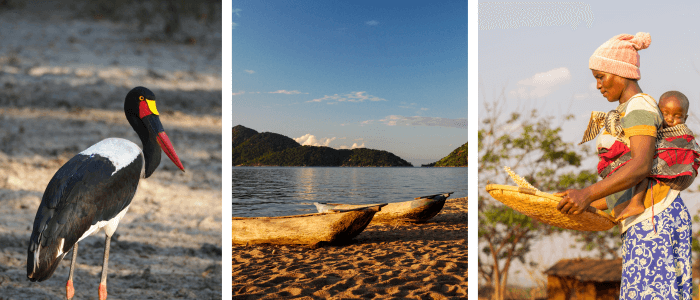 Facts about Malawi: Spoonbill, Lake Malawi, Malawian people
Malawi Facts for Kids
- Continent: Africa
- Population: about 22 million people (2026)
- Capital city: Lilongwe with about 1.4 million people
- Name: Republic of Malawi
- Nickname: "The Warm Heart of Africa"
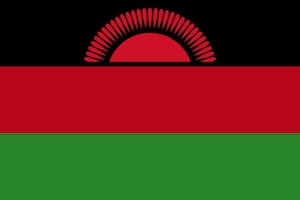 Flag of Malawi
- Government: presidential republic
- Languages: English (official language), Chichewa (national language)
- Literacy: about 70% of all over 15 years of age can read and write
- Religion: mainly Christians (77%) of these 17% are Roman Catholics, about 14% of the population are Muslim
- Currency: 1 Malawian kwacha (MWK)

- National Animal: African fish eagle
- National Colours: red, green and black
- National Day: 6 July (Independence Day)
- National Anthem: "O God Bless Our Country of Malawi"
- Motto: Unity and Freedom
- History: The first people who settled in the area were the Akafula people who came from the western parts of Africa. Many Malawians are descendants of the Bantu people who migrated across Africa for hundreds of years until the 15th century. Arab slave traders who sailed from the island of Zanzibar in the Indian Ocean landed on the shores of Lake Malawi in search of slaves. The slave trade continued in Malawi from 1840 until the late 19th century. In 1891 Malawi became a British Protectorate and the region was renamed Nyasaland. Malawi gained independence from Britain in 1964.
- President: Peter Mutharika (since 2025)
Facts about Malawi | Malawi Geography
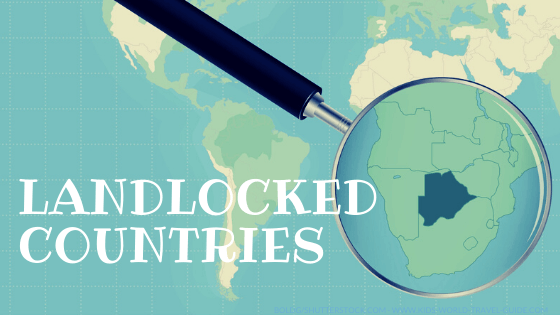
Malawi is a small landlocked country located in southeastern Africa and borders three countries: Tanzania, Mozambique and Zambia. The country lies south of the Equator.
Malawi is a long and narrow country with Lake Malawi forming the border to Tanzania in the northeastern parts of the country. The Great Rift Valley runs through Malawi and shapes the landscape with its mountains and valleys.
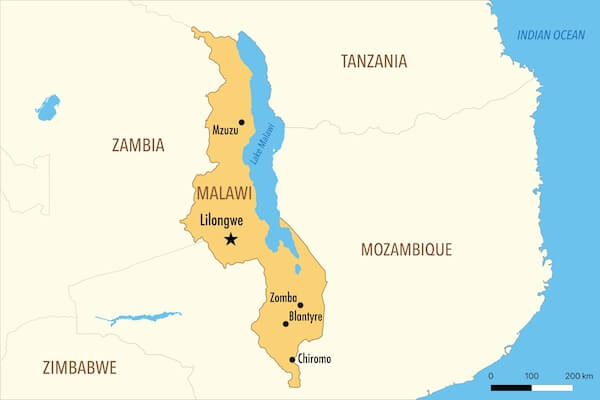 Malawi in Eastern Africa
While Lilongwe in the centre of the country is the capital city, the most important commercial centre is Blantyre in the country's south. Malawi is one of the smaller countries on the African continent and about half the size of Uganda!
Malawi would fit about ten times into South Africa and is a bit larger than Bulgaria or Honduras or a bit smaller than the U.S. state of Pennsylvania/ USA.
The name Malawi comes from an old African kingdom called the Maravi Empire. This Empire existed hundreds of years ago in the area that is now Malawi, as well as parts of Mozambique and Zambia. European visitors later changed the name Maravi into Malawi when writing it down.
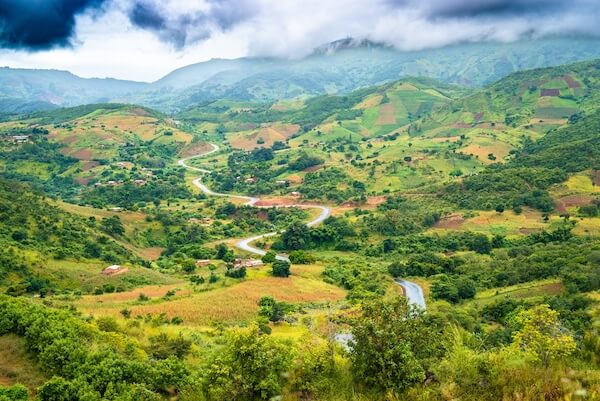 Malawi's rolling hills
Malawi has three main geographic regions: Lake Malawi & Rift Valley Lowlands. Lake Malawi is one of Africa’s largest and deepest lakes. The area around Lake Malawi is popular for tourism and beaches.
The Central Plateau is a region with rolling hills and the main farming area of the country. Malawi’s capital city, Lilongwe, is located in this region. The climate here is milder and cooler than in the lowlands.
Mount Mulanje, the country's highest mountain is located in the Malawi highlands in southern Malawi. Mountains can be found in the country's South and North. In the Shire Highlands, a plateau in southern Malawi, there are many tea plantations as the climate is cool and wet. Sometimes, one can experience frost high in the mountains, but snow does not fall in Malawi.
The largest cities are Blantyre, Mzuzu and Zomba, which was the capital city of the country until 1975.
Facts about Malawi
Geography Superlatives
- The longest river in Malawi is the Shire River which is about 402 km/ 250 miles long. The source is at Lake Malawi and it flows through the southern part of the country until it joins the Zambezi River in neighbouring Mozambique.
- The largest city in Malawi is the capital city Lilongwe.
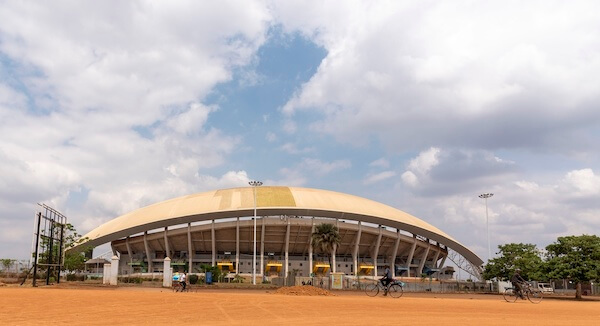 Lilongwe National Stadium - image by Peter Titmuss
- The largest lake in Malawi is Lake Malawi which covers about one-third of the country and is one of the largest lakes in Africa. Lake Malawi is also one of the deepest lakes in the world and is over 700 metres/ 2,296 feet deep.
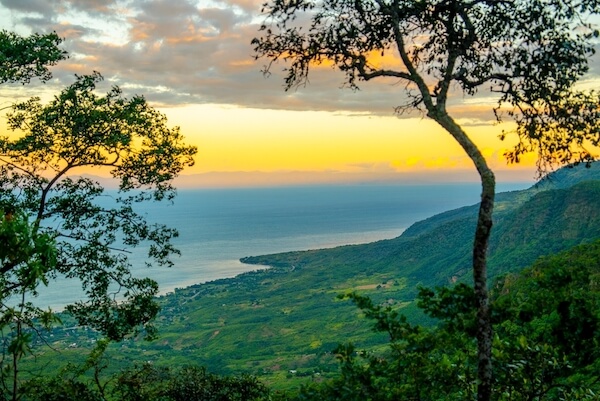 Sunset over Lake Malawi
- The Manchewe waterfalls are the highest waterfalls in Malawi.
- Malawi's highest mountain is Mount Mulanje with 3,002 metres/ 9,849 feet. The mountain is located in southern Malawi and is one of the world's largest inselbergs.
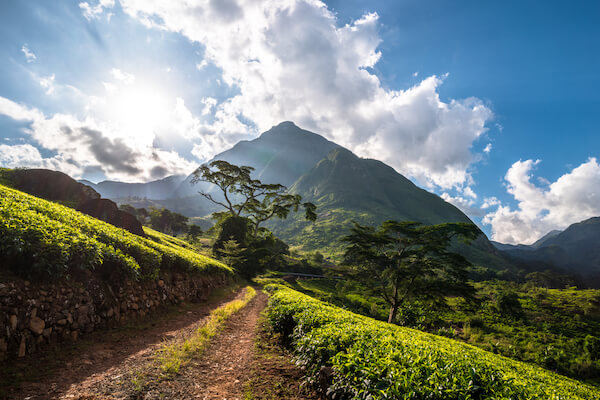 Hiking up to the Mount Mulanje Plateau
- Nyika National Park is the largest national park of Malawi. The park in the country's north is known for its grasslands, wildflowers including orchids as well as for its rich wildlife such as elephants, zebras, hyenas and even leopards.
Facts about Malawi | Climate
Malawi has a tropical climate with three main seasons:
- Rainy season: The wettest time of the year lasts from November until April. This season is very important for agriculture, as the heavy rains help crops grow but occasionally can also cause flooding.
Warm and wet. Fields turn green, and crops grow. - Cool dry season: The months from May to August are the best months to see wildlife and visit national parks. Then the days are cooler, but there can be chilly nights, especially in the mountains.
- Hot dry season: September and October are the hottest months of the year. The temperatures are very high and there is only little rain. As water levels drop during these months, some areas can experience drought conditions. People prepare the fields during this time for the next planting season.
Attractions in Malawi
Facts about Malawi
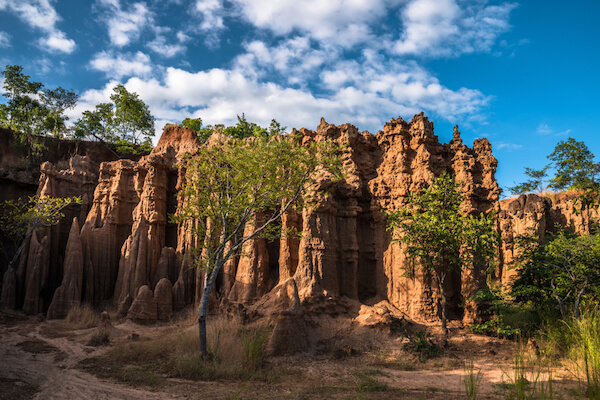 Malape Pillars in the Chikala Hills
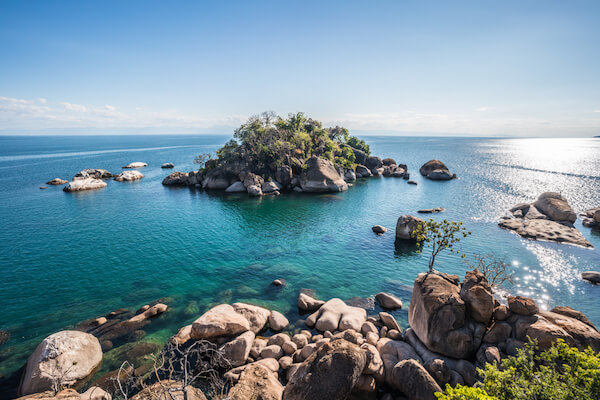 Otterpoint at Chembe
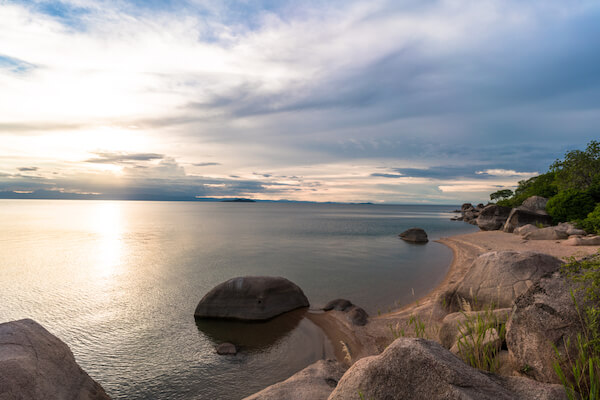 Domwe Island Beach
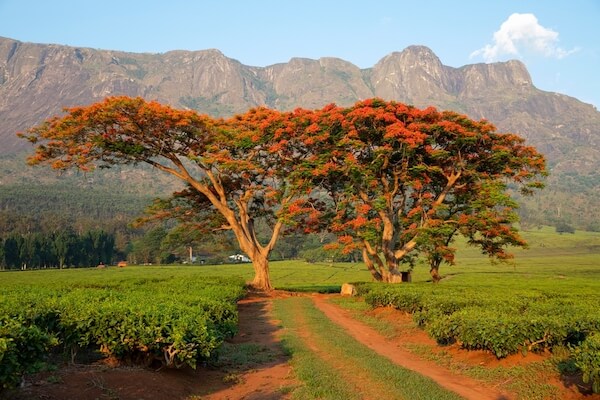 Tea plantation in Malawi
Facts about Malawi for Kids Wildlife and Animals
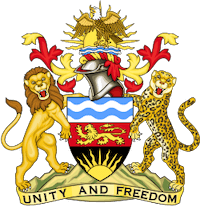
The national animals is the African fish eagle. The Thompson's gazelle is also often mentioned, however, the fish eagle is shown on the official coat of arms, together with a lion and a leopard.
Lake Malawi has over 1,000 different species of fish and as such more species of fish in one lake than any other lake in the world! The lake is famous for its colourful freshwater fish, especially the cichlids, many of these species are found nowhere else on Earth. In Malawi, you can even swim with these colourful tiny fishes.
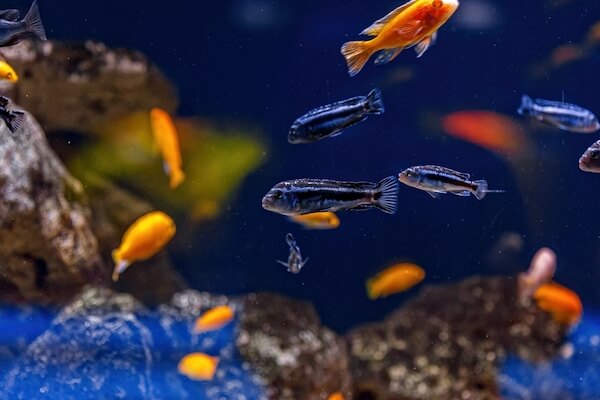 Cichlids
Hippos are commonly seen in rivers and lakes, especially in and around Lake Malawi, thus check the area for those important "Beware of Hippos" warning signs.
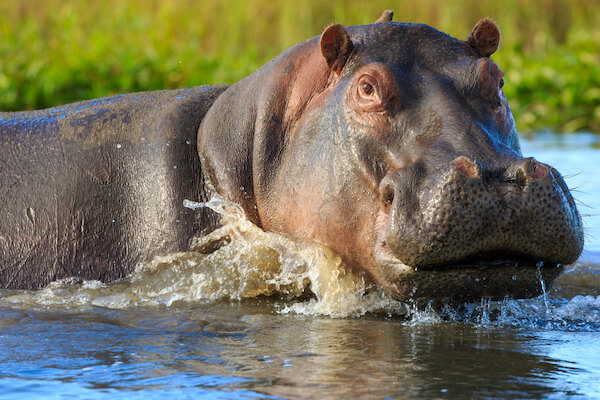 Hippopotamus in Lake Malawi - image by Radek Borovka
Birdlife is rich and diverse, with over 650 bird species recorded in the country. The wetlands in Malawi are home to the African fish eagles, spoon-bills, pelicans and yellow-billed storks.
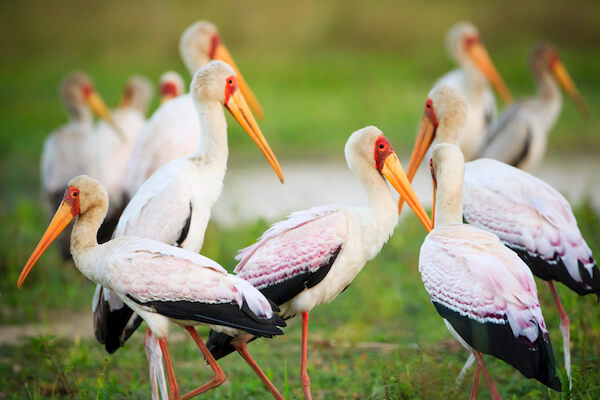 Yellow-billed storks
Malawi has five national parks and four national reserves where wildlife like elephants, hippos, zebras, antelopes, and crocodiles are protected from poachers.
More Facts about Malawi
People
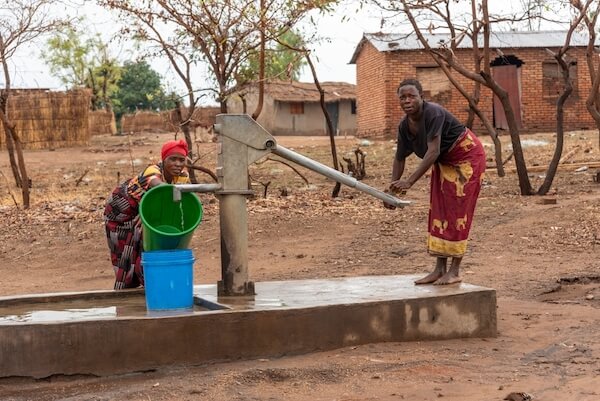 Malawian women collecting water - image by Peter Titmuss/ shutterstock.com
There are more than 20 different ethnic groups live in Malawi, including the Chewa, Yao, and Tumbuka. The largest ethnic group is the Chewa. Their mother tongue Chichewa is the most spoken home language in Malawi.
English is the official languages, but many people speak local languages at home. Malawians in urban areas speak English fluently, and even in rural areas, especially young people speak English quite well.
Family and community life are very important, and people often help one another.
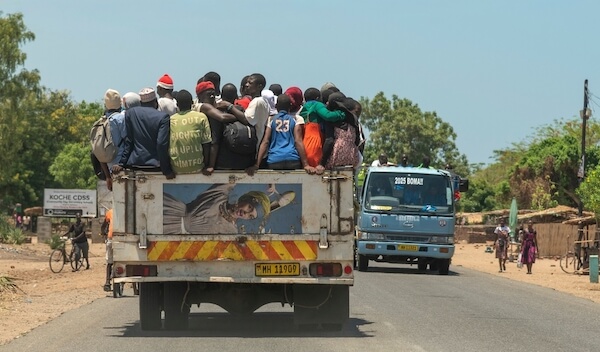 Malawi transport option - image by Peter Titmuss
Traditional dances are an important part of Malawian culture, often performed during festivals and ceremonies.
There are several events, visitors to Malawi should take note of. The Lake of Stars Festival is one of the African continents most diverse music and arts festival that takes place at Lake Malawi every October.
Facts about Malawi | Economy
Malawi is one of the least developed countries in Africa and almost 85% of the people live in rural areas and sustain themselves by farming their own little piece of land, growing and selling crops to feed their families. Maize is the most important crop and is eaten almost every day.
Tea and tobacco are major export products, helping Malawi earn money from other countries.
The main agricultural produce are: corn, tea, sugarcane, potatoes, sorghum and cotton as well as tobacco.
The main trading partners of Malawi are China, South Africa, UAE and India.
Facts about Malawi | Food in Malawi
Malawian food is simple, filling, and based on local crops. Food is traditionally cooked over open fires, especially in rural areas.
Staple foods in Malawi include corn, beans, pumpkin leaves, cassava leaves, mustard greens, okra, ground nuts (peanuts) and tomatoes. Peanut flour which is high in protein, is added to many dishes whether they contain vegetables or bean or meat, this makes the sauces more rich and filling.
Nsima is the most important food in Malawi and considered the national dish of Malawi.
This thick porridge is made from corn flour and water and eaten with the hands and shaped into small balls.
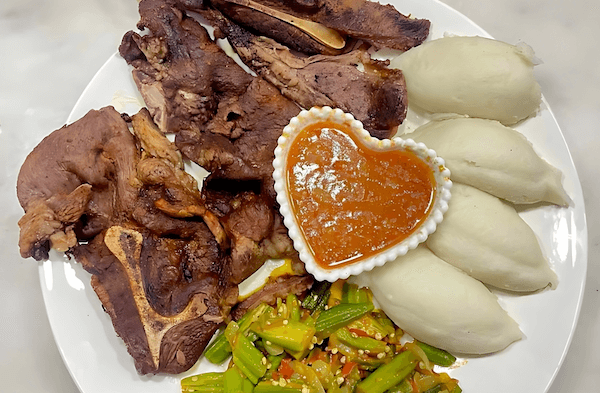 Nsima - image by Naazayn/ shutterstock.com
Sweet potatoes and roasted corn are common street snacks as is cassava which is eaten mainly boiled or dried.
Popular meats include chicken, goat, and beef. Meat is usually eaten on special occasions, not every day. In the regions around Lake Malawi, fish is regularly prepared.
Typical food in Malawi:
- Nsima: this thick porridge is made from maize (corn) flour and water and eaten with the hands. Nsima is usually served with relishes as side dishes, these are called ndiwo or a peanut-based sauce.
- Ndiwo: sauce that can contain leafy greens, beans, tomatoes and onions, but can also include fish or meat.
- Chambo: typical local freshwater fish that is dried in the sun, grilled, boiled or fried and eaten with soup.
- Bonya: a popular dish made from vegetables cooked with ground peanuts.
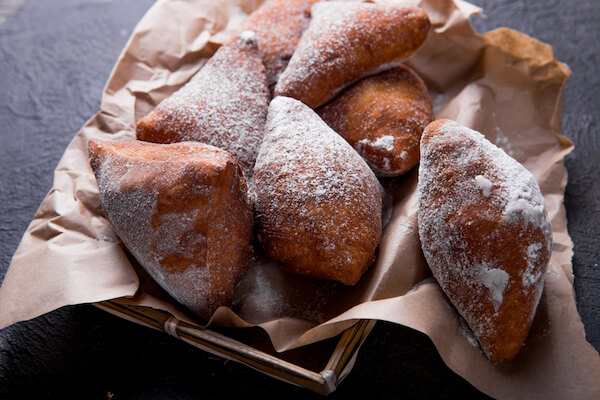 Mandasi
- Mandasi: the sweet fried dough balls are made from and is similar to donuts, but uses less sugar.
- Zitumbuwa: banana fritters are a popular snack and street food.
- Thobwa: this traditional drink is brewed from maize or millet
We hope you enjoyed our Facts about Malawi. We will add more info about this stunning country soon.
Popular Pages
 Africa Facts Africa Facts |
 |
Resources
Facts about Malawi
- Visit Malawi Tourism. "Game Drives." VisitMalawi.mw. Last accessed 9 January 2026
- Malawi Embassy in Germany. "About Malawi." MalawiEmbassy.de Last accessed 9 January 2026
- Malawi Travel Marketing. "Lake Malawi." Malawi Tourism. Last accessed 9 January 2026
Image Credits: wikicommons and shutterstock.com - several of the photos are by mhenrion/ shutterstock.com, Peter Titmuss/ shutterstock.com and kamran ali/ shutterstock.com
Go back from Facts about Malawi to Kids-World-Travel-Guide Homepage
Competition
2026
Recent Articles


-
Facts about Tuvalu for Kids: Geography, People and Wildlife
Sep 11, 26 07:15 AM
Explore our facts about Tuvalu and learn about the Polynesian island nation and its geography, people, economy, culture and animals - Worksheets included -
Animals in Norway for Kids: Wildlife Facts
Sep 03, 26 10:50 AM
Animals in Norway explained: meet reindeer, moose, polar bears, whales and puffins, with habitat facts and a short quiz for class. -
Norway Facts for Kids: Fjords, Vikings and Reindeer
Sep 01, 26 09:01 AM
Learn Norway Facts about the land of the Nobel Prize, the Vikings, reindeers, trolls and other attractions
***
More about Africa
More Countries in Africa
 Tanzania
Fun Facts
Countries in Southern Africa
 Angola

Food around the World
Did you like what you read?

|
Share this page with your friends! Simply use the html code below. Copy and paste onto your website, blog or Facebook page: <a href="https://www.kids-world-travel-guide.com/facts-about-malawi.html">Kids World Travel Guide: Facts about Malawi</a> |
Like us on Facebook




Competition 2026