- Homepage
- Venezuela
Venezuela For Kids
Interesting Venezuela Facts for Kids
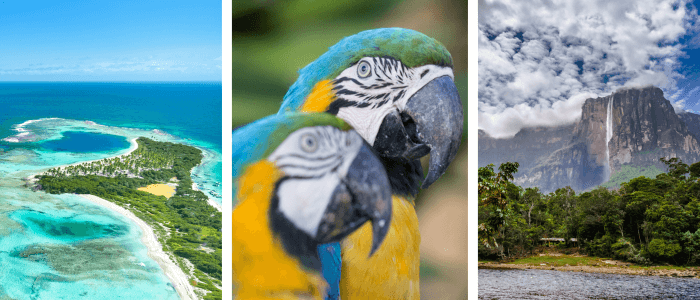 Venezuela for Kids: Morrocoy, parrots, Angel Falls
Here are some interesting facts about Venezuela for Kids. These facts were chosen and researched by kids especially for kids.
Fun Facts about Venezuela for Kids
- Continent: South America
- Population: about 31 million people live in Venezuela (2026)
- Capital: Caracas with 3 million inhabitants
- Name: Bolivarian Republic of Venezuela
- Government: federal presidential republic
- Official Language: Spanish
- Religion: more than 95% are Christians
- Literacy: 97% of the population over 15 years of age can read and write
- Currency: Venezuelan bolívar (and US dollar)
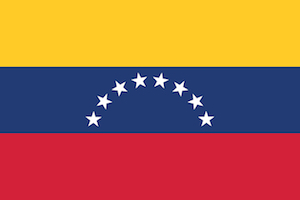
- National Symbols: the national colours: yellow, blue and red, and the troupial (national bird)
- National Day: 5 July (Independence Day)

- National Anthem: 'Gloria al Bravo Pueblo', means in English: Glory to the Brave People
- History: The first indigenous people inhabited the region already 15,000 years ago. Spanish explorers arrived in the early 1500s and established the first settlement in 1520. The name "Venezuela" is said to originate either from the Italian word for "Little Venice" which is Veneziola in Italian that was given to the area by the Italian explorer America Vespucci due to the stilt houses that stand at Lake Maracaibo and the indigenous people called themselves Veneciuela. The country was a colony of Spain from 1522 until 1811 when Venezuela formally declared independence. After several wars of independence, Venezuela became part of Gran Colombia and then fully independent in 1830, when Venezuela separated from Gran Colombia.
- Acting President: Delcy Rodríguez serves as interim president since 5 January 2026 after the reported capture of Nicolás Maduro who faces drug-trafficking and related charges in the USA. There is ongoing political controversy since his capture on 4 January 2026. Maduro has appeared in a U.S. federal court in New York and pleaded not guilty. This is an extraordinary political situation. Rodríguez formerly was Venezuela's vice president since 2018 while Nicolás Maduro Moros did run the country since 2013.
Venezuela for Kids | Geography
Where is Venezuela? Venezuela is a country in northern South America. The country has roughly the shape of an inverted triangle on the country's northern coastline. Venezuela borders the Caribbean Sea to the north. The Caribbean Sea is part of the Atlantic Ocean.
Land borders are shared with Brazil, Colombia and Guyana. The longest landborder is shared with Colombia.
The capital city of Venezuela is Caracas.
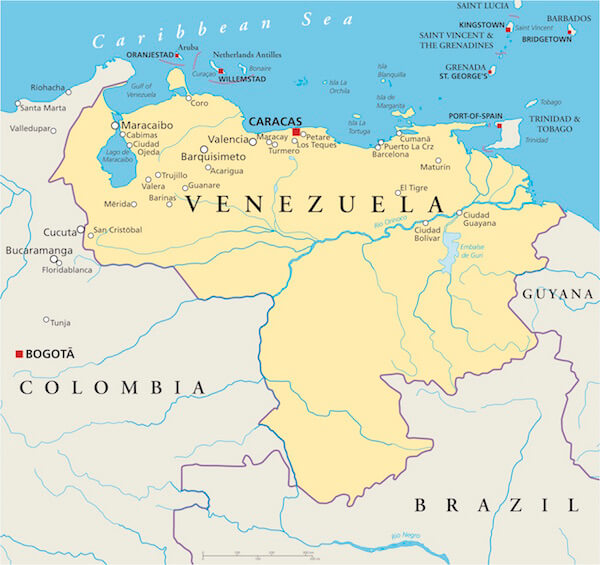 Map of Venezuela
About 300 islands in the Caribbean Sea belong to Venezuela. Most of these islands are small and only a few of them are inhabited. The largest island is Isla de Margarita (Margarita Island) with almost half a million inhabitants.
Venezuela is in the tropics and thus the climate of the country is mostly hot and humid climate in the lowlands and warm to hot and humid all year round. The conditions in the inland are mainly warm and humid only higher regions in the Andes mountains and highlands in the western parts of the country have a more moderate and cooler climate than the rest of the country.
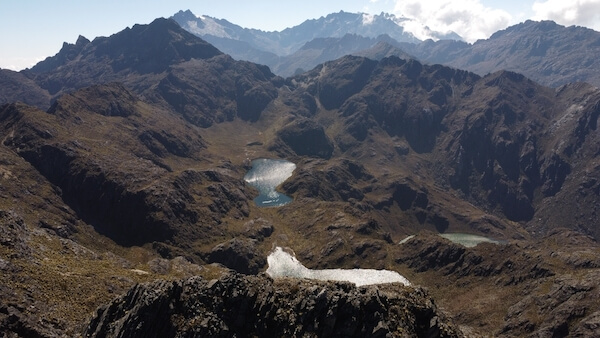 Andes Highlands in Venezuela
Venezuela has four distinct geographical regions: the Maracaibo lowlands in the northwest, the northern mountains and highlands of the Andes, the Orinoco plains in the centre of the country and the Guiana highlands in the southeast. There is a wide range of landscapes: from flat plains and coastal valleys to rugged highlands and table-top mountains, that are referred to as tepuis.
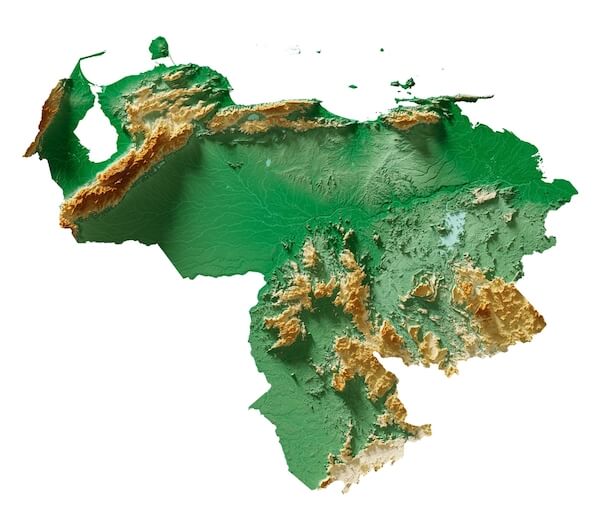 Topography of Venezuela
A flight to Caracas typically takes about 17 hours from London/UK, or 8.5 hours from New York/USA.
Venezuela’s total area is about 912,000 km²/ 352,140 sq mi. Thus Venezuela is more than twice the size of California/ USA or a bit larger than Germany and Spain combined or a bit smaller than Nigeria.
Venezuela for Kids | Geo Superlatives
- Venezuela is one of the 17 megadiverse countries in the world and the country's ecosystems range from Andean glaciers to Amazon rainforests, coastal lowlands and the Caribbean islands.
- Venezuela’s highest peak is the Pico Bolívar with 4,978 m/ 16,332 feet. It is located in the Andes Mountains in northern Venezuela.
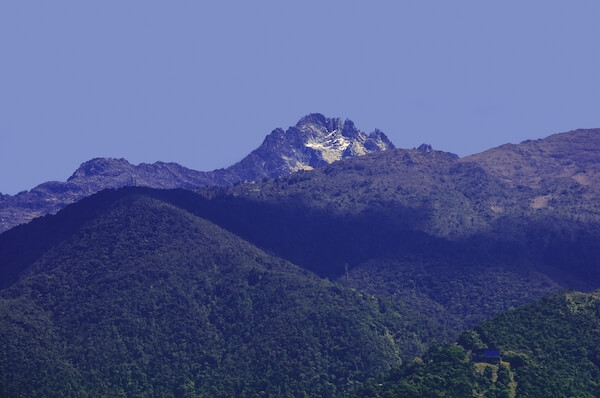 Pico Bolívar
- Mount Roraima is one of the tallest of the South American table-top mountains, that are referred to as tepuis. The plateau on top of Mount Roraima is about 10 km/ 6.2 miles long and 5 km/ 3.1 miles wide. The highest point is 2,810 m/ 9,219 ft above sea level.
Did you know?
|
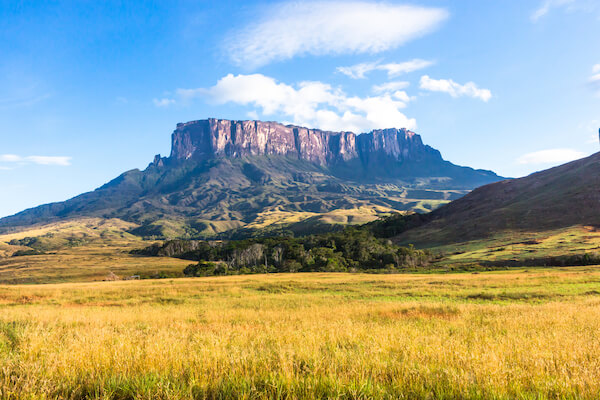 Mount Roriama
- The Llanos are among the largest tropical grassland regions in South America and are located in the lowlands east of the Andes Mountains. The Orinoco River is the main river of this region and also forms part of the border between Venezuela and the neighbouring country Colombia. Seasonal flooding of the rivers in the region creates wetlands that are important for fish breeding, birds and wildlife. The Llanos are also the main cattle-raising region in Venezuela.
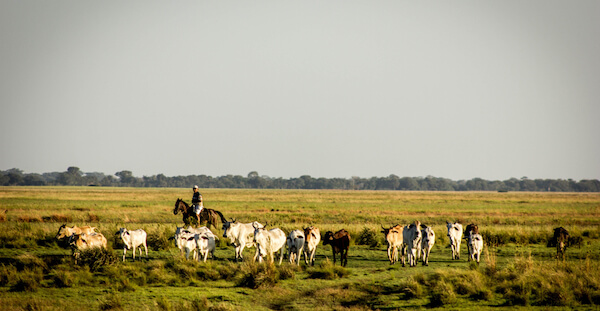 Cattle farming in the Llanos region of Venezuela
- The most important and largest river system in Venezuela is the Orinoco River. The Orinoco flows through the country over more than 2,140 km/ 1,330 miles into a delta that empties into the Atlantic Ocean. About 200 rivers flow into the Orinoco which is a major waterway on the continent. The Orinoco river system is one of the major river systems of the world and the second largest in South America after the Amazon River. The name Orinoco originates from the indigenous Warao language and means 'a place to paddle'.
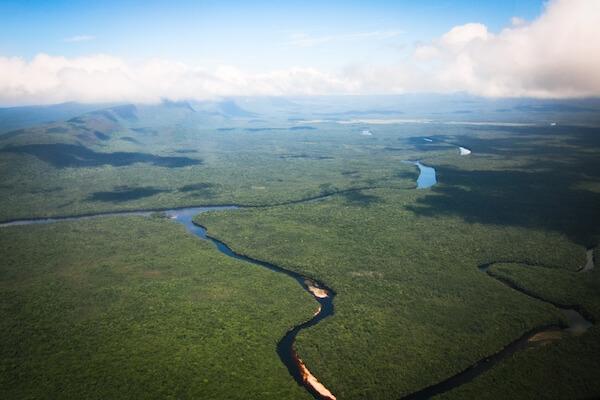 Orinoco Delta
- The Angel Falls, in Spanish called Salto Ángel, are the world’s tallest uninterrupted waterfalls with 979 m/ 3,211 ft and are located eastern Venezuela.
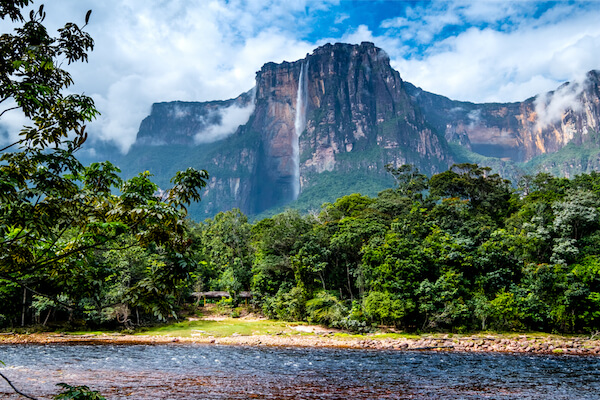 Angel Falls
- Lake Maracaibo is often referred to as the largest lake of Venezuela, however, it is more exactly an inland sea or bay of brackish waters connected to the Gulf of Venezuela and the Caribbean Sea.
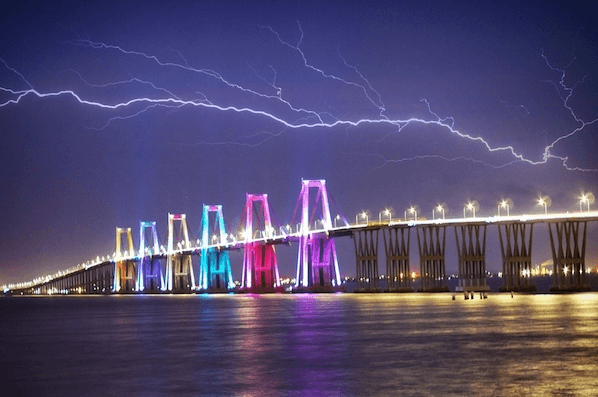 Lake Maracaibo
Lake Maracaibo is the world's most active area for lightnings! Powerful storms at Catatumbo can reach up to 28 lightning strikes per minute and these mainly happen in the evening or at night. Some of these lightnings can last for many hours and throughout the night.
Venezuela for Kids | Attractions and Landmarks
Besides the fascinating waterfalls, rainforest and 43 national parks, there are our some other awesome landmarks and attractions in Venezuela for families to explore:
- Los Roques National Park includes a chain of over 300 islands, islets and coral cays in the Caribbean Sea. It has been a national park since 1972. The islands are surrounded by about 250 coral reefs which support rich marine life such as the colourful parrot fish, snappers and barracudas. A marine research station is located on Dos Mosquises island, which also houses a turtle sanctuary where endangered sea turtle species nest and hatchlings are raised. On these islands you will find lots of picturesque spots for swimming, snorkelling and diving in clear turquoise waters.
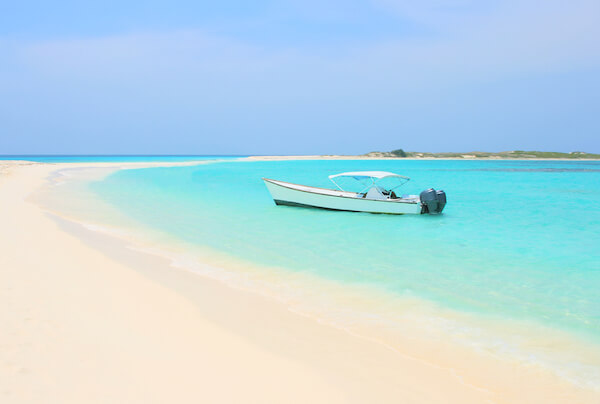 Los Roques beach
- The mountain city of Merida is known for its beautiful colonial buildings as well as for the "Mountain Dreams" (Montana de los Suenos) fun park which is an attraction enjoyed by many families. The peaceful landscape in the northwestern Andes region is a wonderful escape for many city dwellers.
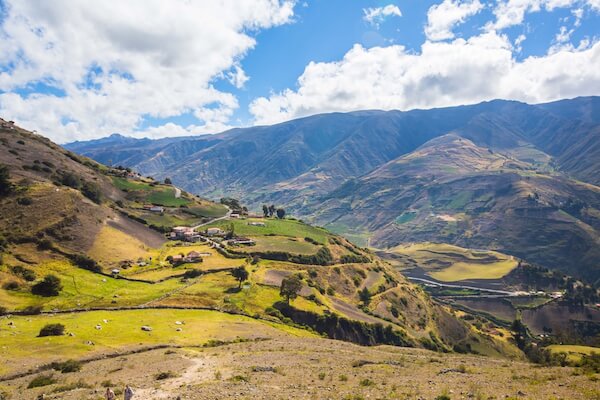 Merida mountainscape
- Esfera Caracas 360, in English called "Caracas Sphere", is a famous sculpture by artist Jesús Soto. The giant spinning sculpture is also referred to as 'Soto Sphere' and often seen as a symbol of the capital city. Walking around the sphere creates unique optical illusions which not only kids love watching. The Soto Sphere seems to move when one walks around it.
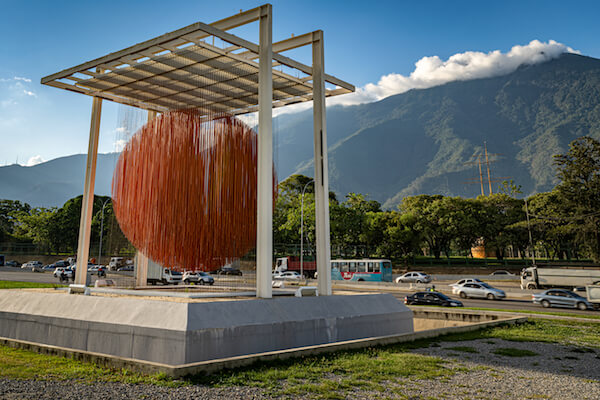 Caracas Sphere
- The town of Coro is one of the oldest colonial towns in Venezuela. The Coro Cathedral was built already in 1525 and the town was the first capital of the country. It still houses many colourful colonial buildings.
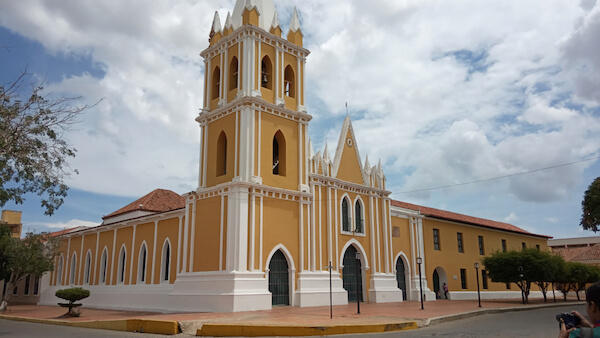 Coro Cathedral
- The Medanos de Coro National Park near the city of Coro is famous for its huge sand dunes. The sanddunes can reach over 40 m/ 130 ft in height.
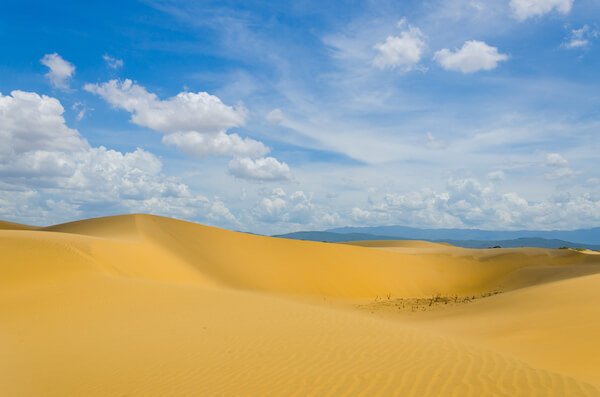 Medanos de Coro National Park
- The statue of the Virgin Mary of Trujillo is usually named the highest statue in the Americas. It is taller than the Statue of Liberty in New York!
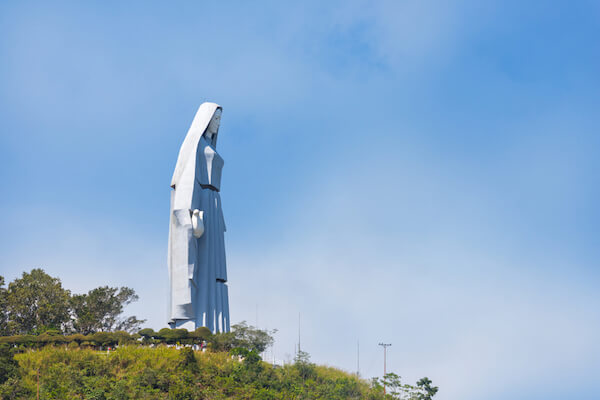 Statue of Peace Virgin Mary in Trujillo in Venezuela
- The Pampatar Salt Flats on Isla de Margarita are a shiny white salt flat that can sparkle in pink and red when the sun hits the mineral deposits. This area is important for natural salt production in Venezuela. Flamingos and many migratory birds can be spotted here.
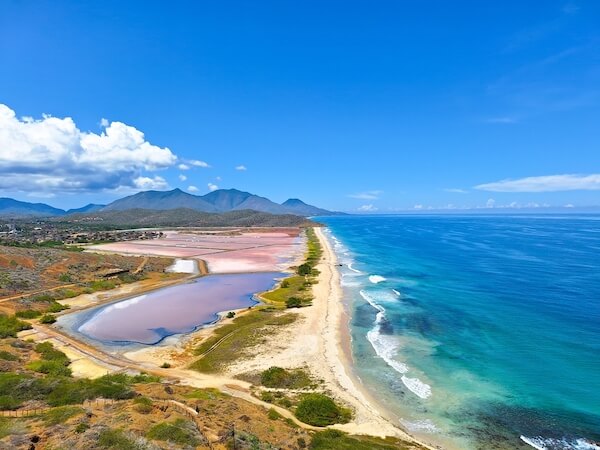 Pampatar Salt Flats
Venezuela for Kids | Venezuelan People
The region of today’s Venezuela was already settled about 15,000 years ago. Among the many indigenous population of the area were the Timoto-Cuicas, the Kalina and the Mariche people and the Warao and Wayuu still live in Venezuela today.
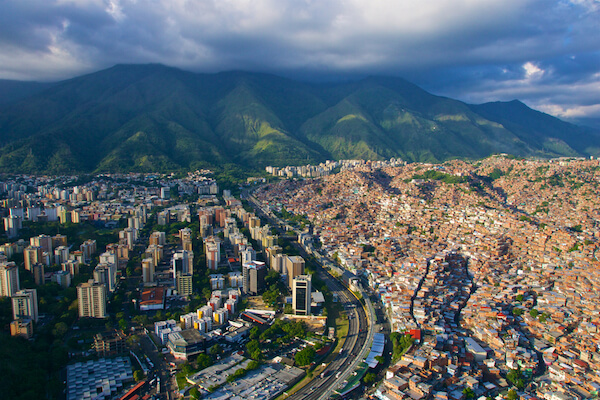 Caracas - Venezuela's capital city
Caracas is the largest urban area in Venezuela and houses about three million people. Most of the Venezuelans live in the northern and western parts of the country, especially in the highlands and valleys along the coast.
Other large cities include Maracaibo and Valencia, both with more than two million inhabitants in their urban areas. Valencia was briefly the capital of Venezuela in the 1830s.
Many Venezuelans enjoy being out and about in Caracas, in the Parque del Este (East Park), where there are several attractions such as the Humboldt Planetarium, a zoo and a children's museum with a replica of the sailing ship of explorer Christopher Columbus and other historic ships.
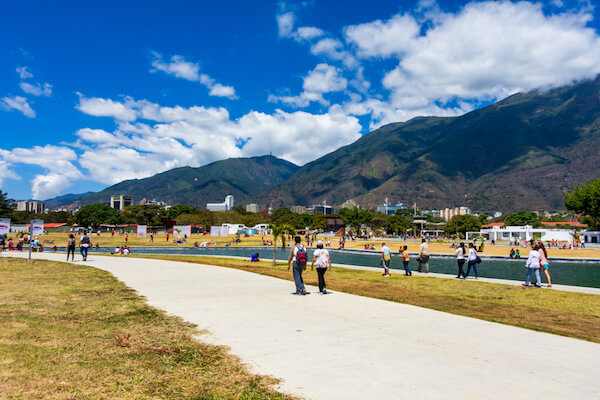 Parque del Este (East Park) in Caracas
Education for children up to 15 years is free in Venezuela, however, in rural and remote areas many schools do not have basic facilities such as proper classrooms, toilets or even windows. Access to a computer or a library is something most children in these areas only can dream of.
In Venezuela it is prohibited to manufacture, possess or sell violent video games and toys, still Venezuela is one of the most dangerous countries to live in.
Venezuela has high levels of violent crime and a very high murder rate. Capital punishment is not used in Venezuela as the country was one of the first in the world to abolish the death penalty for all crimes. The maximum jail sentence is 30 years for serious crime.
Many Venezuelans have left the country in recent years due to the ongoing economic, social and security crisis. Millions of people have emigrated and seek safety and better opportunities in other countries.
Venezuela for Kids | Venezuela Economy
Venezuela has large natural resources, especially petroleum and natural gas. Other important minerals are iron ore, gold, bauxite and diamonds. Despite these vast reserves, the population in the country is very poor and about 9 out of 10 Venezuelans live below the poverty line.
Almost half of all Venezuelans live in extreme poverty and do not have enough income to cover their basic needs.
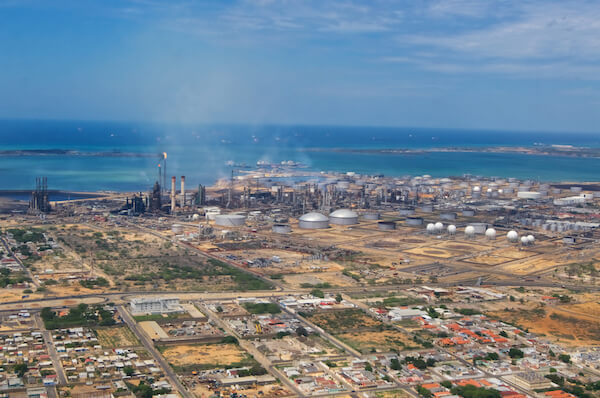 Puntofijo's oil industry
- Venezuela has the largest crude oil reserves in the world, about 17% of all oil reserves are held by Venezuela. The first oil field was drilled in Venezuela in 1914. Due to collapse in production and the falling oil price, the economy suffers tremendously as Venezuela's economy relies on the money received from the export of crude oil and refined petroleum products.
- The petrol price in Venezuela is the lowest in the world due to having these large petroleum reserves.
- Venezuela suffers from the highest inflation rate in the world for several years.
- To counteract the hyperinflation, the Venezuelan government introduced digital tokens in 2018 but the digital currency is largely unused. These tokens called Petro, were hoped to become a sought-after cryptocurrency similar to Bitcoin. The name Petro refers to the backing of the currency by the national petroleum reserves.
- The main agricultural crops in Venezuela are sugar cane, corn, rice, potatoes, plantains or fruits such as bananas and pineapples
- The main trading partners of Venezuela are China, USA, Brazil and Spain.
Venezuela for Kids | Animals
The national bird of Venezuela is the troupial with its orange feathers.
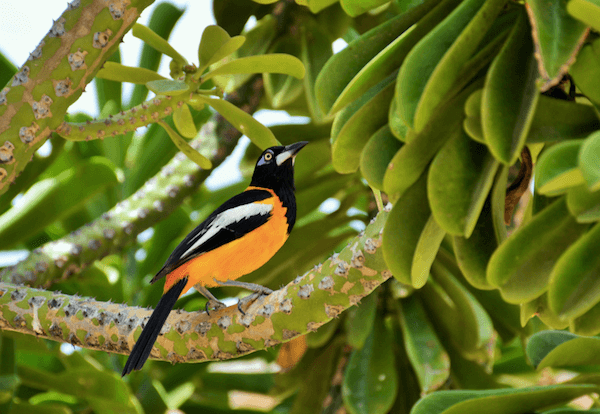 Troupial - Venezuela's national bird
Venezuela has a rich wildlife. About 8,000 species of animals are endemic in the country. Endemic means that the animals originated and always lived in this country or region. Venezuela is one of the richest countries in regards to biodiversity (which refers to plants and animals).
Most of the mammals and bird species can be found in the tropical rainforests south of the Orinoco river.
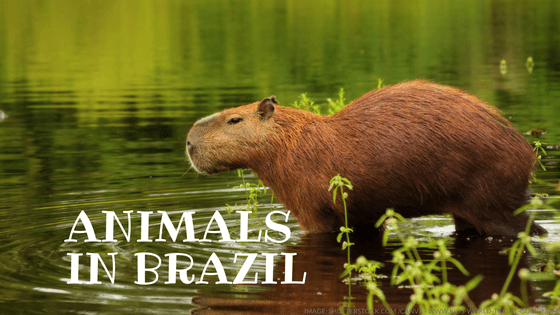
Among the fascinating endemic mammals are jaguars, giant ant eaters, sloths, lizards, howler monkeys and capybaras. Capybaras are the world's largest rodents and grow up to 1.3 m/ 4.3 ft. Capybaras also live in Argentina.
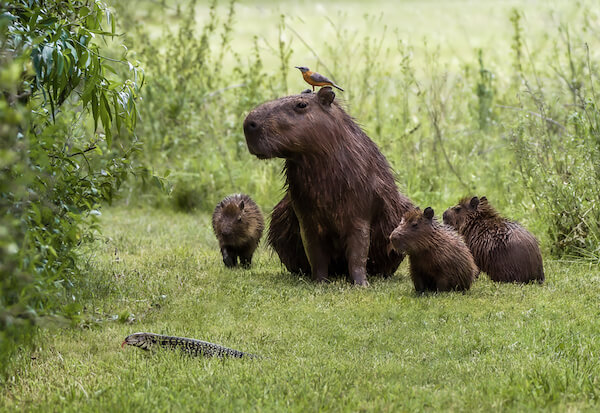 Capybaras
Manatees can be found here as well as Amazon river dolphins.
The crocodiles in the Orinoco river are amongst the largest crocodiles but smaller than the Nile and saltwater crocodiles. Orinoco crocodiles have a long and narrow snout compared to other crocodile species.
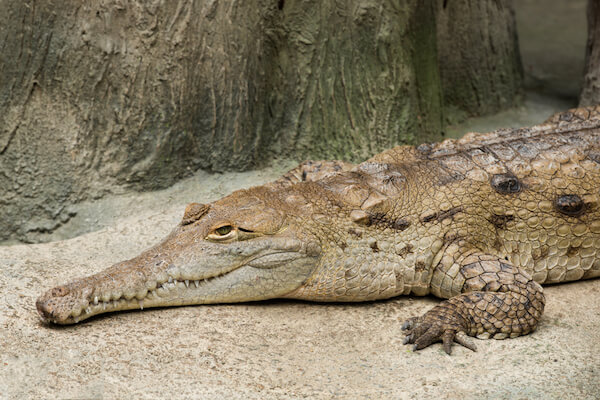 Orinoco crocodile
The critically endangered Orinoco crocodiles grow up to 6.6 m/ 22 ft.
Venezuela for Kids | Geo for Kids
Useful Resources
- Arnaldo Espinoza. "The Untold Story of the Jesús Soto’s Iconic Caracas Sphere." Caracascronicles. 14 January 2019. Last accessed 7 January 2026
- Central Intelligence Agency. "Venezuela." World Fact Book. Last update 26 December 2025. Last accessed 7 January 2026
- Agnieszka Gautier. "The Maracaibo beacon." NASA Earthdata. Last updated 19 April 2021. Last accessed 7 January 2026
- World Wildlife Fund. "Orinoco. An Epic Journey." WWF. Last accessed 7 January 2026
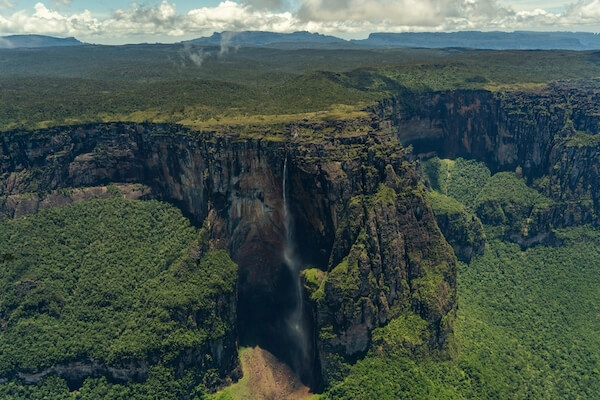 Aerial view of the mighty Angel Falls
Venezuela for Kids | Related Pages
 |
 |
We hope you enjoyed reading our Venezuela Facts for Kids. Make sure to bookmark this page, as we plan to add on more information to make this page even more interesting, not only for children:-)
Picture credits on this page: Images by SXC.hu and Shutterstock.com, Images: Statue of Peace Virgin Mary in Trujillo in Venezuela by Paolo Costa/shutterstock.com; Parque de Este by Giongi63/shutterstock.com
Return from Venezuela Facts to Kids World Travel Guide Homepage
Competition
2026
Recent Articles


-
Jamaica Facts for Kids: Geography, People, Culture and Wildlife
Oct 02, 26 08:16 AM
Our Jamaica Facts for Kids will provide an overview of the Caribbean island nation, about Jamaican geography, people, culture animals, food and economy -
Facts about Tuvalu for Kids: Geography, People and Wildlife
Sep 11, 26 07:15 AM
Explore our facts about Tuvalu and learn about the Polynesian island nation and its geography, people, economy, culture and animals - Worksheets included -
Animals in Norway for Kids: Wildlife Facts
Sep 03, 26 10:50 AM
Animals in Norway explained: meet reindeer, moose, polar bears, whales and puffins, with habitat facts and a short quiz for class.
More about South America
More about Countries in
South America
News for Kids!
Fun Facts
Fun Games



Animals around the World
Continents



Join us on Facebook
Competition 2026