Varanasi: Where Streets Carry Centuries of Memory
Essay by Avni Singh
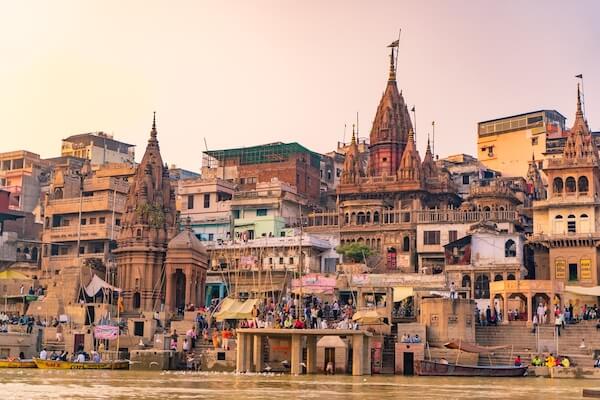 Varanasi - image by Arnav Pratap Singh
Varanasi: Where Streets Carry Centuries Of Memory
They say water holds memories. I say, so do the clay-packed streets of the holy city of Varanasi. The footfall of every pilgrim who travelled miles to offer devotion, every hymn sung to the divine, every sweet that slipped from a devotee’s hand - the alleys of this holy city have absorbed it all. Walking through them is not just a journey across space, but also a journey through time, across a legacy that is more than 2,500 years old.
A Labyrinth of Alleys and Markets
Varanasi has sprawling networks of alleys and backstreets. If you happened to walk through them today, they’d take you through markets that sell the famous Banarasi silk sarees. They might also guide you to the best stalls in town where you could treat yourself to local delicacies like the frothy lassi, crisp kachoris, and the iconic Banarasi paan. And if you follow them far enough, they open onto the ghats, where the Ganges flows, inviting pilgrims and travellers alike.
The final destination of this fabricated tour would be the revered Kashi Vishwanath Temple, where devotees offer prayers in one of Hinduism’s most sacred shrines. Here, the streets of Varanasi seem to pause, as if bowing in reverence before bidding farewell.
The Legacy of Learning: Banaras Hindu University
Varanasi is not only a spiritual capital but also a seat of learning. The Banaras Hindu University (BHU), founded in 1916 by visionary Madan Mohan Malviya, stands as one of Asia’s largest residential universities. And the huge 1300-acre campus? It was donated by the then king of Kashi, Prabhu Narayan Singh.
It is said that Varanasi was one of the first centres of wisdom, with scholars from across the land approaching the region for enlightenment. Even the Buddha, the Awakened One, delivered his first sermon nearby at Sarnath, marking the region as a centre of learning and spiritual awakening.
Today, BHU continues that tradition, welcoming thousands of students from across the world into its halls of learning. Foreigners practicing dance, music, and fine arts are a common sight both on the campus and along the ghats, adding to the city’s vibrant cultural tapestry.
A City of Contrasts
As is the case with every city, the landscape is wildly different for a tourist and for a local. For locals, it is a city of relentless traffic and everyday chaos. My mother tells me that riding a two-wheeler in the alleys of Varanasi meant checking afterwards if you still had all your fingers and all your toes; that’s how close people rode to one another!
Today, however, Varanasi is reinventing itself into a world-class city, all the while preserving its legacy. Roads and railways have improved access, while authorities have renovated ghats and temples to welcome the millions who arrive each passing year.
Adding to this transformation is the newly introduced ropeway system, connecting the railway station to the Kashi Vishwanath Temple. This aerial link allows tourists to bypass the city’s notorious traffic, offering a faster and more scenic route to the shrine.
Timeless and Modern, All at Once
To walk through Varanasi is to experience a city slowly modernising to meet the needs of the 21st century while holding on to its cultural heritage.
Whether you come seeking spirituality, history, knowledge or simply the taste of paan, Varanasi will leave you with memories as timeless as the streets themselves.

Some additional background:
|
Varanasi is a city in northern India, in the state of Uttar Pradesh. The city sits on the banks of the Ganges River and is home to about 1.4 million people. Varanasi is one of the oldest continuously inhabited cities in the world and is known as one of the holiest cities in Hinduism, often called the Spiritual Capital of India. Millions of pilgrims come to pray and bathe in the Ganges River every year. Some of the city’s most fascinating features are the over 80 river steps, called ghats, that lead into the Ganges and are used for rituals, prayers and ceremonies. The ropeway project in Varanasi, which is still under construction, will be India’s first public aerial transport system. Each cable car will accommodate 10 passengers. This alternative means of transport, at a height of 45 meters/ 147 ft above the ground, will stretch over about 3.75 km/ 2.3 miles from the Varanasi Junction railway station to Church Square. It will enable devotees and tourists as well as residents to reach their destinations in Varanasi safely and swiftly. See the President’s info (in Hindi) with insightful images here: |

Thank you so much for contributing this magnificent essay, Avni! You are one of our wonderful stars who keep shining. We wish you a successful and happy new year ahead!
Avni is a 16-year-old student at Podar World School Sama in Vadodara, Gujarat/ India. Her home language is Hindi, English is her second language. Avni's hobbies are playing the keyboard and reading books. She loves travelling and learning about different cultures.
Avni has taken part in our writing competitions for several years. Please read her other outstanding essays here:
 "Ramlila" by Avni Singh (2024) "Ramlila" by Avni Singh (2024) |
 |
Popular Pages
Varanasi Resources
- India Official Tourism. "Where knowledge meets tradition and spirituality." IncredibleIndia. Last accessed 15 January 2026
Competition Winners 2024
 |
 |
 |
 |
 |
 |
 |
 |
Competition Winners 2025




Popular Pages
Country Facts for Kids

Recent Articles


-
Facts about Tuvalu for Kids: Geography, People and Wildlife
Sep 11, 26 07:15 AM
Explore our facts about Tuvalu and learn about the Polynesian island nation and its geography, people, economy, culture and animals - Worksheets included -
Animals in Norway for Kids: Wildlife Facts
Sep 03, 26 10:50 AM
Animals in Norway explained: meet reindeer, moose, polar bears, whales and puffins, with habitat facts and a short quiz for class. -
Norway Facts for Kids: Fjords, Vikings and Reindeer
Sep 01, 26 09:01 AM
Learn Norway Facts about the land of the Nobel Prize, the Vikings, reindeers, trolls and other attractions -
30 Nauru Facts for Kids: Geography, People, Animals
Jul 31, 26 05:56 AM
Get Top Facts about Nauru for kids on location, people, language, animals and phosphate mining. A student-friendly guide to the world's smallest island country. -
Rwanda Facts for Kids: Geography, Wildlife, Culture
Jul 24, 26 10:01 AM
Rwanda facts for kids covering geography, wildlife, culture, maps and landmarks. Students can learn about gorillas, Kigali, volcanoes and Lake Kivu. -
Spain Quiz for Kids: Test Geography & Culture
Jul 20, 26 08:29 AM
Try our Spain quiz for kids with questions on geography, landmarks, food and culture. A quick way for students to test what they know and learn more.
Back from 'Ramlila: Where Legends Come Alive' to Essay Competition Winners 2024 Listing
Return to Kids-World-Travel-Guide Homepage
India for Kids
More about India



More about Asia

More about Countries and Territories in Asia

 Indonesia
 Nepal
Nepal
 Sri Lanka
 Thailand