- Homepage
- Chinese New Year
- Chinese New Year Singapore
Chinese New Year in Singapore
In this article about Chinese New Year in Singapore, one of our young writers, Javier Yung from Singapore shares how Chinese New Year is celebrated in the buzzing Southeast Asian city.
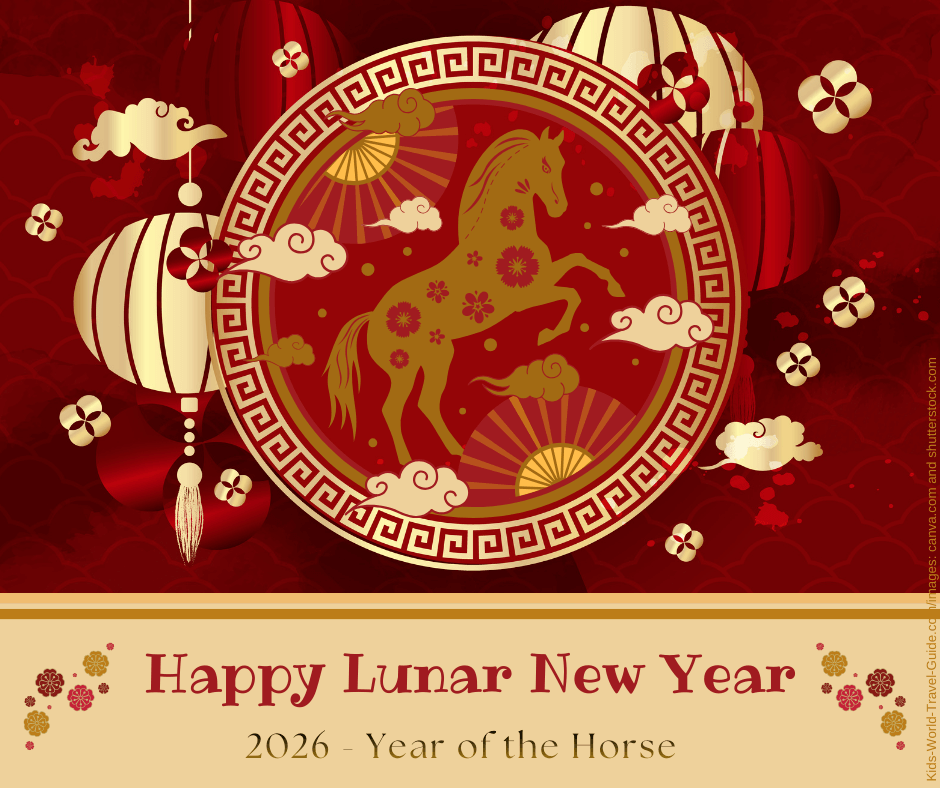
Lunar New Year is celebrated in Singapore from 17 February for 15 days, however the main celebrations with many closures are until 21 February 2026 while the famous Chingay Parade will take place on 27 and 28 February.
Chinese New Year - The Singaporean Way

What you will find on this page:
Let's start with the myth behind the Lunar New Year celebrations. There are twelve zodiac signs in the Chinese lunar calendar.
Zodiac signs
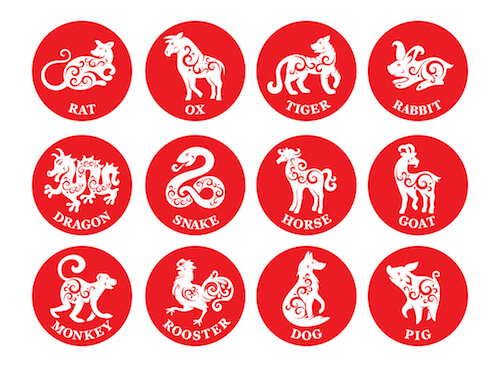 The 12 Chinese zodiac signs
The legend starts with twelve guard animals that were selected to run a race for the Jade Emperor. The clever rat was first, the fast ox came second.
The animals thus appear in the lunar calendar according to their rank in the race.
Javier writes:
I know what you’re thinking – how could a minute and seemingly insignificant animal come first? Well, in order not to fall behind, the rat had the ox carry him on one condition that he sang for the ox. Right when the ox was about to cross the finish line, the rat thereupon slid past, earning himself first place. Sometimes, working smart – not hard, wins the day!
|
Do you remember that 2024 was the Year of the Dragon? 2025 was the Year of the Snake and 2026 is the Year of the Horse. |
Chinese New Year songs
Since then, Chinese New Year has been celebrated by approximately one-sixth of the world population – with lots of goodies and Chinese New Year songs. However, amidst the joy prosperous mood, there might be a deeper story behind the composition of such songs.
For instance, the term 'Happy New Year' (贺新年) was composed to express the desire for a peaceful life without suffering. To boot, the God of Wealth 'Cai Shen Dao' (财神到) is a representation of the desire for wealth and fortune.
|
'Cai shen dao' or 'The Gods must be rich' is in fact one of the most well known Chinese New Year songs. Listen to the song here. |
 |
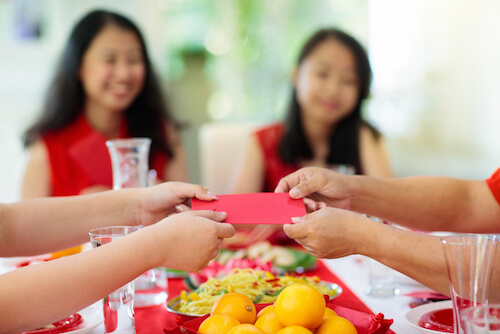
No Chinese New Year celebration is complete without ending the day bringing your hands to your nose to smell the distant fragrance of citrus and new banknotes.
Chinese New Year in Singapore
How is Chinese New Year celebrated in Singapore?
Singapore Chinese New Year
|
According to the Singapore Federation of Chinese Clan Associations, this is the practice of seeking "reciprocity in all human relationships" or "li shang wang lai" (礼尚往来) — hence the exchanging of gifts.
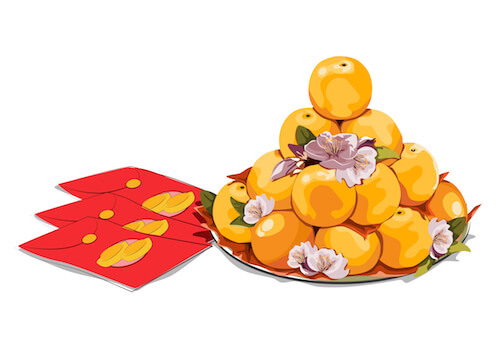 Typical gifts: Mandarin oranges and red packets for money
Though it is a Chinese New Year staple here in Singapore, this practice is mostly found only in Southern China and by the Cantonese.
In Singapore, where festive traditions are largely influenced by Cantonese practices, exchanging oranges symbolise prosperity as the Cantonese word for the fruit, "gam", sounds similar to the Cantonese word for 'gold'.
Besides, isn’t it a pain in the ear to endure your parents’ nagging every day, requiring you to hit the sack early? Well, it’s time to rejoice!
During Chinese New Year Eve, 'shou ye' (守夜) is a Chinese tradition where all family members gather and stay up through the night, with the belief that their parents would live a longer life in return.
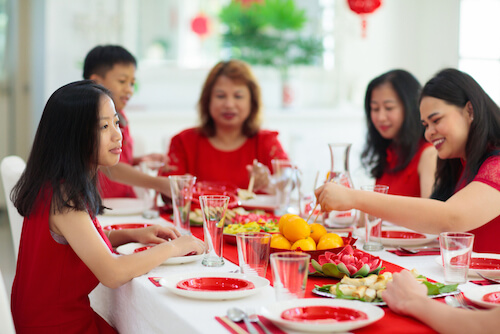 Family Reunion dinner for Chinese New Year
This is often complemented with games such as Mahjong and card games after reunion dinner on the eve of Chinese New Year.
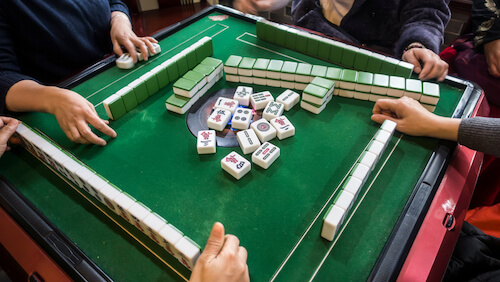 Playing Mahjong
Chinese New Year in Singapore Traditions in Singapore
So now back to our Chinese New Year celebrations:
Grab a pair of chopsticks ready for the 'Lo hei' or 'prosperity toss' and embrace yourselves for the echoes of the widely used Huat ah!!
Last but not least: 'Huat ah' means 'To prosper'.
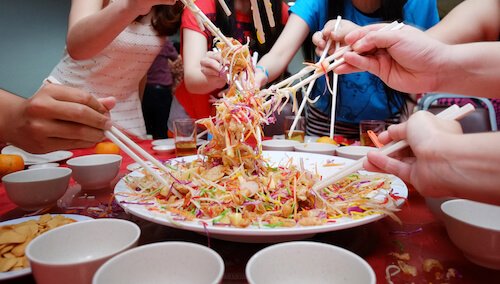 Typical Chinese New Year custom: The prosperity toss
The prosperity toss is called "Yusheng" and usually made with a raw fish salad that consists of thin slices of raw fish, shredded vegetables and fruits such as carrots, pomelo, white and green radish, sesame seeds, deep fried crackers and peanuts. In Singapore there is a special tradition of having a so-called qicai yusheng (七彩鱼生) is a special seven coloured fish salad that was invented by four Singapore Chefs in the 1960s!
The Chinese new year's tradition of Yusheng was brough to Singapore in the 19th century by Cantonese and Teochew immigrants from the Chinese mainland.
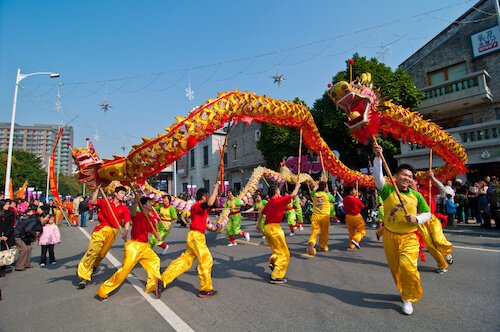 Lion Dance in Singapore
Watching (or even participating in) a lion or dragon dance on Lunar New Year is a must in most families in Singapore. One of the famous lion and dragon dance performances is in the National Museum of Singapore. This event takes place this year on 21 February at 10am.
A uniquely Singaporean tradition is the Chingay Parade, that is held on the second weekend of the New Year's celebrations. In 2026, the annual event will take place on 27 and 28 February.
The first colourful parade happened in 1973, but today, this event is one of the largest and most popular street parades during Lunar New Year in Asia. The parade with fantastic floats and amazing costumes also includes international artists. This magnificent street party is a true celebration of Singapore's diversity.
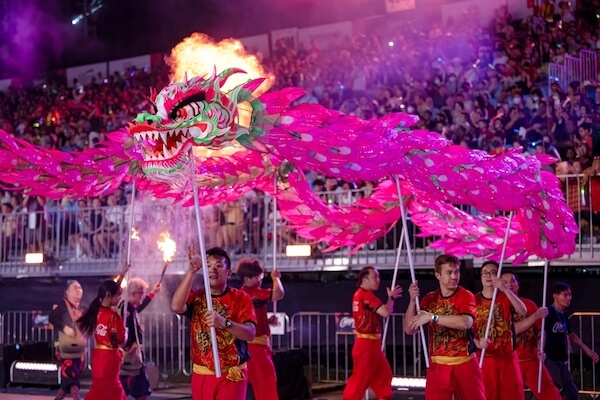 Chingay Streetparade in 2024 - image by ravisankary/shutterstock.com
And this is the main message we want to highlight: The Lunar New Year celebrations in Singapore are not only for the Chinese community in Singapore but for everyone, for residents and visitors alike regardless of ethnic backgrounds.
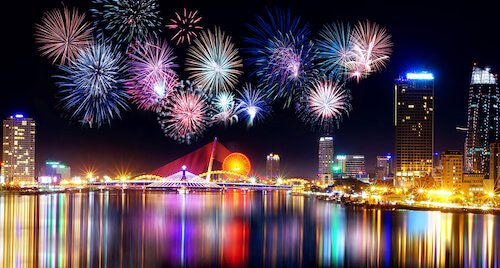
Many non-Chinese Singaporeans and visitors join in the festive celebrations, many are invited to attend parties and open houses or simply enjoy the local traditional food offered during the festivities. And the fireworks displays along Marina Bay are truly one of a kind and enjoyed by all!
Chinese New Year in Singapore
River HongBao 2026
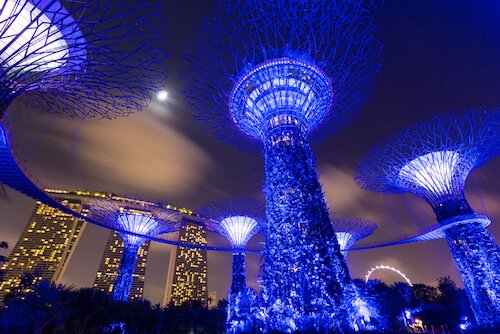
This year's Chinese New Year festivities in Singapore include the popular RiverHongbao which celebrates its 40th anniversary this year. The famous riverside festivities started more modestly but now take place at the Supertree Grove in Gardens By The Bay from 17 to 24 February 2026. There are nightly performances and live stage shows with local and international artists, giant lantern displays, food streets as well as an exhibition about the 40-year long story of the River HongBao festival.
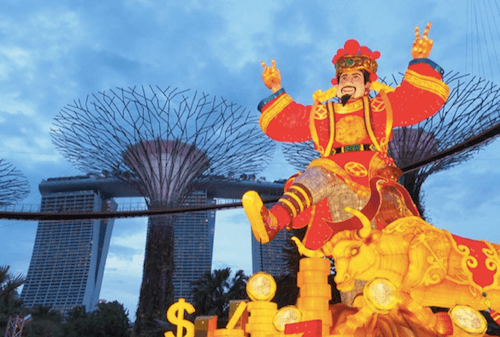 God of Fortune - at the River Hongbao in Singapore
Many larger-than-life lanterns such as previously this huge God of Fortune and a gigantic dragon will be on display at the Gardens by the Bay again. Cultural performances by international troupes as well as several contests and nightly stage shows can be experienced at the River Hongbao showcase. In 2026, there will also be amusement rides and giant fireworks on the first days of the Lunar New Year. Read more here.
Chinese New Year in Singapore
Chinatown in Singapore
Chinatown is the heart of Chinese culture where Singaporeans congregate, especially during the festive season. Since its establishment, it has been pervaded with shophouses and is bustling with visitors.
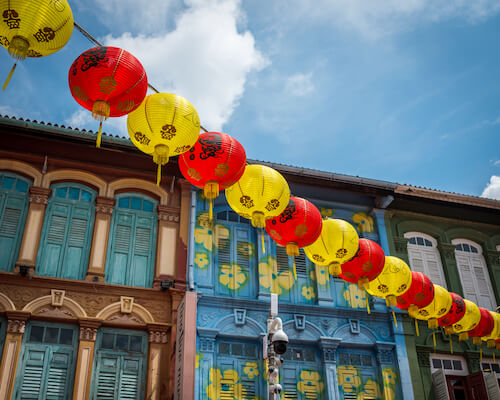 Singapore's Chinatown
However, do you know how to figure out the general histories of the shophouses just by looking at the types of materials they were built with?
For instance, the earliest-established shophouses which were set up between the 1840s and 1900s are likely to be two-storey and made of plaster. On the other end, if steel or concrete mainly make up the shophouse, the likelihood the shophouse was built between the 1950s and 1970s is higher.
Do you know that Chinatown is home to the largest hawker centre in Singapore? That’s not all – the hawker culture in Singapore has been added to the UNESCO Representative List of the Intangible Cultural Heritage of Humanity in December 2020.
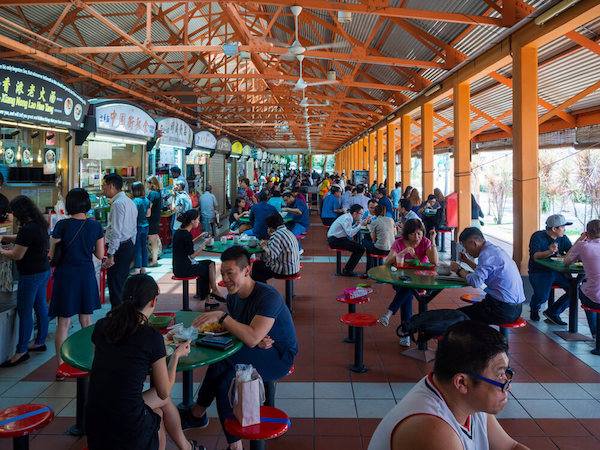 Singapore Hawkercenter in Chinatown
Singapore is unique in that the entire city-state combines and celebrates the cultural traditions of each of those ethnic states, which comprises mainly the Chinese, Indian and Malay groups.
Chinatown is also home to the Buddha Tooth Relic Temple, one of the most famous Buddhist temples in the city.
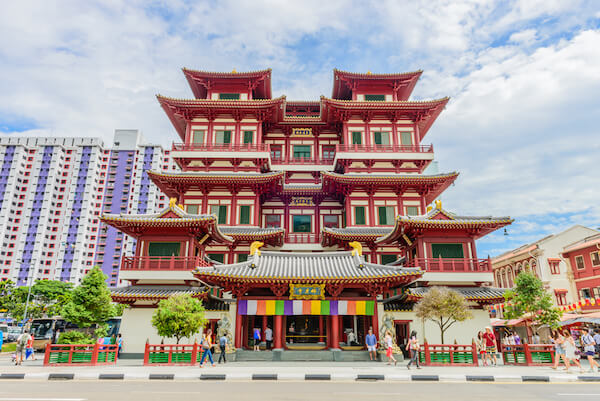 Buddha Tooth Relic Temple in Singapore's Chinatown
In Chinatown you will find also Singapore’s oldest Indian temple. The Sri Mariamman Hindu temple complements Singapore’s status as a polyglot nation whose population consists of diverse ethnic groups.
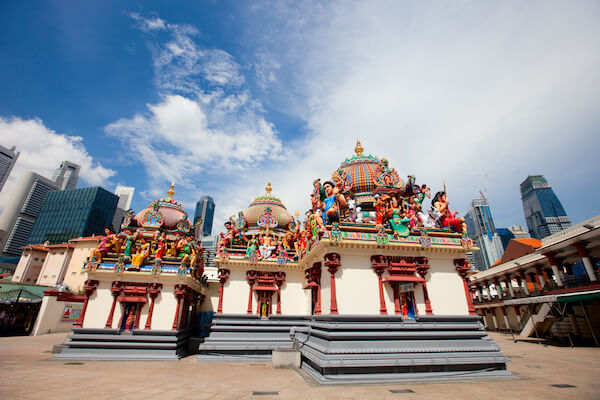 Singapore's Sri Mariamman Hindu temple
Chinese New Year in Singapore History
Lunar New Year has been celebrated in Singapore for many years. Today, more than 70% of all Singaporeans have Chinese roots. Early settlers from Hokkien, Teochew and Cantonese communities brought their traditions and family celebrations with them when they arrived in Singapore.
The Chinese New Year celebrations originate in a farming festival. According to the legend, villagers celebrated the victory over a beast called Nian, that was frightened away by the famers with loud noises, drumming and the colour red. The festival's traditions live on today. Red decorations are still used in homes and in the streets and the famous dragon or lion dances are performed to bring good luck and chase away bad spirits.
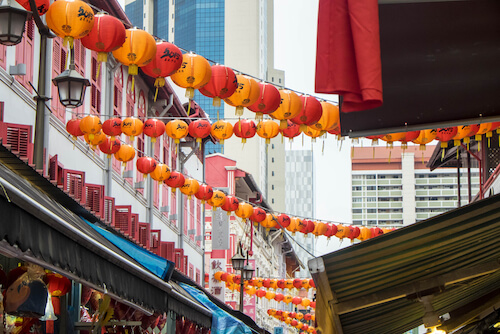 Chinese New Year decorations in Singapore
While Lunar New Year is a time of joy and celebration for many, the eve of the festival also carries a more sombre meaning in Singapore's history.
On 15 February 1942, the British forces surrendered Singapore to the Japanese Imperial Army during the Second World War. That year, the surrender fell on the first day of the Lunar New Year, a day which is commonly associated with hope and new beginnings.
What followed were three years and eight months of hardship and suffering for the people in Singapore under Japanese occupation. For this reason, some families choose to reflect quietly on this date, remembering those who endured the difficult years of war.
Chinese New Year in Singapore Resources
This article was last updated on 16 February 2026. Original parts of this article were provided by Javier Yung, a student from Singapore. The resources used for this text are:
- Andrew Koay. "The Surprising Origins of Singapore's Chinese New Year Traditions, Explained. Mothership.sg. 25 January 2020. Last accessed 16 February 2026
- Further resources used for the updated 2026 article: GardensByTheBay. "Riverhongbao2026." GardensbyTheBay. Last accessed 16 February 2026.
- National Heritage Board. "Hawker Culture in Singapore. NHB.gov.sg. Last accessed 16 February 2026
- National Library Board. "Yusheng". Nlb.gov.sg. Last accessed 16 February 2026
- Government of Singapore. "The Chingay Story." Chingay.gov.sg. Last accessed 16 February 2026
Read more from our young author Javier Yung from Chung Cheng High School in his award winning essay about 'Singlish' here - or click on the image below:
Popular Pages
 |
 |
  |
  |
More about Asia
Feel free to contact us if you or your school would like to join in our schools project. Looking forward to hearing from you!
Picture credits in main text: own or shutterstock.com
Return from Chinese New Year in Singapore to Kids-World-Travel-Guide Homepage
Competition
2026
Recent Articles


-
EU facts for kids | European Union Basics
May 09, 26 07:53 AM
Our EU facts will provide basic insight and fun facts about the European Union ncluding EU history, member states, locations, symbols and more -
Barbados Facts for Kids: Geography and Culture
Apr 16, 26 09:30 AM
Read Barbados Facts about Bajan food, festivals, turtles, flying fish and more in a country guide created for children, school projects and curious minds. -
Zimbabwe Facts for Kids: Geography, Culture & Wildlife
Apr 15, 26 11:56 AM
Discover Zimbabwe Facts for Kids: Learn about geography, people, animals, famous landmarks, food and economy in this Southern African country.
Lunar New Year
Countries celebrating Lunar New Year
More about Singapore
More about Countries and Territories in Asia
 Indonesia

 Nepal
Nepal

 Sri Lanka
 Thailand
News for Kids

***
Fun Games


Fun Facts
















Like us
Competition 2026